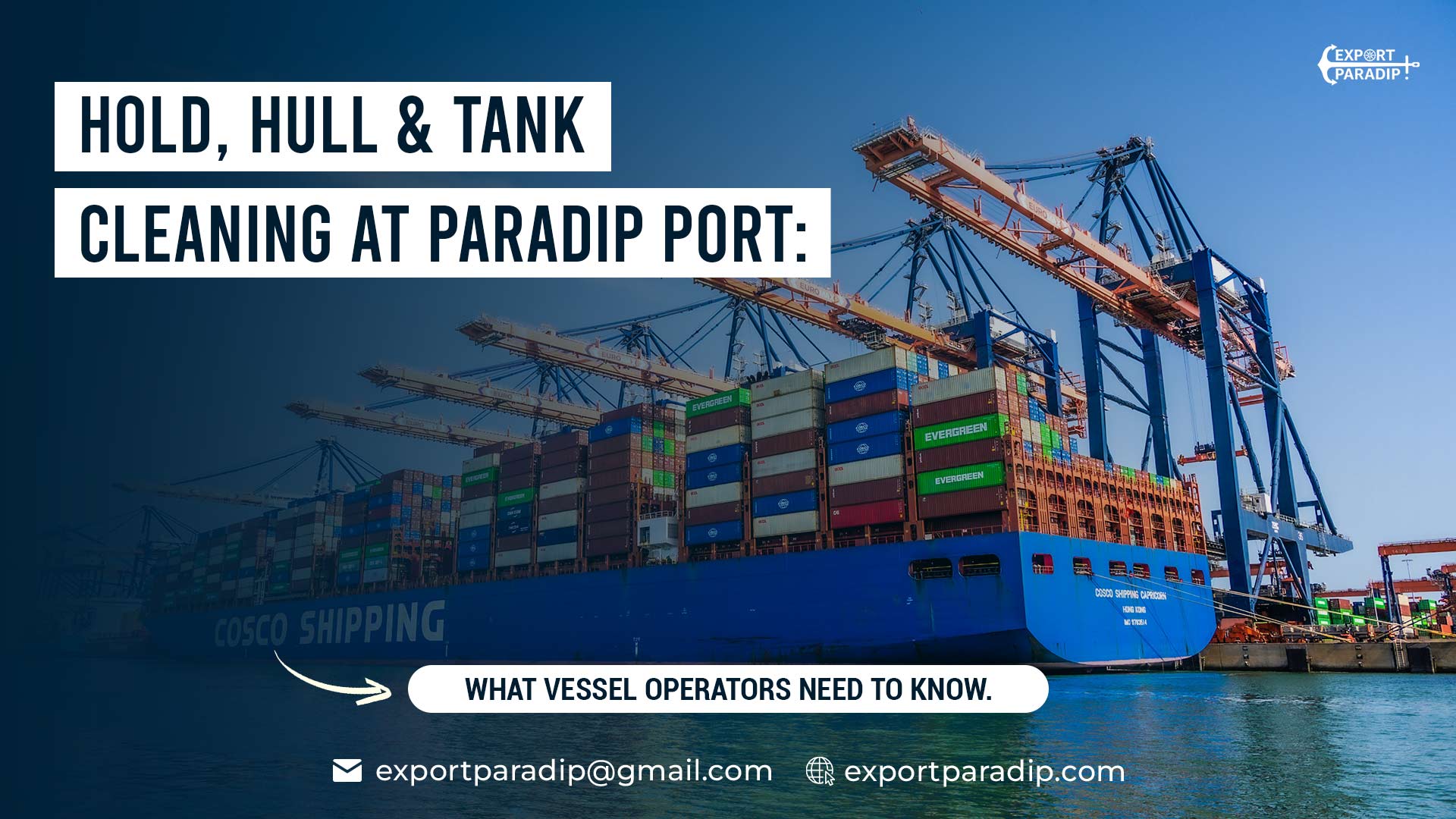
 A vessel arriving at Paradip isn't just there to load or discharge cargo for many operators, it's also the window to get holds, hulls & tanks properly cleaned before the next charter. It's easy to treat this as routine housekeeping. In practice, it's a compliance requirement, a cargo-quality safeguard & an operational efficiency lever all at once.
Export Paradip provides professional ship cleaning services at Paradip Port hold, hull, tank & underwater cleaning for vessel operators from the US, Europe, the Middle East & Asia. Here's why this matters more than most operators realise.
🧽 Why Hold Cleaning Isn't Optional
A cargo hold that carried coal, iron ore or fertilizer on its last voyage can leave behind residue that contaminates the next load entirely a serious problem if that next cargo is grain, food-grade material, or anything sensitive to cross-contamination. Charterers increasingly demand grain-clean or hospital-clean holds & surveyors evaluate dryness, odor neutrality, coating condition & the absence of loose scale before approving a hold for loading.
Fail that inspection & the cost isn't just the cleaning itself it's the delay. A rejected hold means idle vessel time, missed loading windows & in chartered arrangements, real financial penalties written into the charter party.
📋 What IMO & MARPOL Compliance Actually Requires
Ship cleaning at any major port isn't just about appearance it's governed by international maritime regulations that carry real consequences for non-compliance: IMO regulations require cargo holds to be thoroughly cleaned & inspected before certain cargo types are loaded, with non-compliance risking fines & operational delays MARPOL compliance governs how wash water, sludge & cargo residues are handled these cannot be discharged improperly, and port authorities require documented transfer to licensed reception facilities SOLAS-aligned safety practices apply to crew & shore personnel involved in cleaning operations, particularly around hazardous residue exposure 💡 Export Paradip's Advantage: Our cleaning operations follow IMO & MARPOL-compliant methods & documented waste disposal, so operators aren't left exposed to compliance risk simply because they needed a fast turnaround.
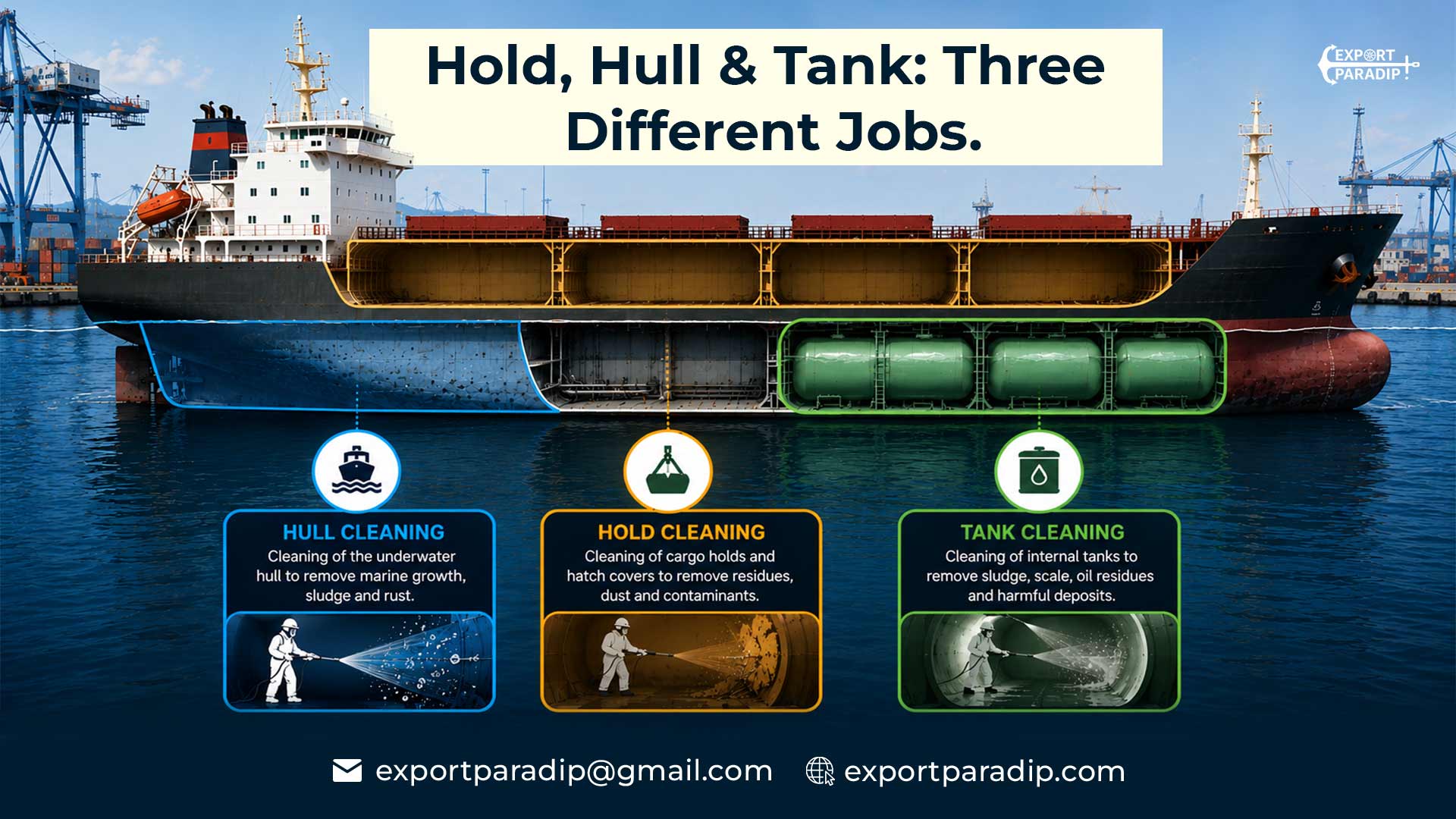
⚓ Hold, Hull & Tank: Three Different Jobs
Ship cleaning isn't a single service each part of the vessel presents a different challenge:
Hold Cleaning: Removing cargo residue, dust & contamination between loads critical for switching cargo types or meeting charterer-specified cleanliness standards
Hull Cleaning: Managing biofouling marine growth that builds up on the hull over time, increasing fuel consumption & drag if left unaddressed. This has become a bigger focus globally following the IMO's updated 2023 Biofouling Guidelines, which encourage proactive management to reduce invasive species transfer & improve vessel efficiency
Tank Cleaning: Especially critical for tankers carrying crude oil, fuel oil, chemicals or other liquid cargo, where residue from a previous cargo can compromise the safety & purity of the next load
Each requires different equipment, chemical agents & documentation which is why coordinating all three with one provider at berth saves real time compared to arranging them separately.
📸 Documentation Surveyors Actually Check
Modern charter parties increasingly demand proof, not just a clean hold. That typically means: Time-stamped photographs of the cleaning process & final result Digital checklists confirming each stage was completed Chemical batch tracking for any cleaning agents used Waste transfer documentation confirming compliant disposal Transparent, documented reporting isn't just good practice it's increasingly what protects vessel operators from disputes with charterers or cargo owners after the fact.
🚢 How to Book Cleaning Services at Paradip
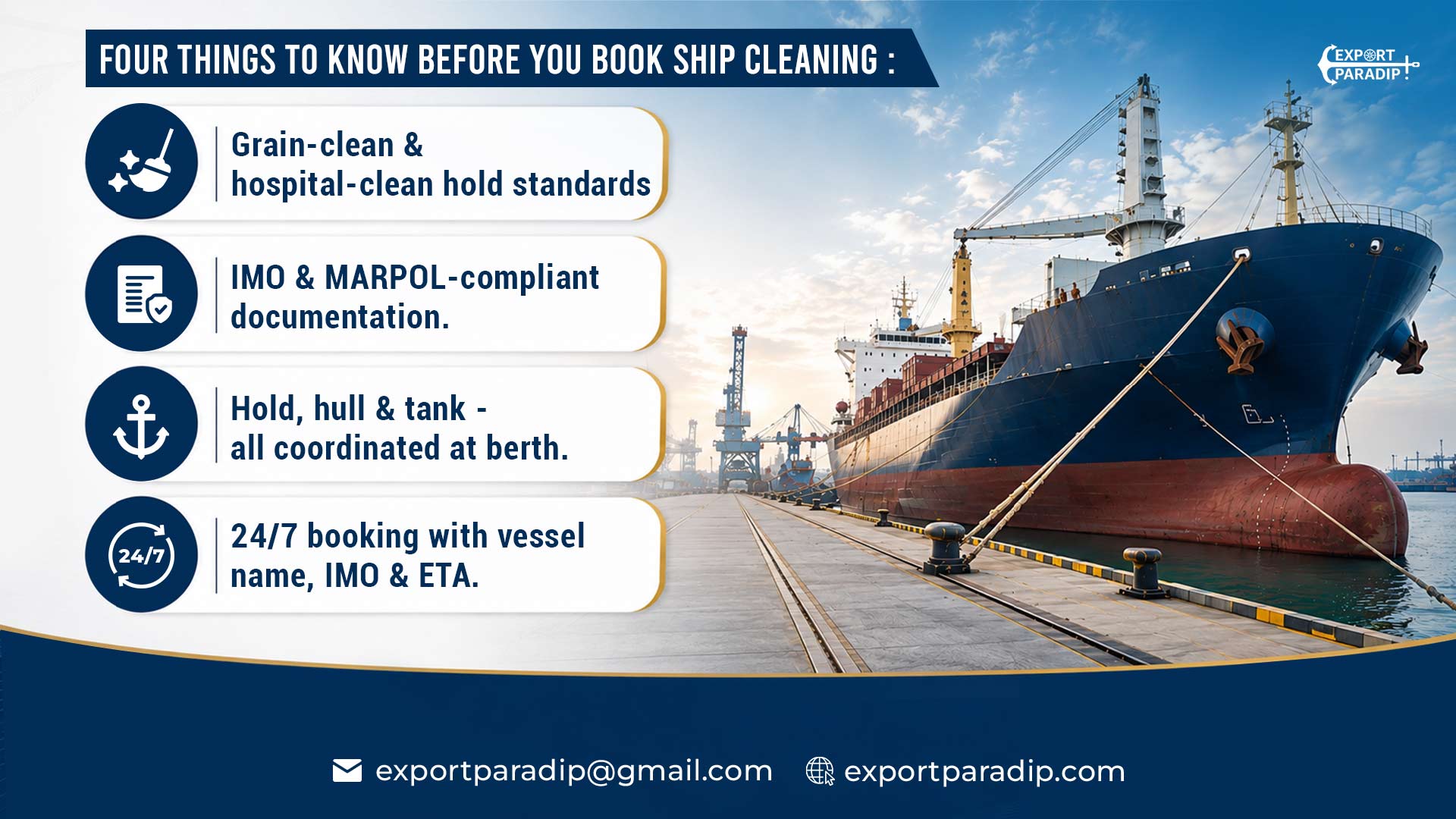
When contacting a provider for ship cleaning at Paradip, having the following ready speeds up scheduling significantly: ✔ Vessel Name ✔ IMO Number ✔ Cleaning Scope hold, hull, tank, or a combination ✔ ETA at Paradip
Export Paradip's ship cleaning team operates on a 24/7 basis, coordinating cleaning windows around your actual arrival & departure schedule rather than requiring separate downtime.
✅ Before Your Vessel Calls at Paradip
✔ Confirm your cleaning scope hold, hull, tank, or all three
✔ Check charterer-specified cleanliness standards grain-clean, hospital-clean, or standard
✔ Have your IMO number & ETA ready when booking
✔ Request documentation photos, checklists & waste disposal records
✔ Coordinate timing with your port call to avoid unnecessary idle time
Export Paradip provides IMO & MARPOL-compliant hold, hull & tank cleaning directly at Paradip Port, serving vessel operators worldwide. Get in touch with your vessel name, IMO number, cleaning scope & ETA to book, or explore our full ship cleaning services for more detail.
FAQ's
What is grain-clean or hospital-clean hold cleaning?
These are cleanliness standards charterers specify for holds before loading sensitive cargo like grain or food-grade materials evaluated by surveyors for dryness, odor neutrality, coating condition & absence of loose scale.
Is ship hold cleaning legally required before every voyage?
It depends on the previous & next cargo type, and often on charter party terms. IMO regulations and charterer requirements frequently make thorough cleaning & inspection mandatory before loading certain cargo categories.
What's the difference between hull cleaning and hold cleaning?
Hold cleaning removes cargo residue & contamination inside cargo spaces. Hull cleaning addresses biofouling marine growth on the vessel's exterior which affects fuel efficiency & falls under IMO biofouling guidelines.
How do I book ship cleaning services at Paradip Port?
Contact Export Paradip with your vessel name, IMO number, cleaning scope (hold, hull, tank, or combination) & estimated time of arrival. Services operate 24/7 to align with your port call.