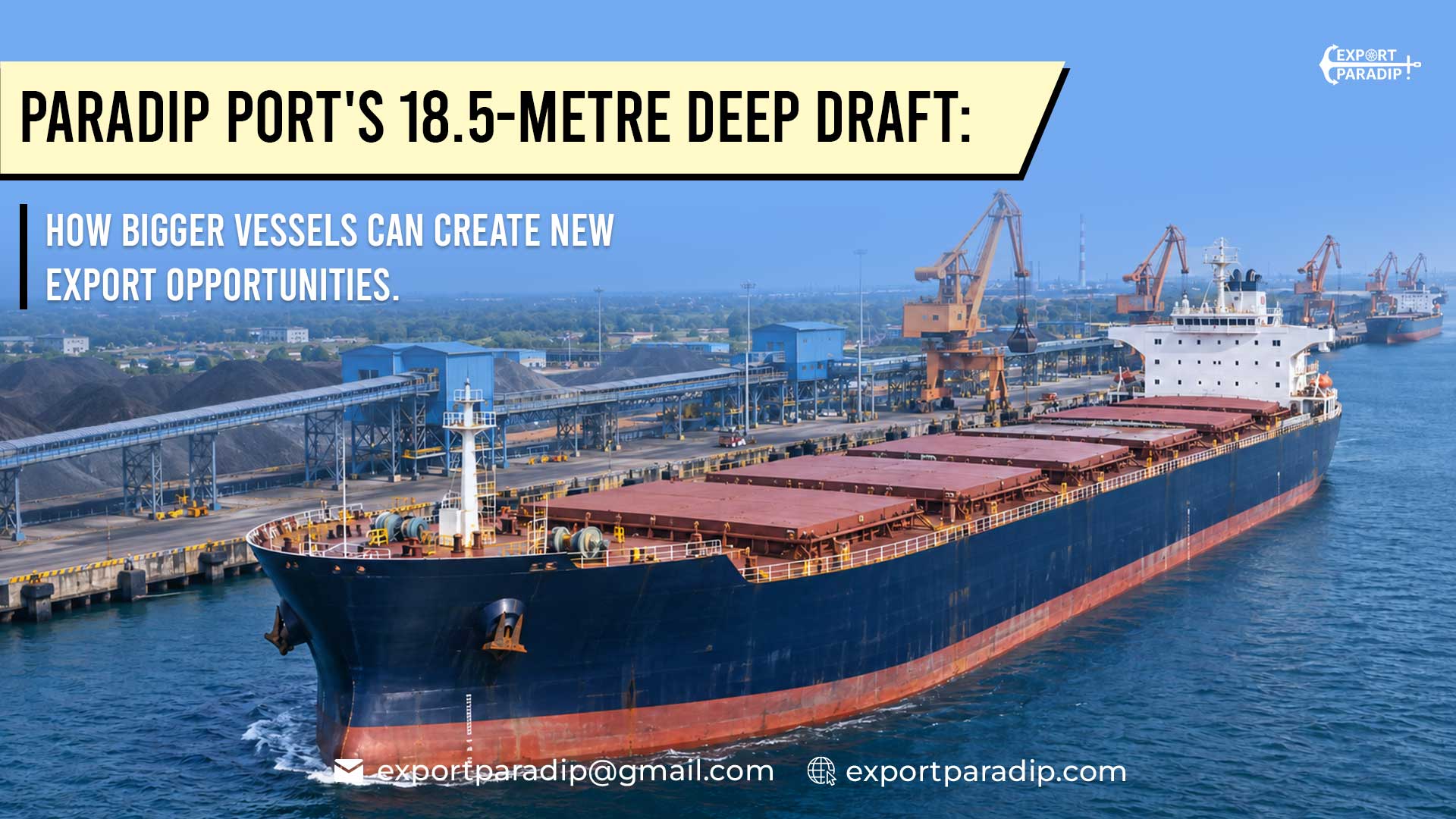
 The Paradip Port deep draft has moved from plan to reality. On 21 August 2026, Union Minister Sarbananda Sonowal inaugurated seven projects worth ₹427.80 crore at Paradip. The centrepiece was a ₹352 crore capital dredging project that gives the port an 18.5-metre deep-draft capability.
The goal is to let fully laden Capesize vessels, the largest dry bulk carriers, enter the inner harbour. For buyers and exporters of coal, iron ore and minerals, bigger ships mean larger parcels per voyage and a potentially lower freight cost per tonne.
This guide explains what the new depth means, what has already happened, and what to confirm before you plan a shipment.
What an 18.5-Metre Deep Draft Actually Means
Draft is how deep a loaded ship sits below the waterline. A port's deep-draft capability is how deep a loaded vessel it can safely admit. Capesize ships carry the biggest loads, but they need the depth to match.
The port says the new capability should improve economies of scale while cutting vessel turnaround and logistics costs. That is the commercial case in one sentence: more cargo per ship, fewer wasted hours.
Why Bigger Vessels Can Lower Cost Per Tonne
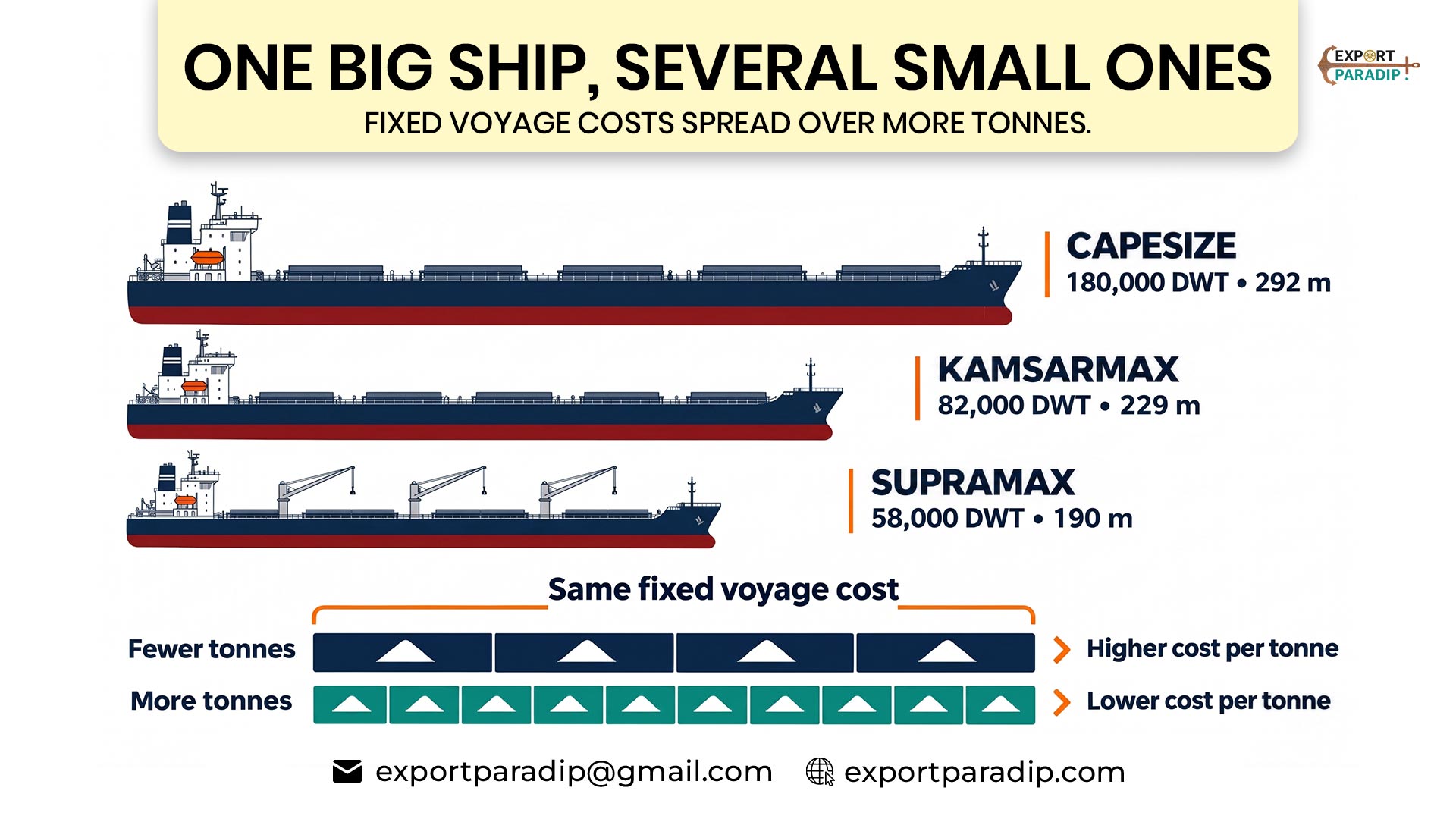
Every voyage has fixed costs such as fuel, crew and port charges. A bigger vessel spreads them across more tonnes. One Capesize call at Paradip moved 152,702 tonnes of coking coal, a parcel that would otherwise need several smaller bulk carriers.
Savings are not automatic. Freight rates also follow the wider shipping market. But scale gives Paradip cargo owners a structural advantage they did not have before.
The First Capesize Call: 6 September 2026
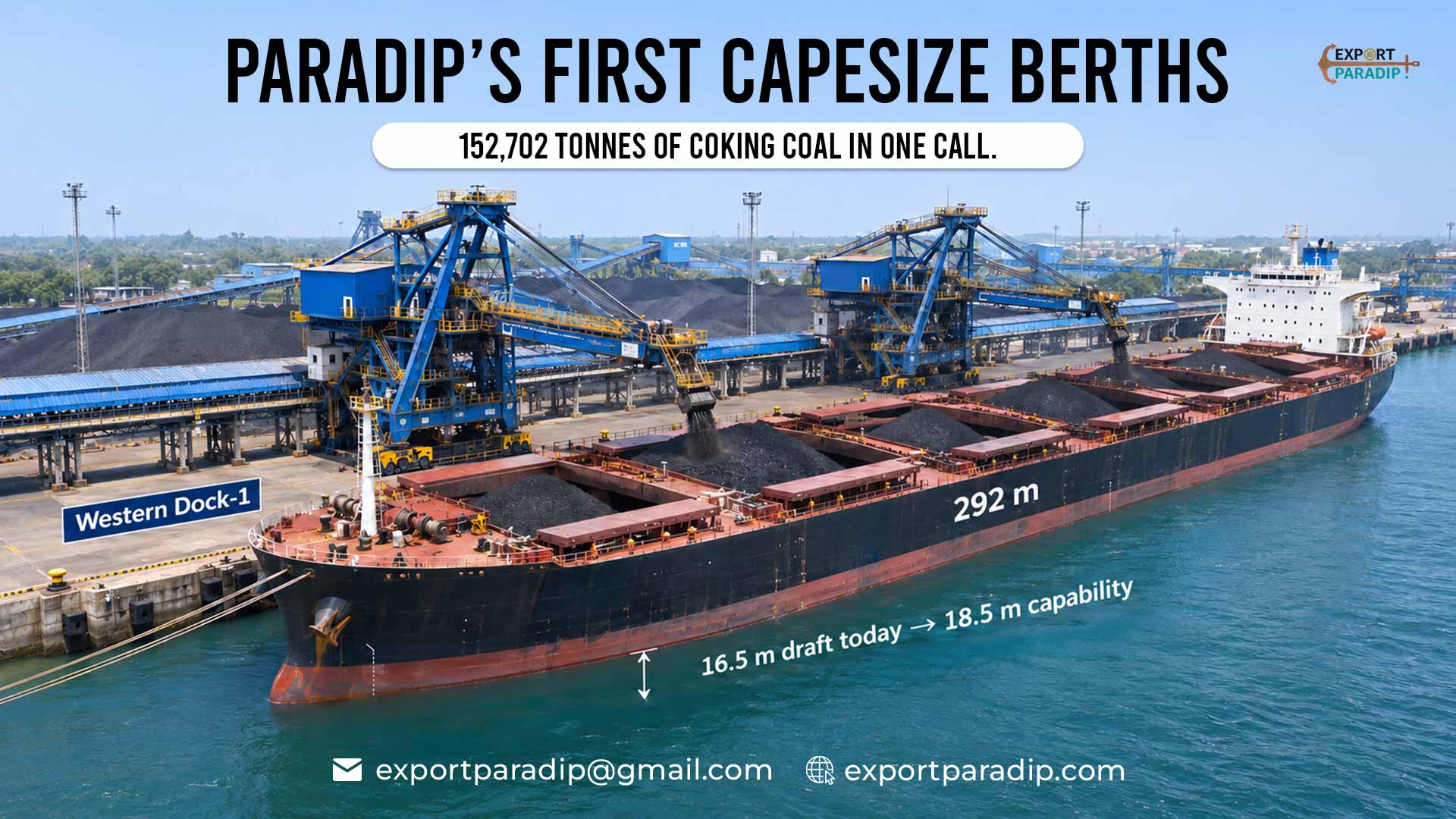
On 6 September, Paradip berthed its first Capesize vessel, MV Mineral Kwangyang, at Western Dock-1. The ship is 292 metres long and 45 metres wide. It arrived on 5 September with coking coal from Hay Point, Australia, and berthed at 6 am the next day.
Note the draft: 16.5 metres, below the 18.5-metre capability. It proves the berth and operations work for Capesize ships. The port's own depth target is the next step.
Where Buyers and Exporters Can Benefit
Deep draft matters most for bulk cargo. If you buy or ship coal, iron ore or other minerals, larger vessels can mean bigger consolidated lots and better long-haul economics to East Asian markets. Explore our Minerals & Ores and Metallurgical Products ranges for cargo that suits bulk shipping.
Volumes are also rising. Paradip handled a record 156.45 MMT in FY 2025–26, and the port now targets more than 170 MMT in FY 2026–27. Concession agreements worth ₹1,580.36 crore aim at 100 per cent berth mechanisation by 2030, from about 80 per cent today.
Reality Check: What to Confirm Before You Book
A port's headline depth is not the same as the draft your ship can load on a given day. Loadable draft depends on the berth, tide, vessel and cargo. Before you commit to a Capesize parcel:
-
Ask your shipping agent for the berth-specific draft limit.
-
Check upcoming arrivals on the Vessel Line-Up Schedule and live positions on the Vessel Map.
-
Estimate voyage time with the Port Distance & Sailing Days tool.
Conclusion
The 18.5-metre deep draft gives Paradip a real shot at larger vessels, lower per-tonne costs and bigger bulk parcels. The first Capesize call shows the berth works. What remains is steady fully laden operations over the coming months. Plan with live data and berth-specific confirmation, not headline numbers alone.
Ready to plan a bulk shipment? Contact the Export Paradip team.
FAQ's
What is the Paradip Port deep draft?
It is the 18.5-metre deep-draft capability created by a ₹352 crore capital dredging project, designed to let fully laden Capesize vessels enter the inner harbour.
Can Paradip handle fully laden Capesize vessels now?
The port says its capability allows it. The first Capesize call, on 6 September 2026, was at a 16.5-metre draft, so confirm the berth-specific limit with your agent.
What is a Capesize vessel?
It is one of the largest classes of dry bulk carrier, used for cargo such as coal and iron ore.
Will deep draft lower my freight cost?
It can reduce cost per tonne by carrying more cargo per voyage, but savings are not guaranteed and depend on the freight market.
How do I check vessel arrivals at Paradip?
Use the Vessel Line-Up Schedule for upcoming berthing windows and the Vessel Map for live positions.