A Bigger Port, New Possibilities for Exporters Paradip Port is preparing for a bigger role in India's maritime trade.
With new infrastructure projects, deeper-draft capabilities and plans for more mechanised cargo handling, the port is moving towards a more efficient shipping environment.
For exporters operating across Odisha, Jharkhand, Chhattisgarh and neighbouring industrial regions, these developments are worth watching. Better port infrastructure can create opportunities for larger shipments, improved cargo movement and more reliable logistics planning. But expansion doesn't automatically mean faster clearance or lower shipping costs. Understanding what is changing and what is still under development can help exporters make smarter decisions.
What's Changing at Paradip Port in 2026?
Several important developments have brought Paradip Port into focus this year. In August 2026, the Ministry of Ports, Shipping and Waterways announced the inauguration of seven infrastructure projects worth ₹427.80 crore, alongside the port's 18.5-metre deep-draft capability.
The announcement also highlighted concession agreements worth approximately ₹1,580.36 crore for three mechanisation projects. Meanwhile, Paradip Port Authority reported handling a record 156.45 million metric tonnes of cargo during FY 2025–26.
The port is now targeting more than 170 million metric tonnes in FY 2026–27. These figures reflect growing ambitions for India's eastern maritime gateway.
Official reference: Paradip Port Authority
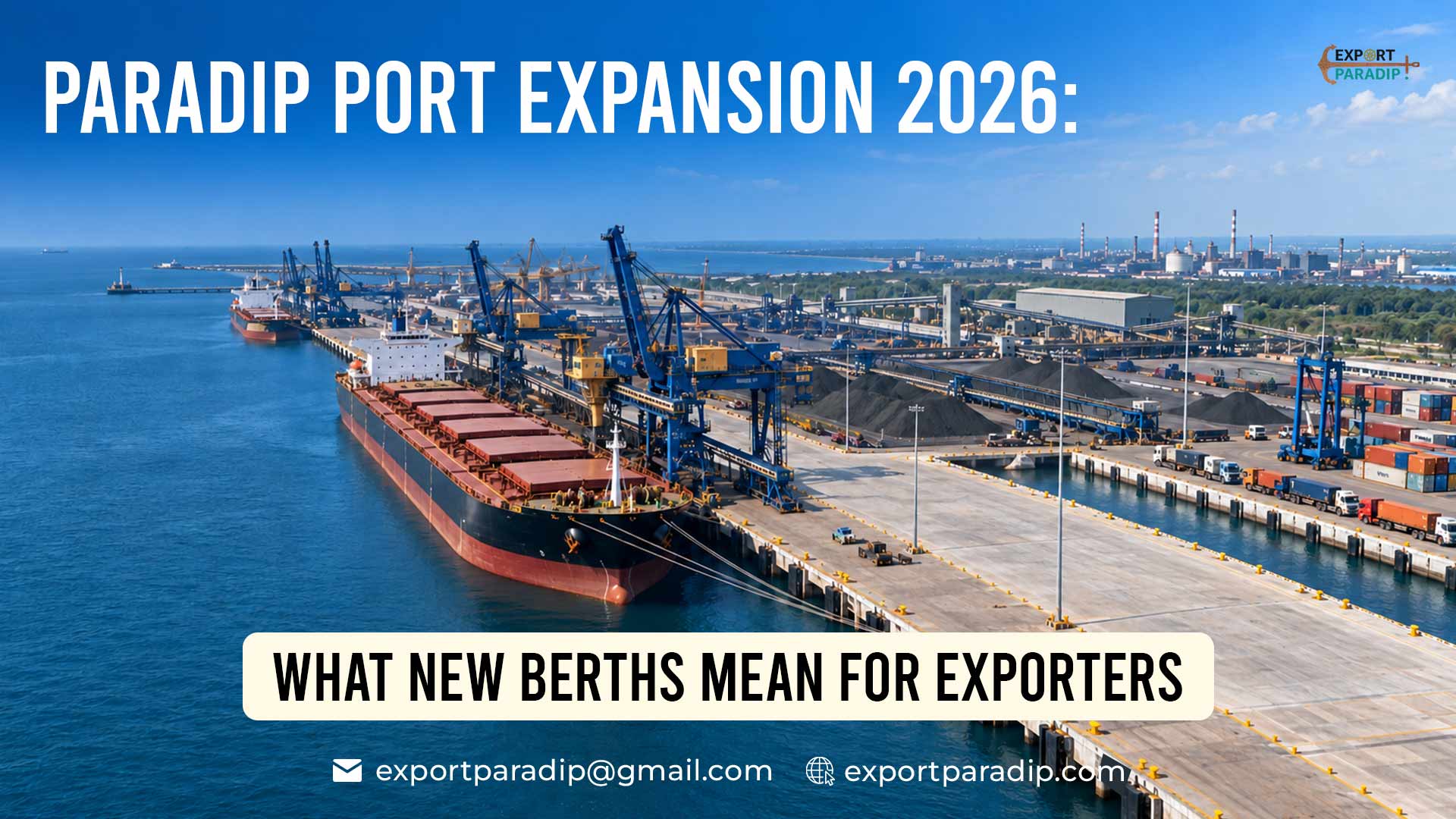
Why New Berths Matter for Export Shipping
A berth is the designated location where a vessel docks for cargo loading or unloading.
When a port increases usable berth capacity, it may be able to accommodate more vessels or handle different cargo requirements.
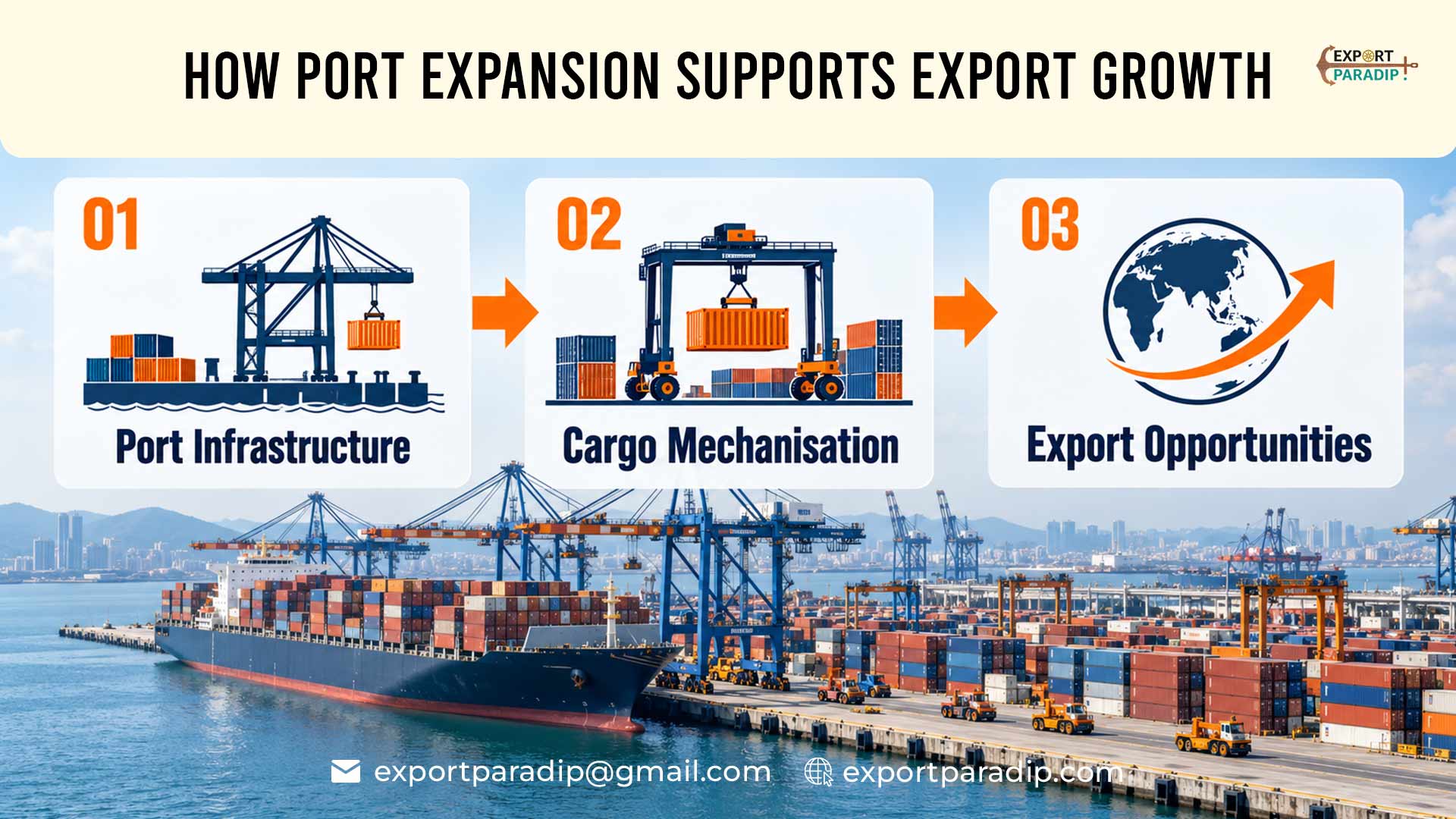
For exporters, improvements could eventually mean:
-
More cargo-handling opportunities.
-
Better accommodation for larger vessels.
-
Greater flexibility in planning bulk shipments.
-
Reduced pressure on existing infrastructure.
-
Potential improvements in vessel turnaround.
However, actual benefits depend on when projects become operational, cargo-handling equipment, berth availability and shipping demand. Exporters should continue checking current schedules rather than assuming additional capacity is immediately available.
How Deeper Draft Can Support Larger Vessels
One important development is Paradip's reported 18.5-metre deep-draft capability. A deeper navigational channel or berth can help accommodate vessels requiring greater water depth, subject to operational restrictions and safety approvals.
For businesses exporting bulk commodities such as iron ore, coal-related products or industrial materials, larger vessel options may offer commercial advantages.
Shipping more cargo in a single voyage can potentially improve freight efficiency, depending on vessel utilisation, charter rates and destination requirements.
But every shipment still needs proper planning.
Use Export Paradip's Vessel Map to review vessel positions and the Vessel Line-Up Schedule to support shipping coordination.
Port Mechanisation: What Could Improve?
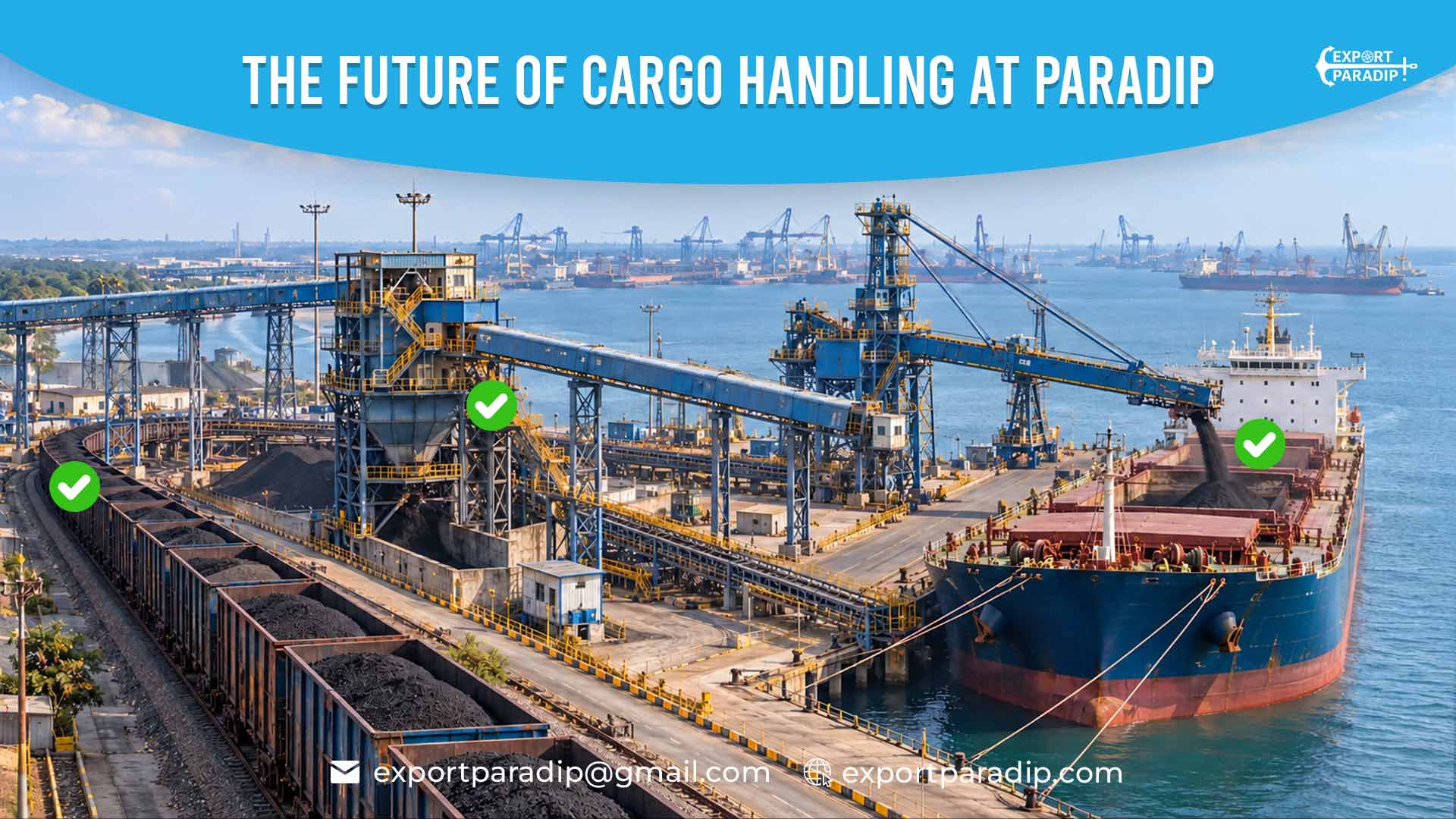
Mechanisation is another major focus of Paradip's expansion plans. Traditional cargo operations may rely heavily on manual coordination and multiple handling stages. Modern mechanised systems can support more consistent movement through specialised equipment, conveyors and automated controls.
Potential advantages include:
Faster cargo handling: Efficient equipment may reduce loading and unloading time.
Improved operational consistency: Standardised processes can make cargo movement easier to coordinate.
Reduced cargo handling losses: Suitable enclosed or controlled systems may limit spillage and material exposure.
Better planning visibility: Digital monitoring can support operational decisions.
These improvements are particularly relevant to high-volume bulk cargo.
Still, exporters should check which facilities are operational and whether the improvements apply to their specific cargo type.
What Does the Expansion Mean for Odisha Exporters?
Paradip serves an industrial hinterland with significant mineral, metallurgical and agricultural activity. Future improvements in port capacity could support businesses moving high-volume goods towards overseas markets.
However, expansion may also bring temporary operational challenges. Construction activity, changing traffic patterns and new cargo-handling arrangements can require closer coordination among transporters, port operators and exporters.
Businesses should monitor updates about berth commissioning, road connectivity, rail movement and terminal procedures. The goal is to benefit from new infrastructure without overlooking everyday shipping requirements.
How Exporters Should Prepare for Future Port Growth
Exporters don't need to wait for every infrastructure project to finish before improving their logistics planning. Start with five practical actions: 1. Review shipping requirements. Understand the cargo volumes, vessel types and handling facilities suitable for your goods.
2. Check current vessel schedules. Use available tracking tools and confirm loading arrangements with your shipping partners.
3. Prepare documents early. The Export Documentation Checklist can help organise required paperwork.
4. Coordinate transport capacity. Plan road or rail movement around confirmed cargo-handling windows.
5. Review overall shipping costs. Compare handling expenses, freight rates, storage costs and possible delays before changing shipment plans.
 Good export decisions depend on the complete logistics chain, not just the size of the port.
Conclusion: Paradip's Growth Creates Opportunities Worth Planning For
Paradip Port's 2026 infrastructure developments represent an important step towards greater cargo-handling capacity and modernisation. For exporters, new berths, deeper draft and mechanised operations could support future shipping opportunities.
But practical benefits depend on project completion, operational conditions and individual shipment requirements.
Stay informed about port developments, confirm vessel arrangements and prepare cargo movement carefully. Explore Export Paradip's shipping tools or contact us for export planning information.
FAQ's
What are the major Paradip Port developments in 2026?
Developments include infrastructure investments, new mechanisation agreements, deeper-draft capability and ongoing projects intended to increase port capacity.
How will new berths benefit exporters?
Additional operational berths may improve cargo-handling availability and shipping flexibility. Benefits depend on completion, operational readiness and vessel demand.
What does the 18.5-metre draft capability mean?
It indicates improved water-depth capability for suitable vessels, subject to navigational, berth-specific and safety restrictions.
Will Paradip Port expansion reduce shipping costs?
It may improve operational efficiency, but lower costs are not guaranteed. Freight rates, terminal tariffs and transport expenses still affect shipment costs.
How can exporters track Paradip vessel movements?
Exporters can use the Vessel Map and Vessel Line-Up Schedule, then confirm operational information with the relevant vessel agent or port operator.