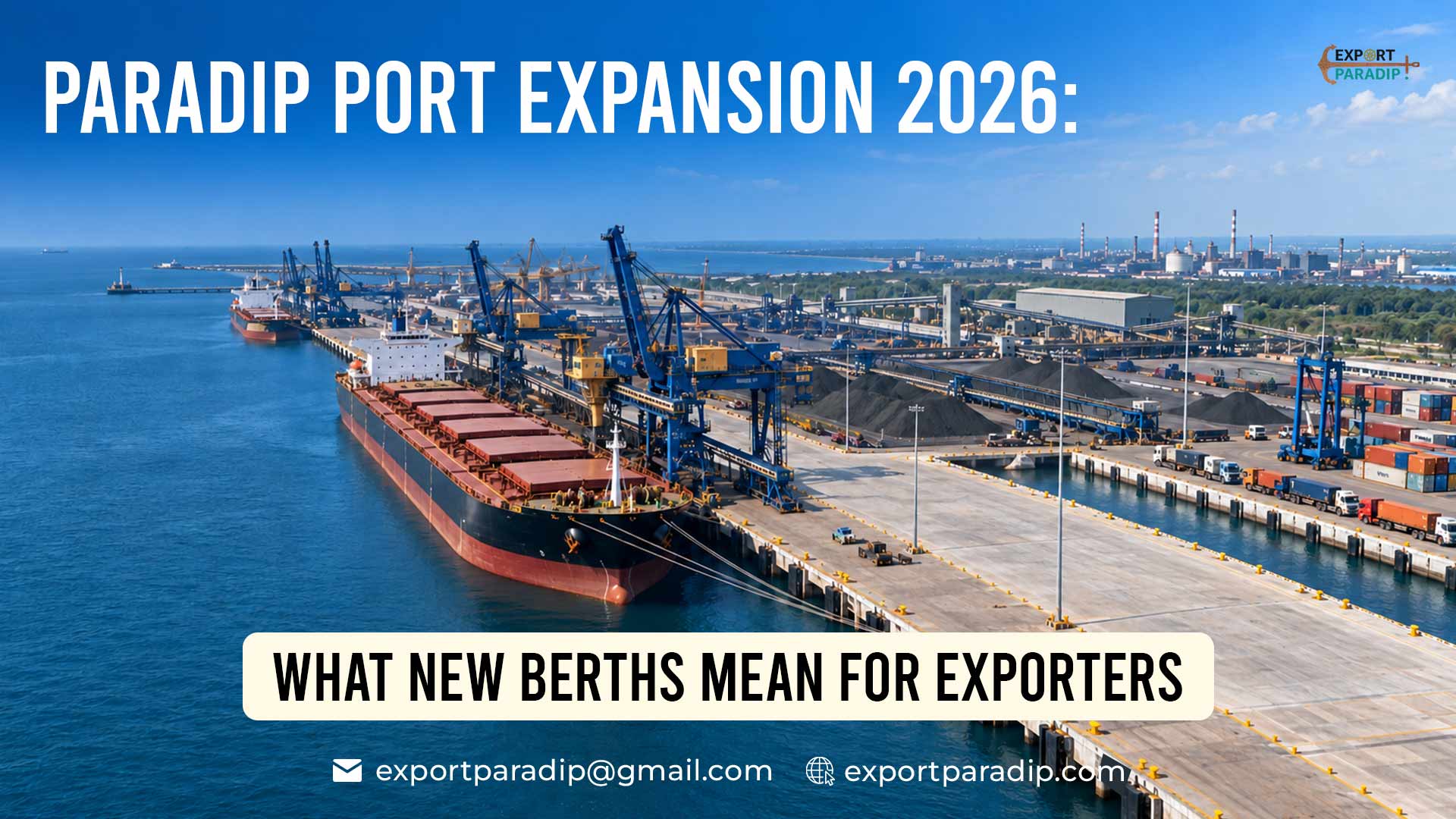
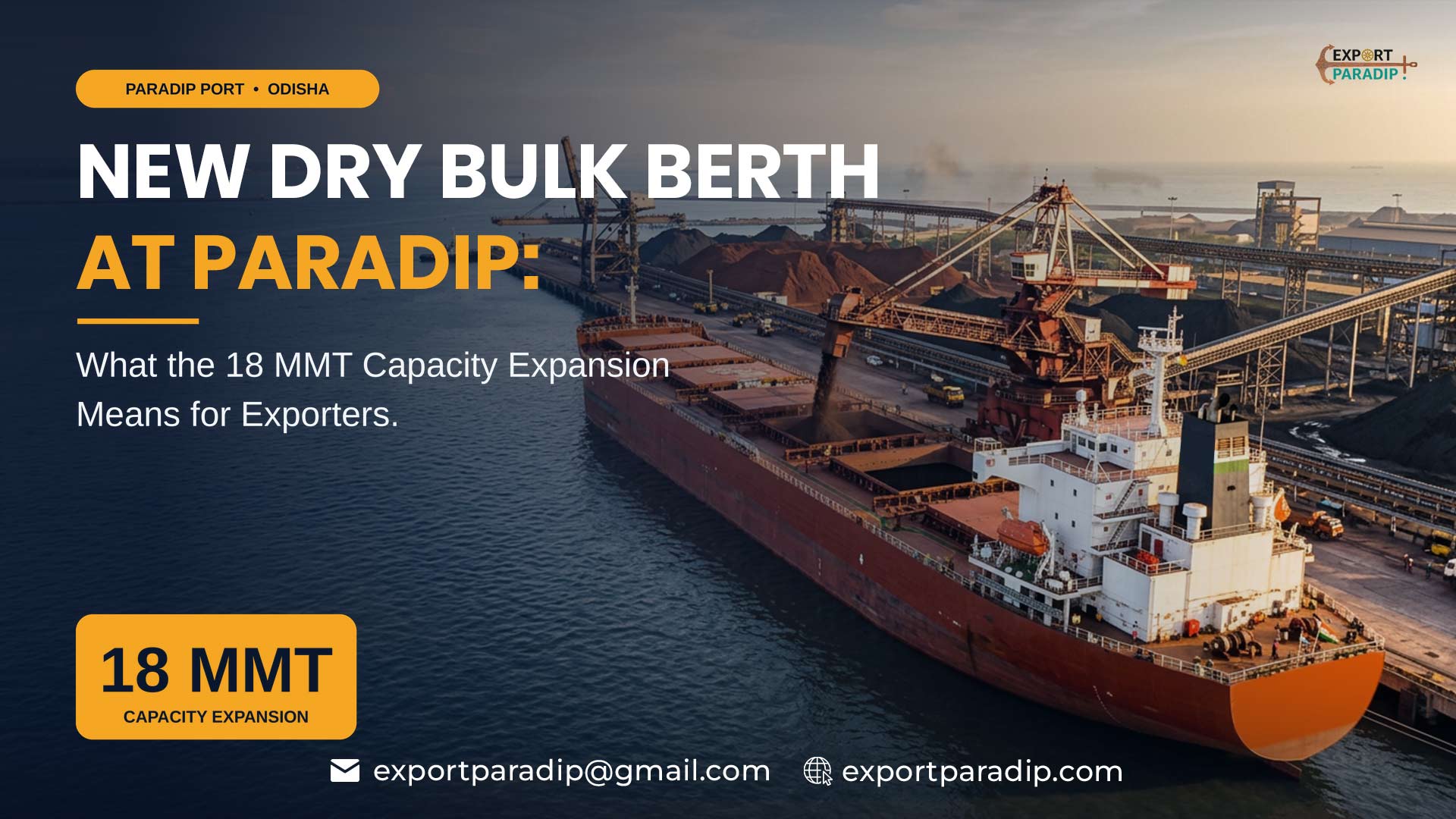
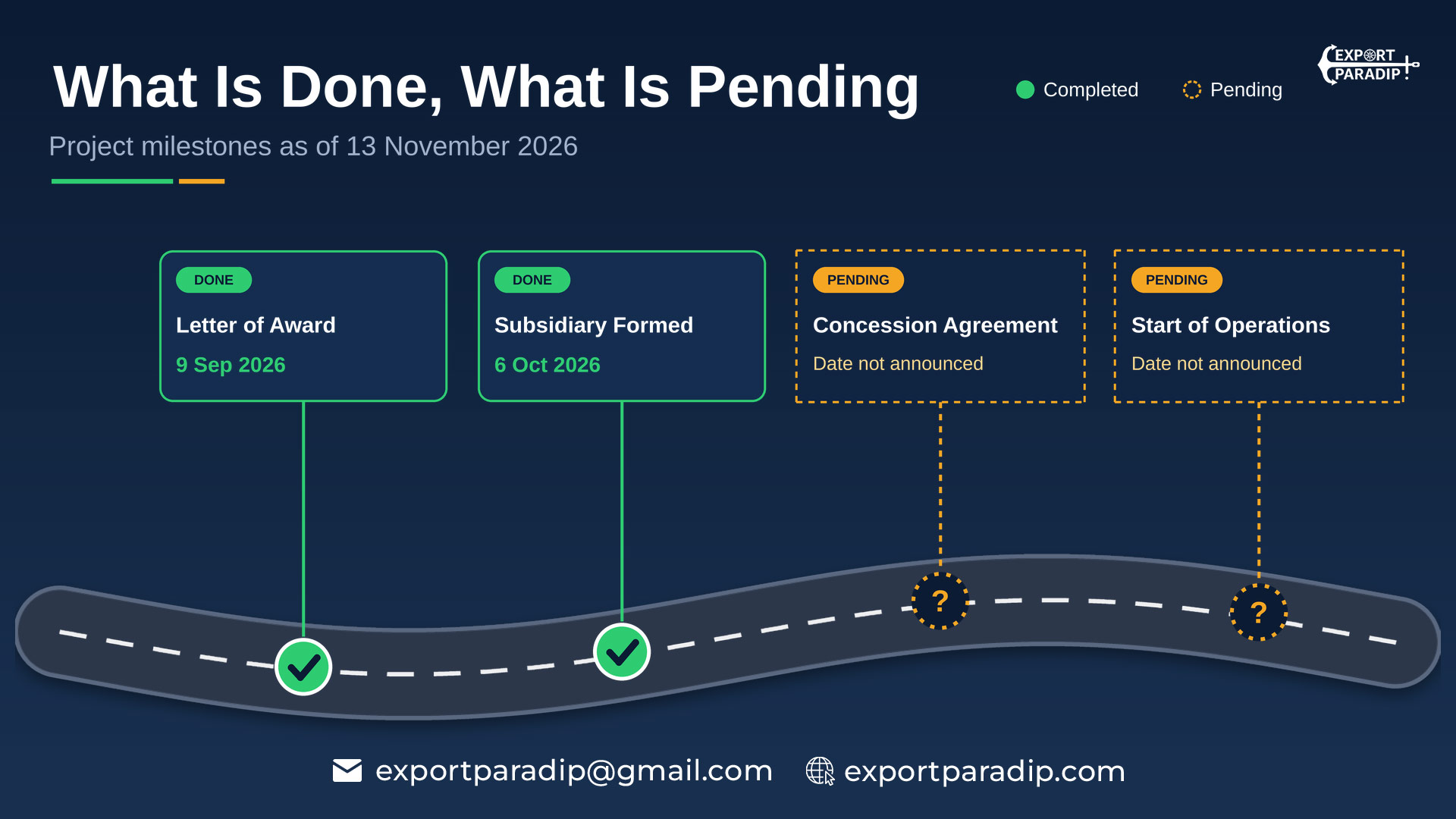
 Paradip's dry bulk capacity is about to grow. On 9 September 2026, Adani Ports and SEZ (APSEZ) announced it had won the bid, and received a Letter of Award, to develop and operate two dry bulk berths at Paradip. The berths are CQ-I and CQ-II, and together they add about 18 million metric tonnes (MMT) of annual capacity.
For exporters and buyers of coal, limestone and other bulk cargo, the Paradip Port dry bulk berth project matters because berth capacity decides how fast cargo moves. More capacity can mean shorter waits for vessels, and that can mean lower demurrage risk for your shipment. This guide covers what has been announced, what has not, how a mechanised bulk berth works, and how to prepare your own shipping plan.
What Has Been Announced
The facts, from the company and press reports:
-
Berths: CQ-I and CQ-II, two dry bulk berths at Paradip Port, Odisha.
-
Capacity: about 18 MMT a year of new handling capacity.
-
Term: 30 years under a public-private partnership (PPP).
-
Cargo: coal, limestone and other dry bulk commodities.
Planned features: mechanised cargo handling, deep-draft berth infrastructure and large-scale storage. On 6 October 2026, APSEZ incorporated a wholly owned subsidiary, Paradip Mahanadi Terminal Limited, to run the project. The filing noted it had not yet begun operations.
Why 18 MMT of Capacity Matters
Paradip is already busy. It handled 150.41 million tonnes in FY 2024–25 and a record 156.45 MMT in FY 2025–26. When a port grows this fast, berths become the bottleneck. Vessels that arrive before a berth is free wait at anchor, and every waiting day adds cost for the shipowner, which usually flows back to the cargo owner through demurrage or higher freight. Adding berth capacity is the most direct way to ease that pressure.
One caution: capacity is not throughput. 18 MMT is what the berths are designed to handle, not what they will handle. Actual volumes depend on cargo contracts, rail availability and market demand.
How a Mechanised Dry Bulk Berth Works
"Mechanised" is the word that matters most in the announcement. On a mechanised berth, ship unloaders and conveyor systems move cargo between the vessel and the storage yard, instead of relying on cranes, grabs and trucks working in short bursts.
In practice this tends to bring three benefits. Cargo moves at a steadier, faster rate, so a vessel spends less time alongside. Dust and spillage are easier to control because cargo travels on enclosed or managed conveyor lines. And large storage areas let the operator stage cargo before a ship arrives, so loading can start the moment the vessel is berthed.
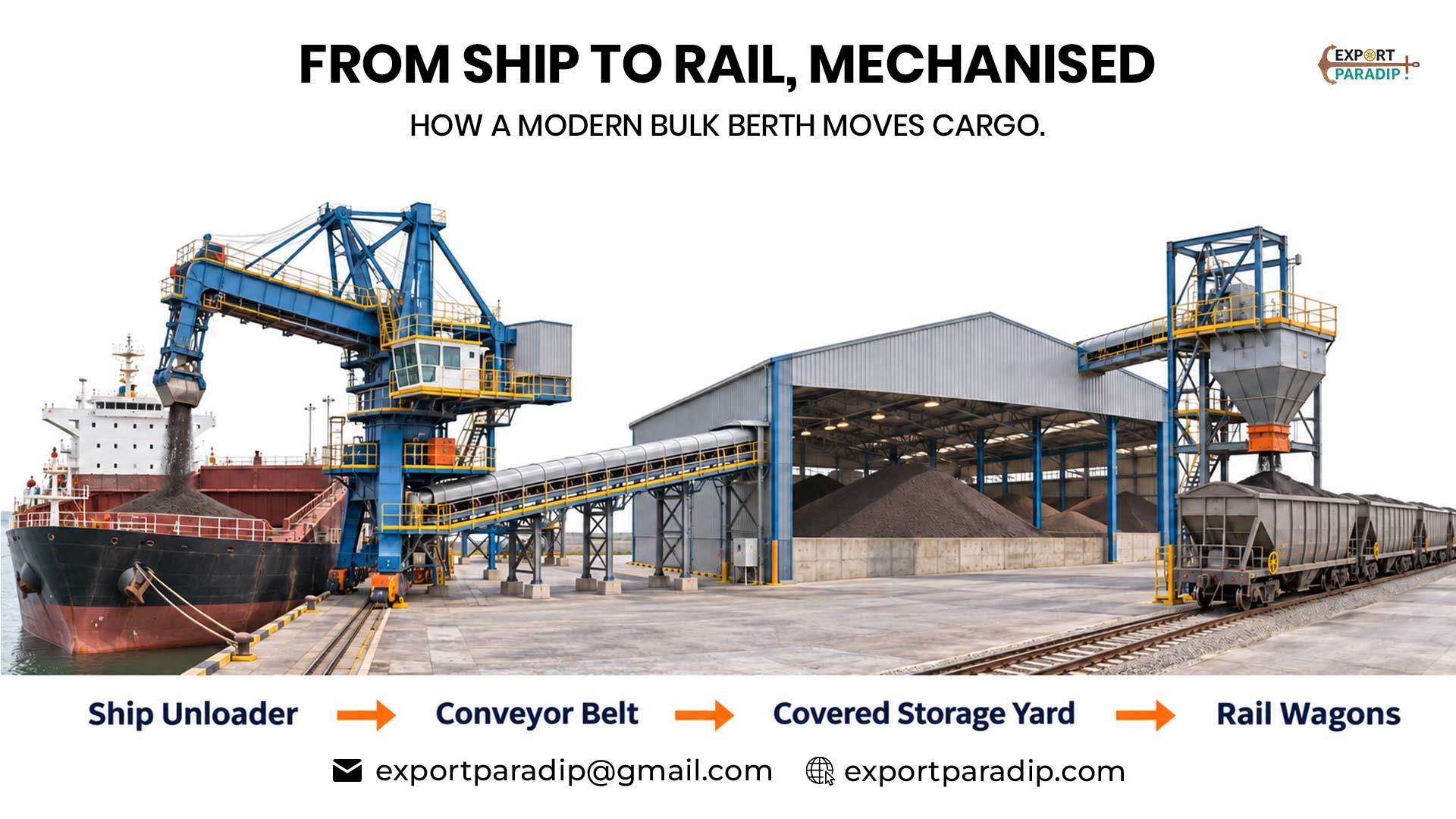
These benefits depend on how the terminal is built and run, and the specifications for CQ-I and CQ-II have not been published. Treat them as the typical advantages of mechanisation, not promises for this project.
It Fits a Wider Upgrade
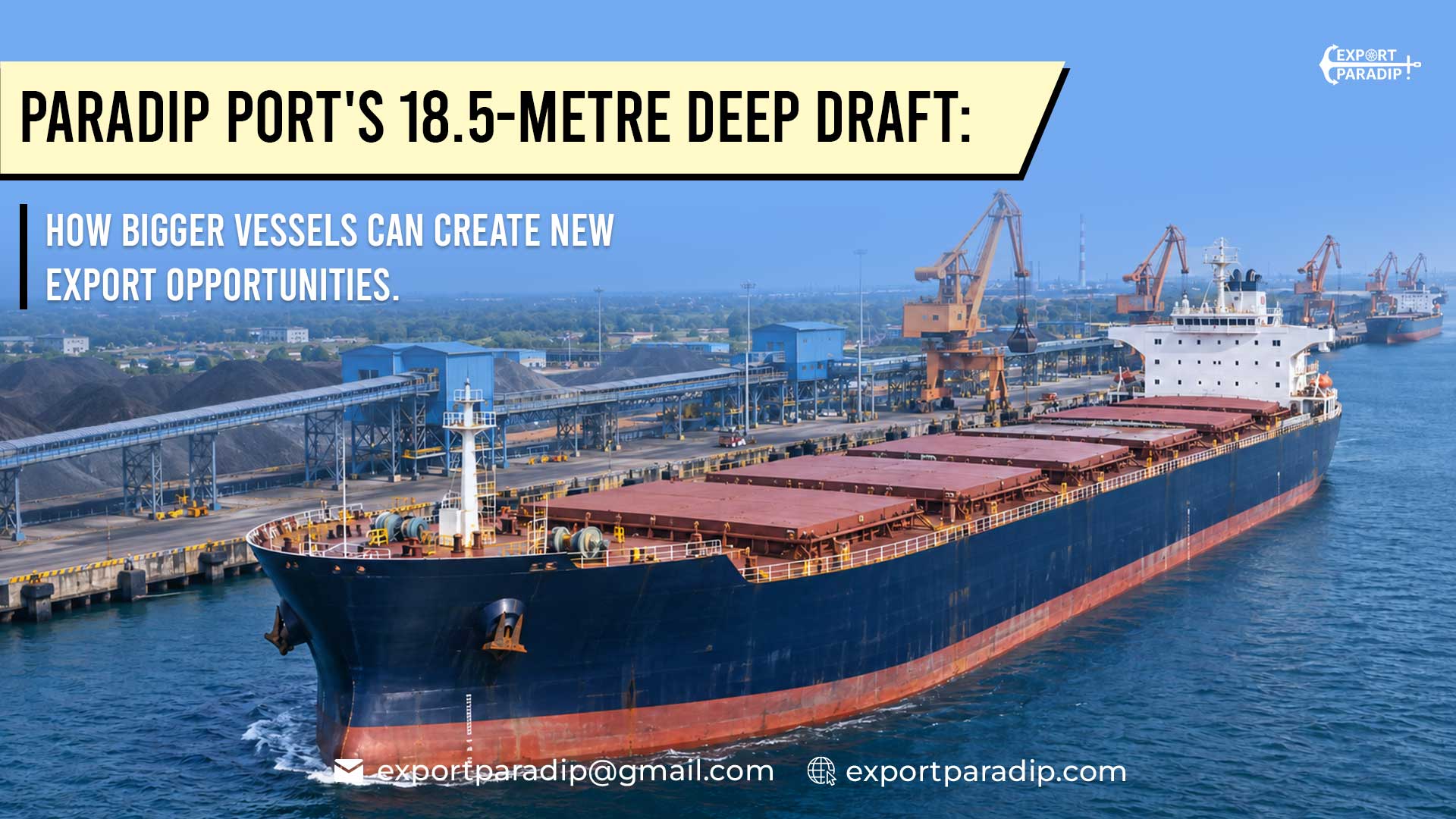
This project is one part of a larger push. In 2026 the Port Authority also signed concession agreements worth about ₹1,580 crore aimed at 100 per cent berth mechanisation by 2030. Deeper water has arrived too: read our guide to the 18.5-metre deep draft that lets larger vessels call. Deeper channels, bigger ships and more mechanised berths all point the same way: more bulk volume through Paradip.
What It Could Mean for Exporters
If you ship dry bulk, three effects are worth watching:
1.Berthing waits. More capacity could ease queues, though results depend on traffic.
2.Handling speed. Mechanised systems can speed loading and cut time alongside.
3.Storage. Large storage can help you stage cargo before a vessel arrives.
Exporters of coal, limestone and similar bulk commodities are the direct audience. Browse our Minerals & Ores and Metallurgical Products ranges to see cargo suited to bulk shipping.
Reality Check: What Is Not Yet Known
Be careful with timelines. As of 13 November 2026, public reports do not give a commissioning date, an investment figure or the specific berth depths. The reports we reviewed do not confirm that the concession agreement has been signed.
Projects like this take time and may ramp up in stages. Do not build a shipping plan around the new capacity until operations start and the operator publishes tariffs and handling terms.
How to Prepare Now
You do not have to wait for the berths to open to plan better: Check arrivals on the Vessel Line-Up Schedule before fixing a dispatch date. Follow live ship positions on the Vessel Map. Estimate voyage time with the Port Distance & Sailing Days tool. Ask your agent which berth your cargo is likely to use and what storage terms apply. Follow official updates from the Port Authority and APSEZ.
Conclusion
The Paradip Port dry bulk berth project adds a clear signal: 18 MMT of planned capacity, a 30-year private operator and mechanised handling. The benefits to exporters are possible, not yet proven.
Watch for the concession agreement and start date, and keep planning with live data. Planning a bulk shipment? Contact the Export Paradip team.
FAQ's
What is the new dry bulk berth at Paradip Port?
It is two berths, CQ-I and CQ-II, that APSEZ won the bid to develop and operate, adding about 18 MMT of annual capacity.
Who will operate the berths?
APSEZ, through its wholly owned subsidiary Paradip Mahanadi Terminal Limited, under a 30-year PPP concession.
What cargo will the berths handle?
Coal, limestone and other dry bulk commodities.
When will the new berths open?
No commissioning date has been published. Check official updates before planning shipments.
Will it lower my shipping costs?
It could reduce waiting time and handling delays, but costs also depend on freight rates and cargo volumes.