
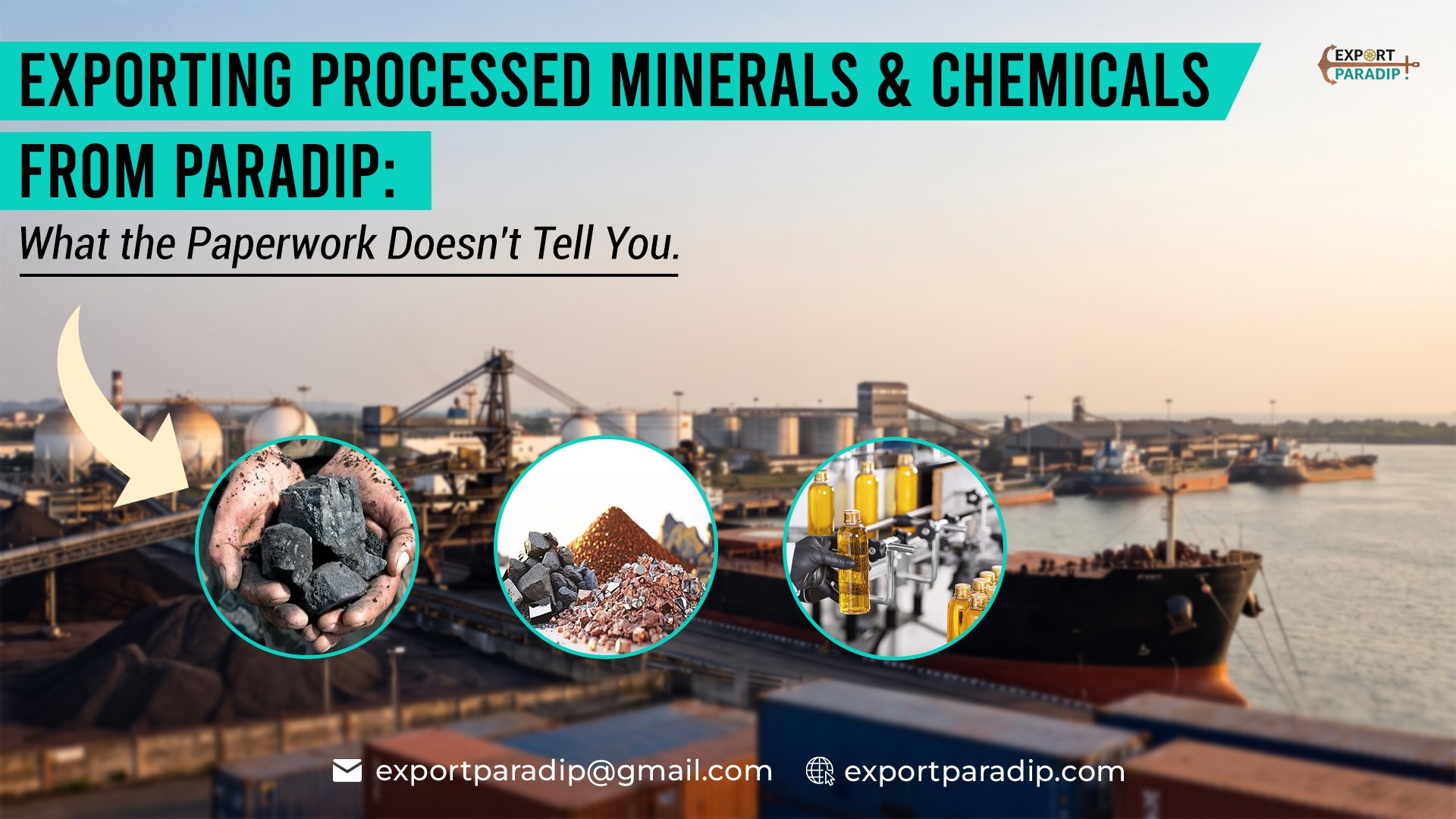
Raw ore & finished chemicals move through very different rulebooks even when they're loaded onto the same vessel. For exporters shipping processed minerals & chemicals through Paradip Port, getting classification, packaging & safety documentation right isn't just about smooth customs clearance. Get it wrong & you're looking at rejected cargo, stalled shipments, or a hold that fails inspection before it ever leaves port.
🏷️ Classification: Why "Processed" Changes Everything
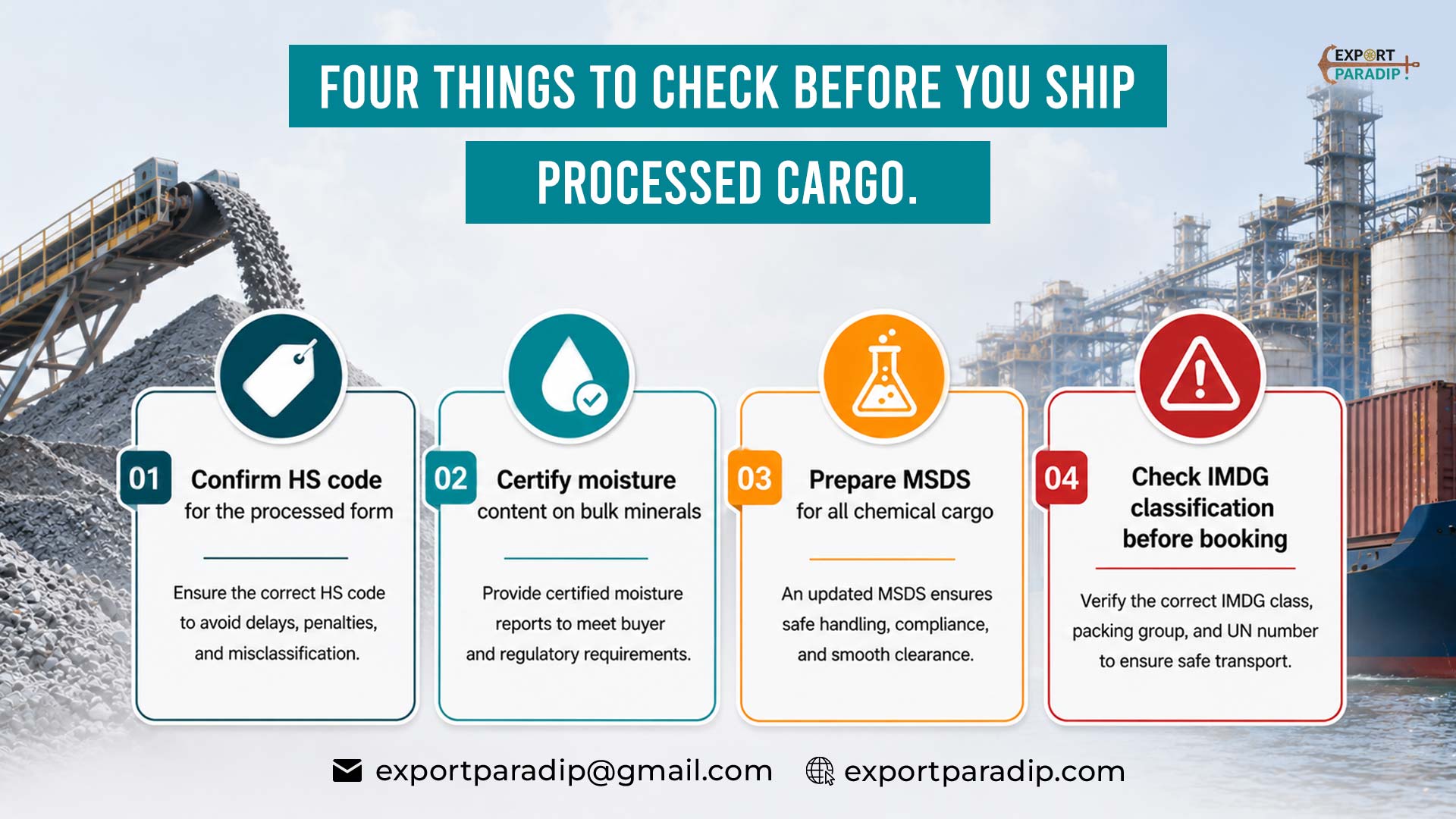
The moment a raw mineral undergoes processing calcining, refining, alloying its HS classification usually shifts & that shift affects duty rates, export incentive eligibility & the compliance requirements attached to your shipment.
-
Calcined Bauxite falls under HS Chapter 26 (Ores, Slag & Ash), specifically under Heading 2606 but the calcined form is treated distinctly from natural bauxite for classification purposes, since processing changes both its use case & its trade code.
-
Ferro Alloys a major East Coast export category carry their own HS codes reflecting their status as processed metallurgical products rather than raw ore.
-
Industrial Chemicals typically fall under entirely different chapters (28, 29 or 38, depending on composition), governed by a separate set of documentation & safety requirements than mineral-based cargo.
Misclassifying a processed mineral as its raw equivalent or vice versa is one of the most common reasons shipments get flagged at customs. If you're unsure which heading your product falls under, our HS Code Finder lets you check before you file.
💧 Moisture Control: The Detail That Gets Overlooked
For bulk mineral cargo like calcined bauxite, moisture content isn't a minor technical detail it directly affects both cargo quality & shipping safety. Industry practice keeps moisture content below 15% to prevent degradation during transit & cargo shipped outside acceptable moisture ranges risks rejection at the destination port or, in bulk carriers, genuine stability concerns during the voyage.
Packaging matters just as much: bulk mineral cargo is typically moved in woven polypropylene bags, bulk containers, or loose via bulk carrier, with preservation methods focused specifically on minimizing humidity exposure throughout transit.
🧪 Chemicals: A Different Documentation Standard Entirely
If your processed goods extend into industrial chemicals, the documentation bar is significantly higher than for mineral cargo:
-
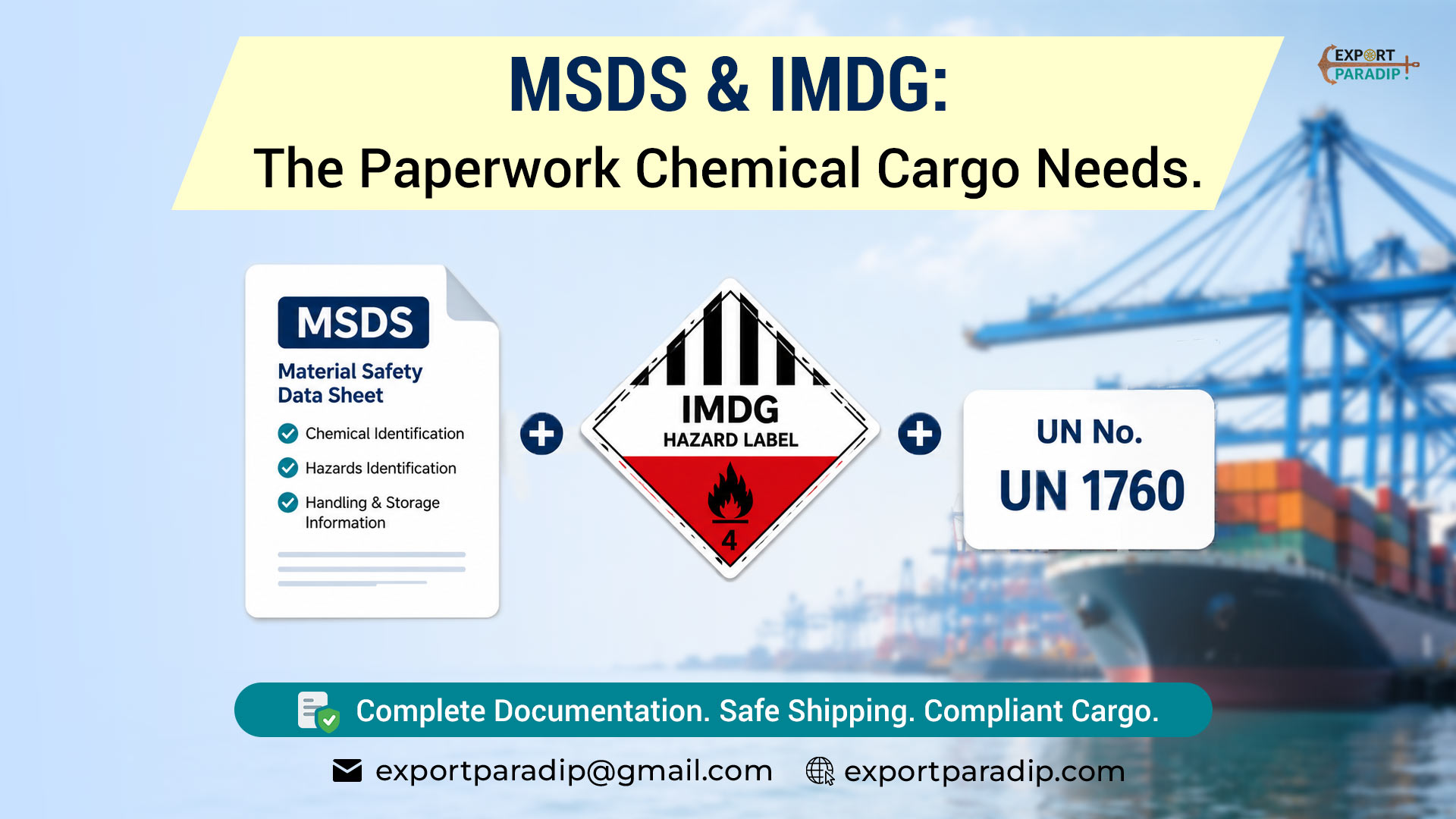
Material Safety Data Sheets (MSDS/SDS): Required for most industrial chemical shipments, detailing composition, handling hazards & emergency response information buyers & port authorities alike will expect this before cargo is accepted.
-
IMDG Code Compliance: If your chemical cargo is classified as dangerous goods under the International Maritime Dangerous Goods Code, packaging, labeling & stowage all follow a separate regulatory framework this isn't optional paperwork, it's what determines whether your cargo can be loaded at all.
-
UN Numbers & Hazard Classifications: Chemical shipments falling under IMDG classification need correct UN numbers & hazard class labeling on both packaging & shipping documents.
💡 Export Paradip's Advantage: Chemical cargo that's misclassified as non-hazardous even unintentionally can result in shipment rejection at the port, not just a compliance flag. Verifying MSDS accuracy & IMDG classification before booking saves far more time than resolving it at berth.
✅ Quality Standards & International Alignment
Both processed minerals & industrial chemicals are increasingly expected to meet internationally recognised quality benchmarks ISO & ASTM specifications for minerals & composition/purity standards for chemicals particularly when shipping to buyers in regulated markets like the EU, US or Japan. Meeting these standards isn't just about passing inspection at origin. It's what allows your buyer to accept the cargo without additional testing or delay on their end, which matters directly for how quickly you get paid.
📦 Documentation Checklist for This Cargo Category
Beyond standard export paperwork, processed minerals & chemicals shipments typically require:
✔ Correct HS classification confirmed against the processed (not raw) form of the product
✔ Certificate of Analysis (CoA) confirming composition & purity against buyer specifications
✔ MSDS/SDS for any chemical cargo, regardless of hazard classification
✔ IMDG documentation & UN numbers if cargo qualifies as dangerous goods
✔ Moisture content certification for bulk mineral cargo like calcined bauxite
Export Paradip helps exporters shipping processed minerals & chemicals through Paradip Port keep classification & documentation consistent from booking through customs clearance. Get in touch to talk through your shipment, or check your product's classification with our HS Code Finder before you file.
FAQ's
Does calcined bauxite have a different HS code than natural bauxite?
Yes. While both fall under HS Chapter 26, calcined bauxite is classified distinctly from natural (uncalcined) bauxite, since processing changes its trade classification & duty treatment.
Why does moisture content matter for bulk mineral exports?
Excess moisture can degrade cargo quality and, in bulk carriers, raise genuine stability concerns during transit. Industry practice keeps moisture content below 15% for cargo like calcined bauxite, with certification often required to confirm this.
Is an MSDS required for all chemical exports?
Most industrial chemical shipments require an MSDS/SDS detailing composition, handling hazards & emergency response information buyers & port authorities generally expect this regardless of whether the cargo is classified as hazardous.
What is IMDG classification & does it apply to my cargo?
The International Maritime Dangerous Goods Code governs packaging, labeling & stowage for chemical cargo classified as dangerous goods. If your chemical falls under this classification, IMDG compliance is mandatory for loading, not optional documentation.
Can Export Paradip help classify my processed mineral or chemical product?
Export Paradip helps exporters confirm HS classification & keep shipment documentation consistent through our HS Code Finder & shipment support. For MSDS preparation & IMDG classification specifics, we'd recommend pairing our guidance with a certified chemical compliance consultant. Contact our team to get started.