Introduction: The Weeks That Test Every Export Plan
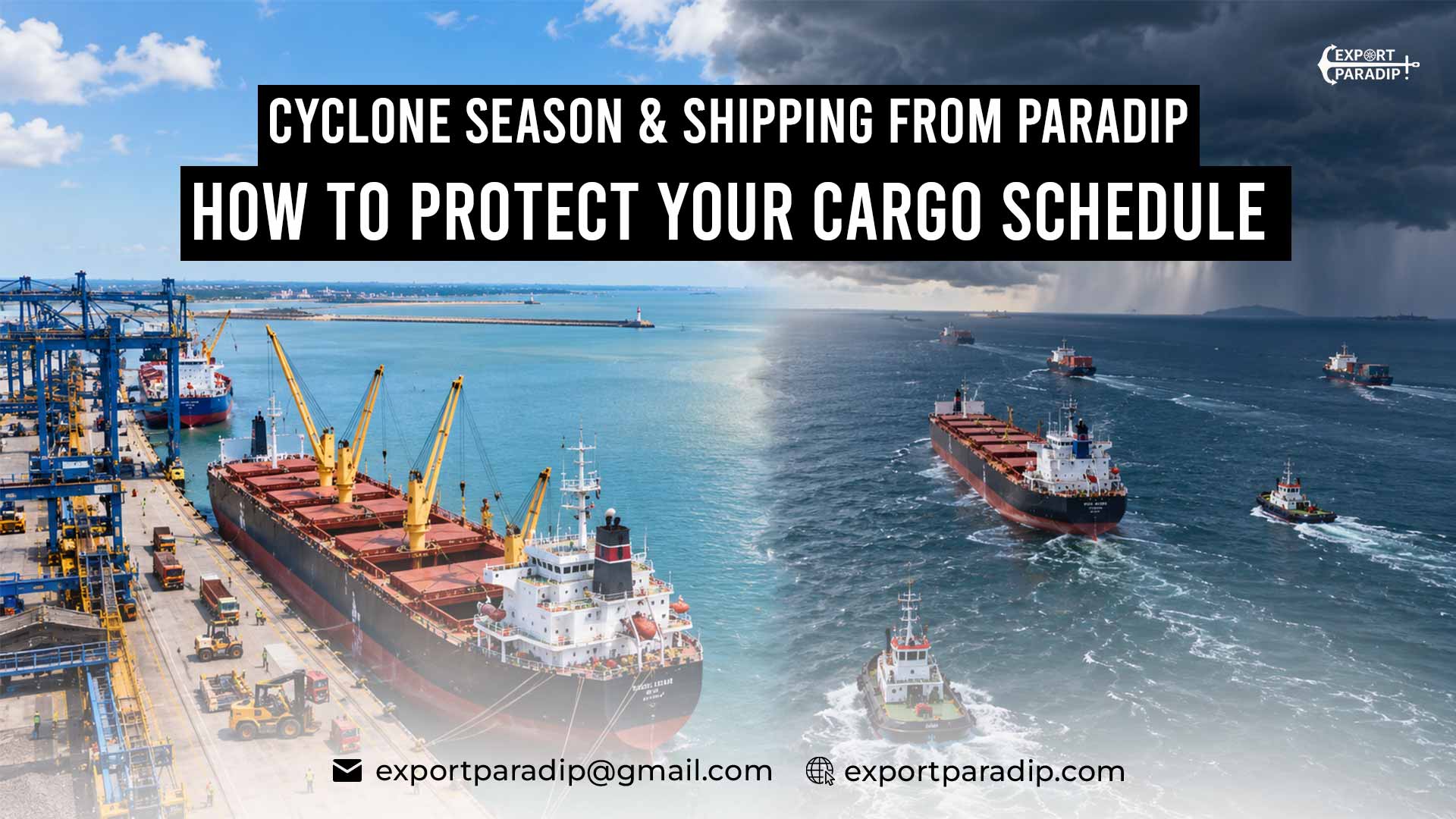
Cyclones in the Bay of Bengal mostly develop in October and November, when warm sea temperatures and low wind shear create ideal conditions. For exporters shipping through Paradip Port, that makes these weeks the highest-risk window for schedule disruption. A cyclone doesn't have to make landfall at Paradip to affect you a warning alone can pause port operations, shift vessels to safer waters and push loading dates back by days.
What Actually Happens at a Port During a Cyclone Warning
When a severe system approaches, ports typically suspend operations and move vessels to safe locations. Cyclone Midhili in 2023 is a clear example on the same bay: port operations were suspended and vessels were shifted ahead of landfall. In October 2024, Cyclone Dana affected Odisha, with Paradip recording 62 mm of rain in a single day and fishing vessels advised to stay in port. For exporters, the cargo isn't the only thing in motion. Berth allocation, vessel line-ups and your own dispatch plan all shift at once.
The Hidden Delay: Roads and Rail
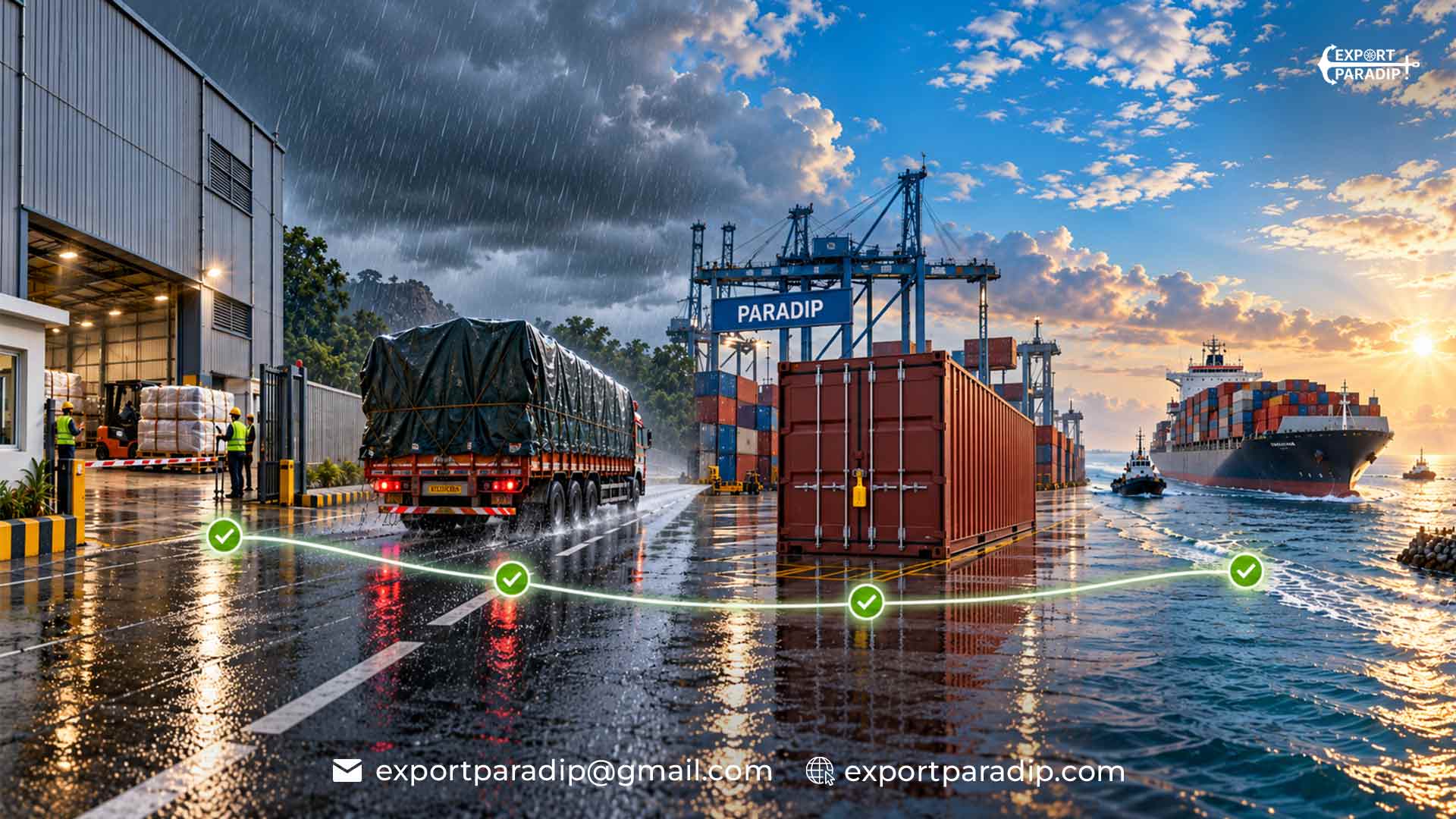
Port suspension is only half the picture. Intense rainfall can cause waterlogging that slows road and rail movement across coastal Odisha, delaying cargo before it ever reaches the gate. Even after a weather system passes, heavy rain can slow vessel turnaround and loading efficiency at ports like Visakhapatnam, Paradip and Dhamra.
If your cargo is already at the port when operations stop, it sits exposed to humidity, flooding and delay. If it's still in transit, trucks and wagons can be stranded.
How to Plan Dispatch Around Cyclone Risk
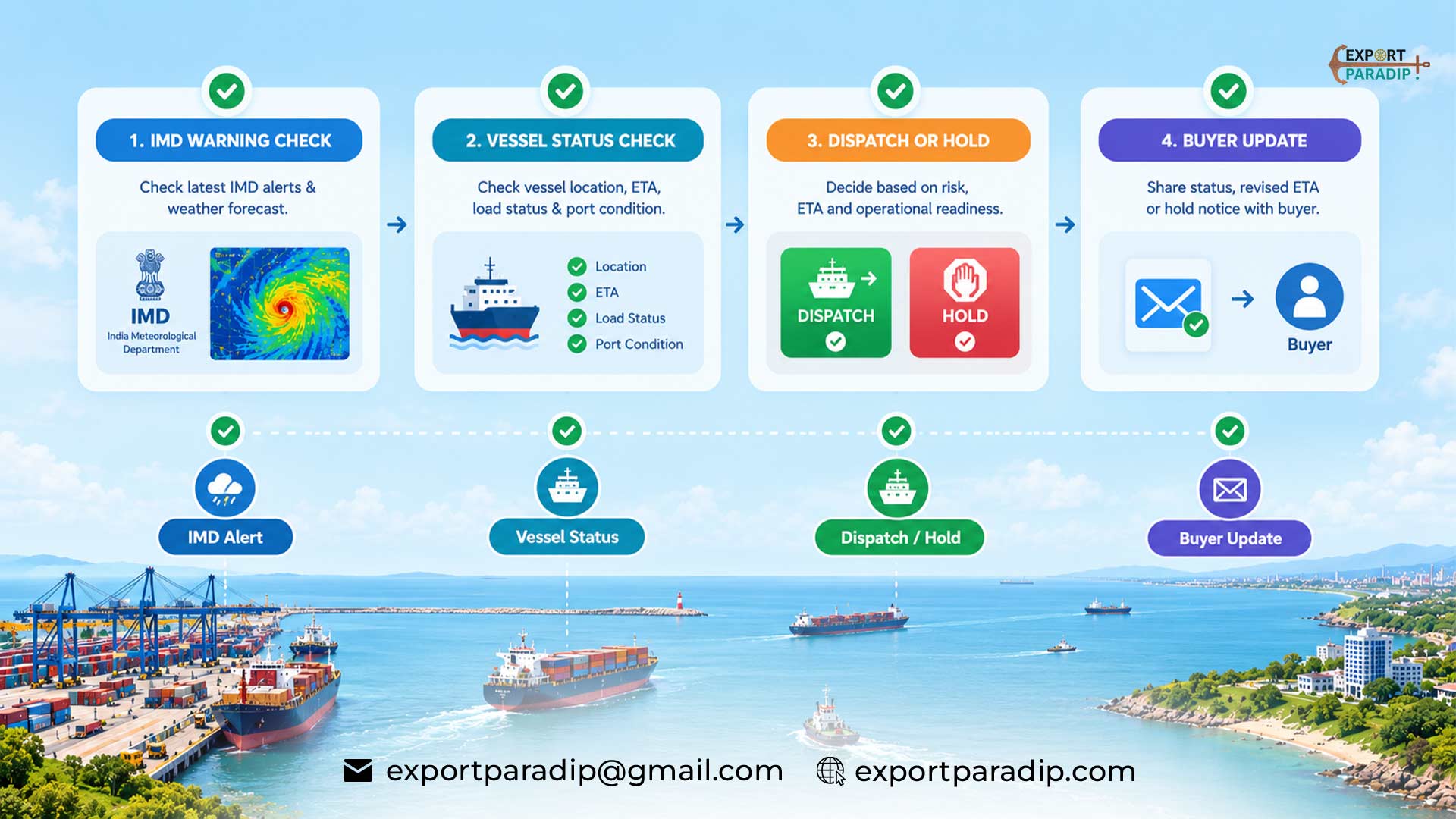
A few habits separate exporters who absorb a weather delay from those who get caught by it:
-
Watch official warnings daily. The India Meteorological Department issues cyclone alerts and track forecasts check them before releasing cargo to the port.
-
Check vessel status, not just your booking. Use the Vessel Map for live positions and the Vessel Line-Up Schedule for upcoming berthing windows.
-
Hold cargo back when a warning is live. Stuffing and dispatching into a suspended port only adds exposure and storage cost.
-
Build a weather buffer into quotes. Use the Port Distance & Sailing Days Calculator and add extra days for October–November shipments.
-
Tell your buyer early. A heads-up before a delay protects the relationship far more than an explanation after it.
Protecting Cargo Value: Insurance and Packaging
Weather delay is a schedule problem; weather damage is a financial one. Confirm your cover before the season peaks our guide to export cargo insurance explains how ICC A, B and C clauses respond to different perils. Moisture-sensitive goods such as minerals, grains and leather also benefit from sealed, humidity-resistant packaging, as covered in our Processed Minerals & Chemicals guide.
Before Your Next October November Shipment
✔ Check IMD cyclone warnings before cargo release
✔ Confirm vessel position and berthing window
✔ Hold dispatch if a port suspension is possible
✔ Add buffer days to buyer delivery quotes
✔ Review insurance cover and cargo packaging
A cyclone can't be scheduled around, but its impact can be planned for. Explore our Export Documentation Checklist to keep paperwork ready for rescheduled shipments, or get in touch if you're planning dispatch this season.
FAQ's
Does a cyclone have to hit Paradip to delay my shipment?
No. A cyclone warning alone can suspend port operations, move vessels to safe locations and shift berth schedules, even if landfall is elsewhere on the coast.
When is cyclone season for Paradip Port?
Bay of Bengal cyclones are most frequent in October and November, with a smaller pre-monsoon peak in April and May.
Should I still dispatch cargo to the port during a cyclone alert?
Generally no. Holding cargo until operations resume avoids exposure, storage charges and stranded transport.
How can I track whether my vessel is affected?
Use the Vessel Map for live position and the Vessel Line-Up Schedule for berthing windows, and cross-check with IMD warnings.
Your question here?
Your answer here.
Does cargo insurance cover weather damage?
It depends on your policy's ICC clause and conditions. Review your cover with your insurer before the season peaks.