Sitting on the eastern coast of India, Paradip Port has quietly grown into something exporters across Odisha, Jharkhand & Chhattisgarh now count on every single shipping cycle. It is not just the deep-water berths or the mechanised handling systems that make this port stand apart, it is the whole picture. The location, the hinterland access, the vessel frequency & the growing container infrastructure together create a genuine edge for businesses moving goods internationally.
The Export Paradip team has spent years helping exporters tap into this infrastructure offering real-time tracking tools, documentation support & direct buyer connections. If you have been wondering whether Paradip Port bulk cargo operations suit your trade, this guide breaks it down clearly.
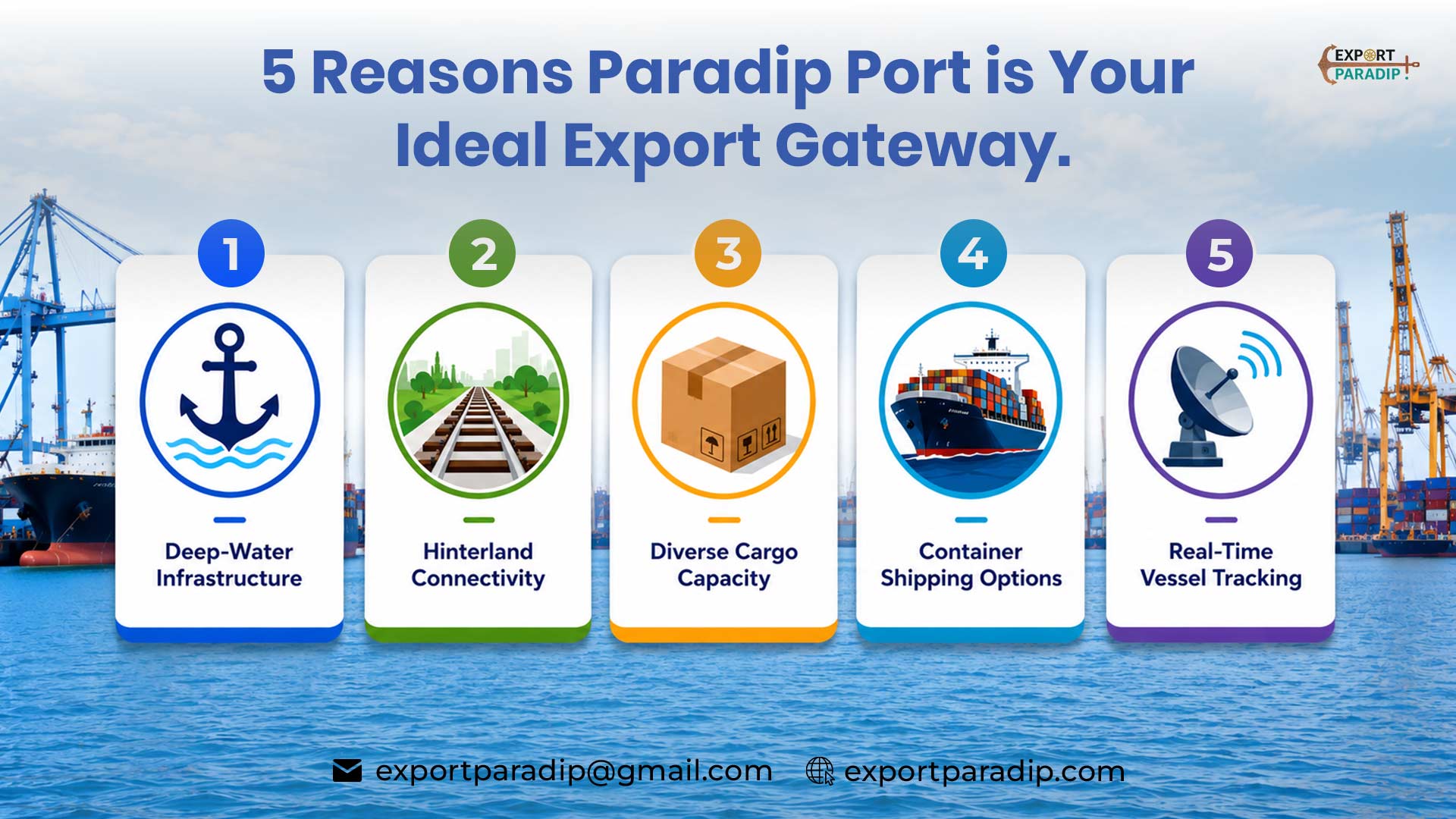
Deep-Water Access That Handles the Big Vessels
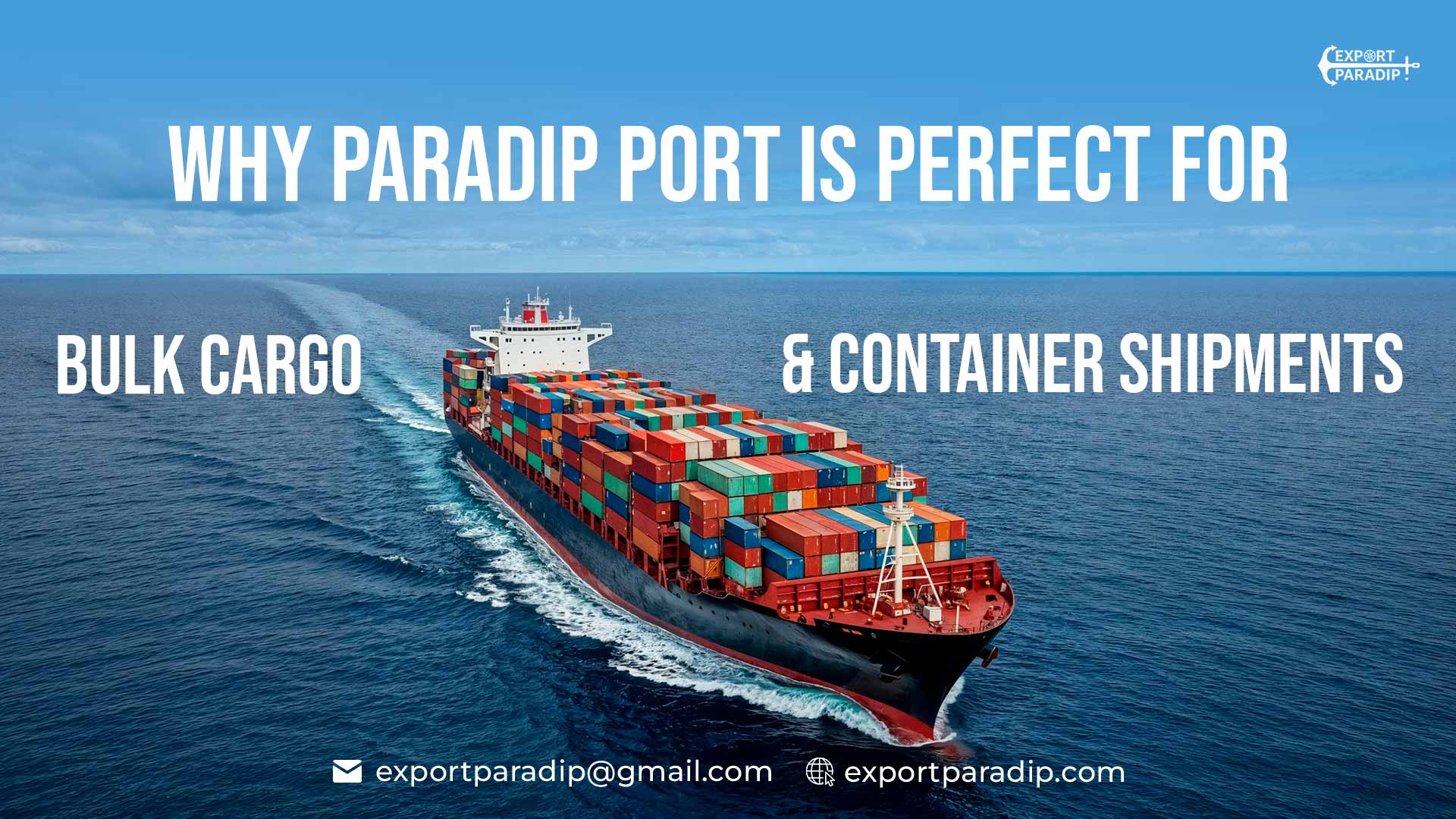
Larger vessels mean lower freight cost per tonne that is a straightforward shipping truth. Paradip Port’s deep-draft capability allows it to berth Panamax & Capesize bulk carriers without the tidal window restrictions that slow things down at shallower ports. For exporters shipping iron ore, coal, fertilisers or steel in large volumes, this directly translates into better freight rates & fewer scheduling complications. Export Paradip helps businesses coordinate vessel bookings with these schedules, reducing idle waiting time at the port.
Location That Cuts Inland Freight Costs Significantly
Getting cargo to the port is just as important as what happens once it gets there. Paradip sits close to the raw material belts of Odisha & Jharkhand which means road & rail distances from mine to berth are considerably shorter compared to western ports. Chromite, manganese, iron ore & other minerals reach Paradip Port faster & at lower inland freight expense. Businesses exporting agricultural commodities from Odisha carry the same advantage. Less time moving cargo inland means lower total export cost and that matters when you are quoting buyers in competitive international markets.
What Paradip Port Bulk Cargo Infrastructure Actually Handles
The port is not a single-commodity terminal. It moves a wide range of goods & has dedicated systems for each. Export Paradip provides sector-specific guidance depending on what you ship:
-
Iron ore & chrome ore: India’s largest iron ore export terminal with mechanised ore handling
-
Coal & fertilisers: dedicated berths with covered storage to maintain cargo quality
-
Steel & metallurgical products: handled through specialised equipment & break-bulk systems
-
Agricultural & agro-based goods: containerised with fumigation & phytosanitary compliance
-
Marine products: cold-chain logistics support for seafood exports to demanding markets
-
Processed minerals & chemicals: bulk liquid & dry cargo facilities available
Container Shipping Is Growing Here Too
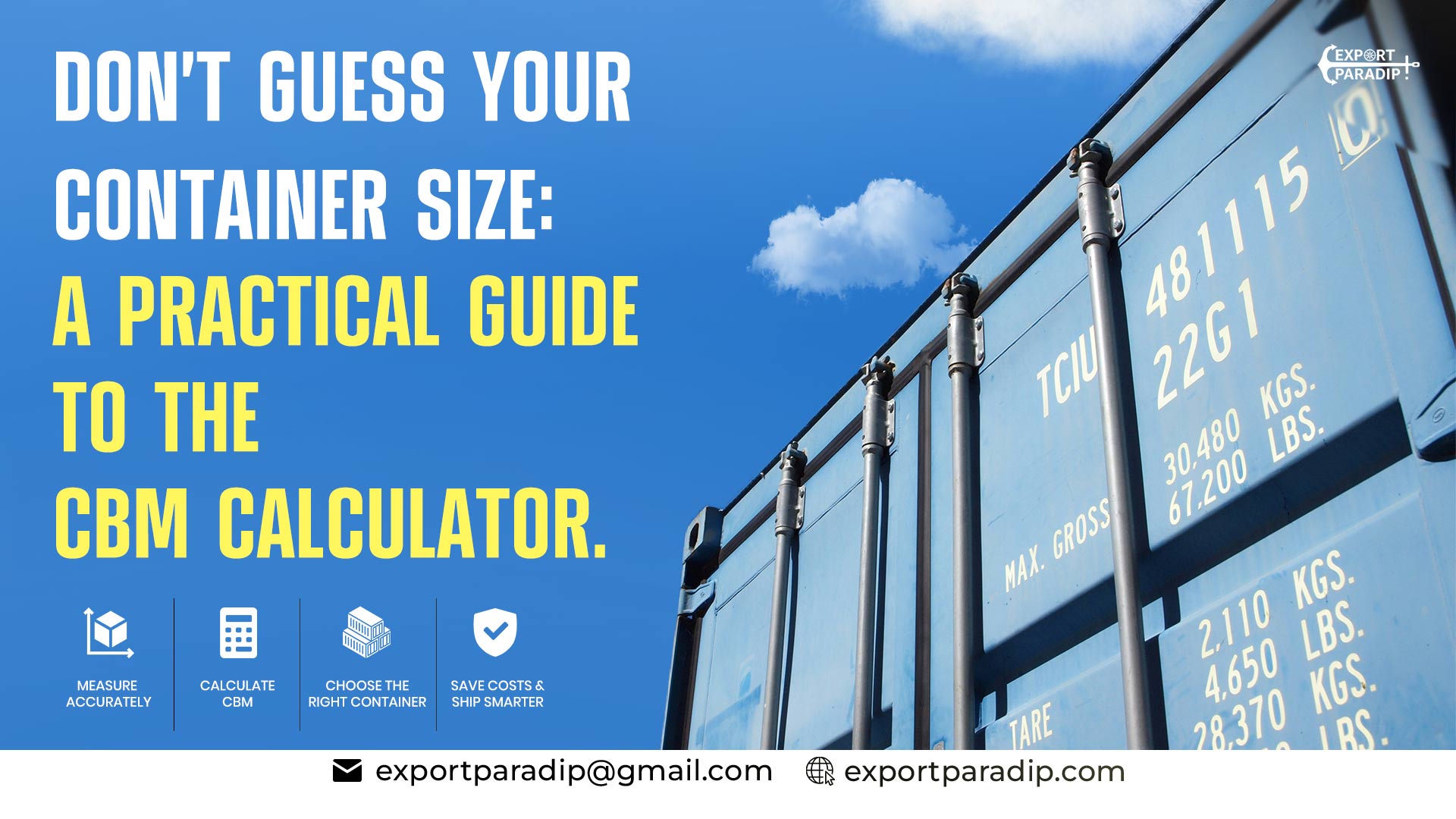
Not everything ships in bulk. Manufacturers, food processors & pharmaceutical businesses typically need FCL (Full Container Load) or LCL (Less than Container Load) options and Paradip Port is expanding its container handling capacity to serve this growing demand. FCL works well for established exporters with consistent volumes, while LCL suits smaller businesses or those testing new markets. Export Paradip helps you decide which option fits your shipment size, budget & delivery commitments and then coordinates accordingly.
Vessel Visibility Gives Exporters a Planning Advantage
Real-Time Vessel Tracking & Shipment Planning Tools
Efficient shipment planning requires visibility into vessel schedules & port activity. Export Paradip offers exporters access to two powerful digital tools:
- Vessel Map: Track real-time vessel movements at Paradip Port
👉 https://exportparadip.com/online-services/vessel-map
- Vessel Line-Up Schedule: View upcoming vessel arrivals, berthing times & cargo categories
👉 https://exportparadip.com/online-services/vessel-line-up-schedule
These tools allow exporters to plan dispatch timelines accurately, avoid port congestion & coordinate smoothly with international buyers.
How Export Paradip Supports Your Export Operations
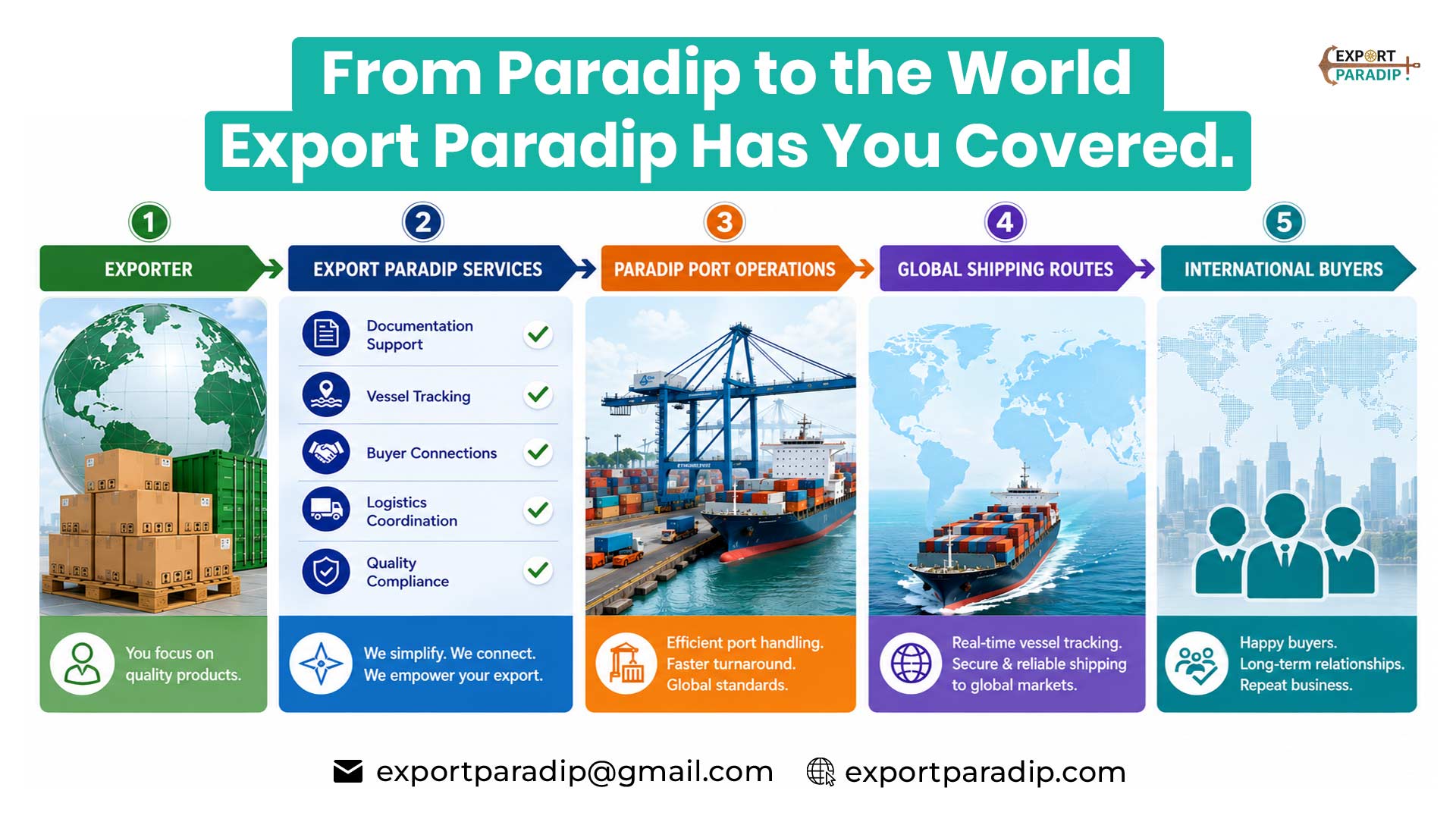
International trade has many moving parts & first-time exporters often find the documentation, compliance & logistics side harder than the selling itself. Export Paradip was built to address exactly that gap. Services offered include:
-
Export documentation assistance & customs clearance support
-
Logistics coordination from the production facility through to the foreign port
-
Real-time vessel tracking & shipment planning via digital tools
-
Verified international buyer connections across multiple global markets
-
Product quality control & compliance guidance for destination country standards
-
Consolidated cargo solutions that allow SMEs to export without high minimum volume requirements
-
Market insights to help you identify where demand for your product is growing
Practical Tips for Exporters Using Paradip Port
Check the Vessel Line-Up Schedule before finalising your dispatch date not after production is complete Move from LCL to FCL as your export volumes grow the cost saving per unit is significant Prepare documentation in advance customs clearance bottlenecks are avoidable with the right groundwork Use the live Vessel Map regularly to stay updated on port activity & shipping frequency Partner with Export Paradip early especially if you are entering a new product category or international market.
A Port Built for Serious Exporters
Paradip Port bulk cargo operations have matured into something that goes well beyond basic commodity handling. The combination of deep-water berthing, strong hinterland connectivity, diverse cargo systems & expanding container infrastructure makes it one of the most practical export gateways on India’s eastern coast. What makes the real difference for growing exporters is having the right support alongside that infrastructure. Export Paradip brings together digital tools, logistics expertise & global market access to help businesses of every size ship with clarity & confidence from Paradip Port.
FAQ's
Why is Paradip Port considered ideal for bulk cargo shipments?
Its deep-water berths handle large bulk carriers, mechanised systems cut cargo turnaround time & its proximity to mineral-producing states keeps inland freight costs low.
What types of cargo can be exported through Paradip Port?
Iron ore, chrome ore, coal, fertilisers, steel, agricultural commodities, marine products & containerised manufactured goods are all regularly handled here.
When should exporters choose FCL over LCL shipping at Paradip Port?
FCL makes sense once your export volumes fill most of a container — it lowers the per-unit freight cost compared to sharing space through LCL.
How can exporters track vessel schedules at Paradip Port?
The Vessel Map & Vessel Line-Up Schedule on exportparadip.com provide live vessel positions, berthing times & cargo category information ahead of dispatch.
How does Export Paradip help businesses ship through Paradip Port?
Export Paradip handles documentation support, logistics coordination, buyer connections & vessel tracking tools covering the full export journey from factory to foreign port.