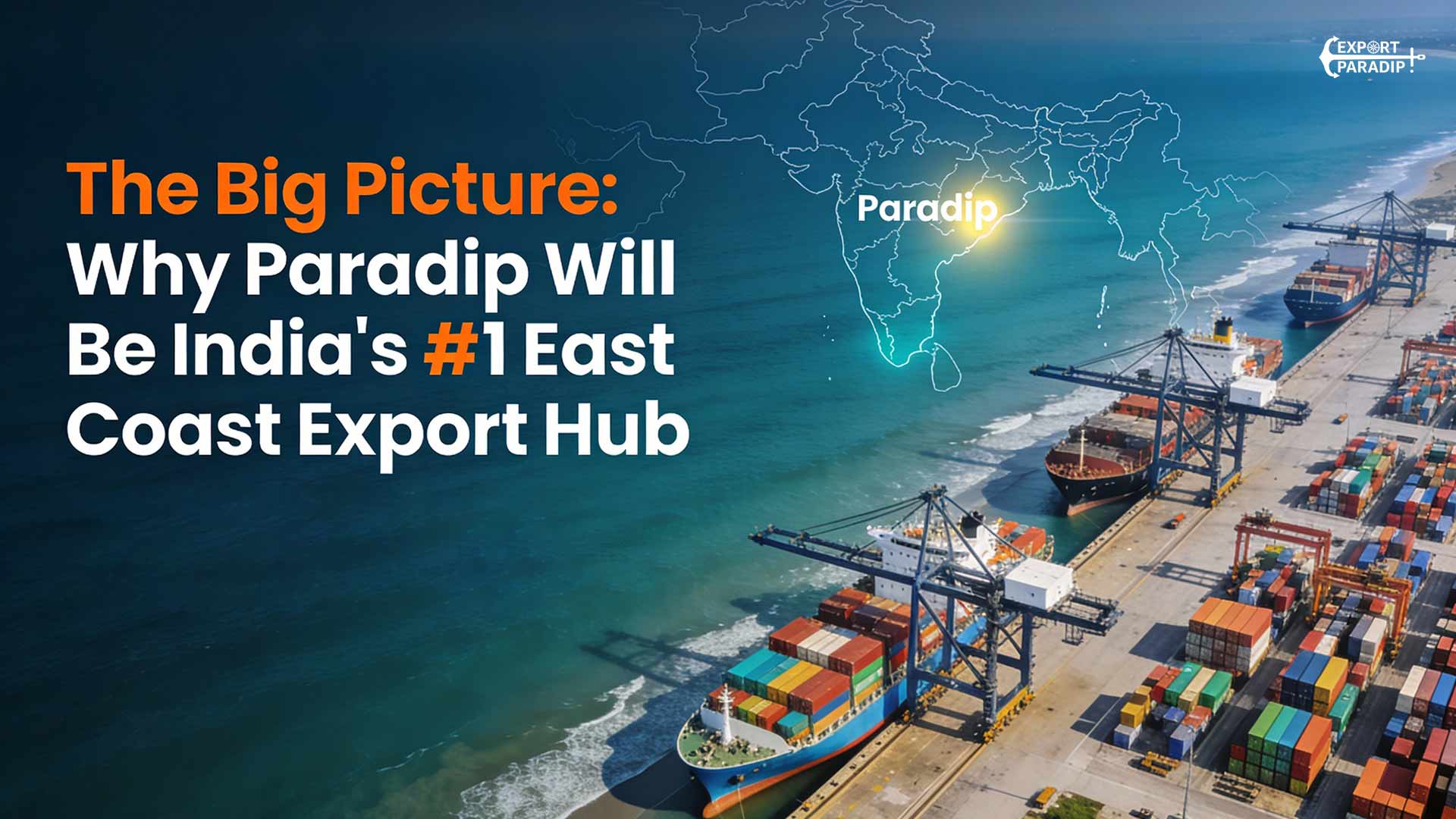
India's eastern seaboard is witnessing a transformation that will redefine the country's export landscape for decades to come. At the heart of this shift lies Paradip Port, strategically positioned in Odisha & rapidly emerging as the nation's most formidable export gateway on the east coast.
While ports like Chennai, Visakhapatnam & Kolkata have historically dominated eastern maritime trade, Paradip is now poised to claim the top position. This isn't speculation, it's a trajectory backed by infrastructure upgrades, geographical advantages, cargo diversification, government support & the digital revolution in port operations.
This blog explores the compelling reasons why Export Paradip will become India's premier east coast export hub & what this means for businesses, producers & the Indian economy.
Understanding Paradip's Strategic Position
Location is destiny in maritime trade, & Paradip enjoys one of the most advantageous positions on India's eastern coastline.
Geographic Excellence
Situated on the coast of Odisha, Paradip Port sits at the confluence of the Mahanadi River & the Bay of Bengal. This natural deep-water harbor offers several strategic advantages that competing ports simply cannot replicate.
Proximity to Resource-Rich Hinterland
Paradip is surrounded by some of India's most resource-abundant regions. Odisha alone accounts for massive reserves of iron ore, chromite, bauxite, coal & other minerals. The state is also a significant producer of rice, marine products, seafood & agricultural commodities. This proximity to production centers dramatically reduces inland transportation costs & time, giving exporters a competitive edge.
Shorter Shipping Routes to Key Markets
When compared to west coast ports, Paradip offers significantly shorter sailing distances to Southeast Asian markets, East Asian economies & Oceania. For trade with countries like China, Japan, South Korea, Thailand, Vietnam, Indonesia & Australia, Paradip provides faster transit times, which translates to lower freight costs, reduced inventory holding periods & quicker turnaround for buyers.
Natural Draft Advantage
Unlike many ports that require constant dredging to maintain depth, Paradip's natural harbor depth allows it to accommodate larger vessels with minimal maintenance. This natural advantage reduces operational costs & enables the port to handle modern mega-ships that drive down per-unit shipping costs.
Infrastructure Expansion Driving Capacity
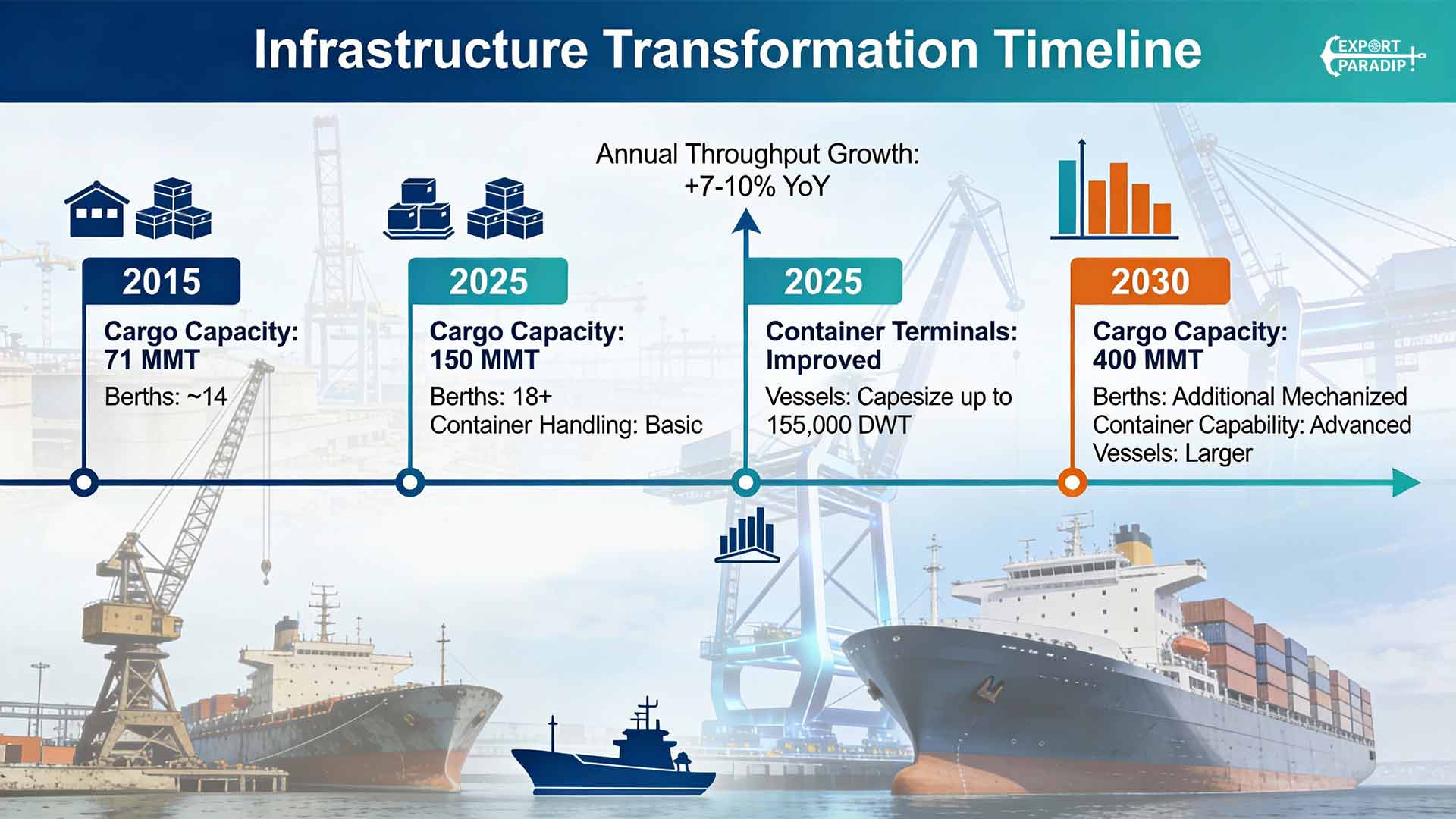
A port's competitiveness isn't just about location, it's about capacity, efficiency & modern infrastructure. Paradip has been undergoing massive infrastructure development that positions it for exponential growth.
Mechanization & Modernization
Paradip Port has invested heavily in mechanizing cargo handling operations. The introduction of modern ship loaders, unloaders, conveyor systems & automated cargo handling equipment has dramatically improved throughput. What once took days can now be accomplished in hours, reducing vessel turnaround time & making the port attractive to international shipping lines.
Deepening & Widening Projects
Ongoing channel deepening projects are enabling Paradip to accommodate vessels with greater drafts. This means larger bulk carriers & container ships can now berth directly at Paradip, eliminating the need for transshipment at other ports. For exporters, this translates to direct shipping routes & significant cost savings.
Expanding Berth Capacity
Multiple new berths are being added to handle diverse cargo types from bulk minerals & coal to containerized goods, liquid cargo & specialized products like automobiles. This diversification allows Paradip to serve multiple industries simultaneously without congestion or delays.
Connectivity Infrastructure
Road & rail connectivity to Paradip has been substantially upgraded. Dedicated freight corridors, new highway connections & improved rail links ensure seamless movement of cargo from inland production centers to the port. The East Coast Economic Corridor project further strengthens this connectivity, positioning Paradip as the natural export gateway for multiple states including Odisha, Jharkhand, Chhattisgarh & parts of West Bengal & Madhya Pradesh.
Cargo Diversification: Beyond Minerals
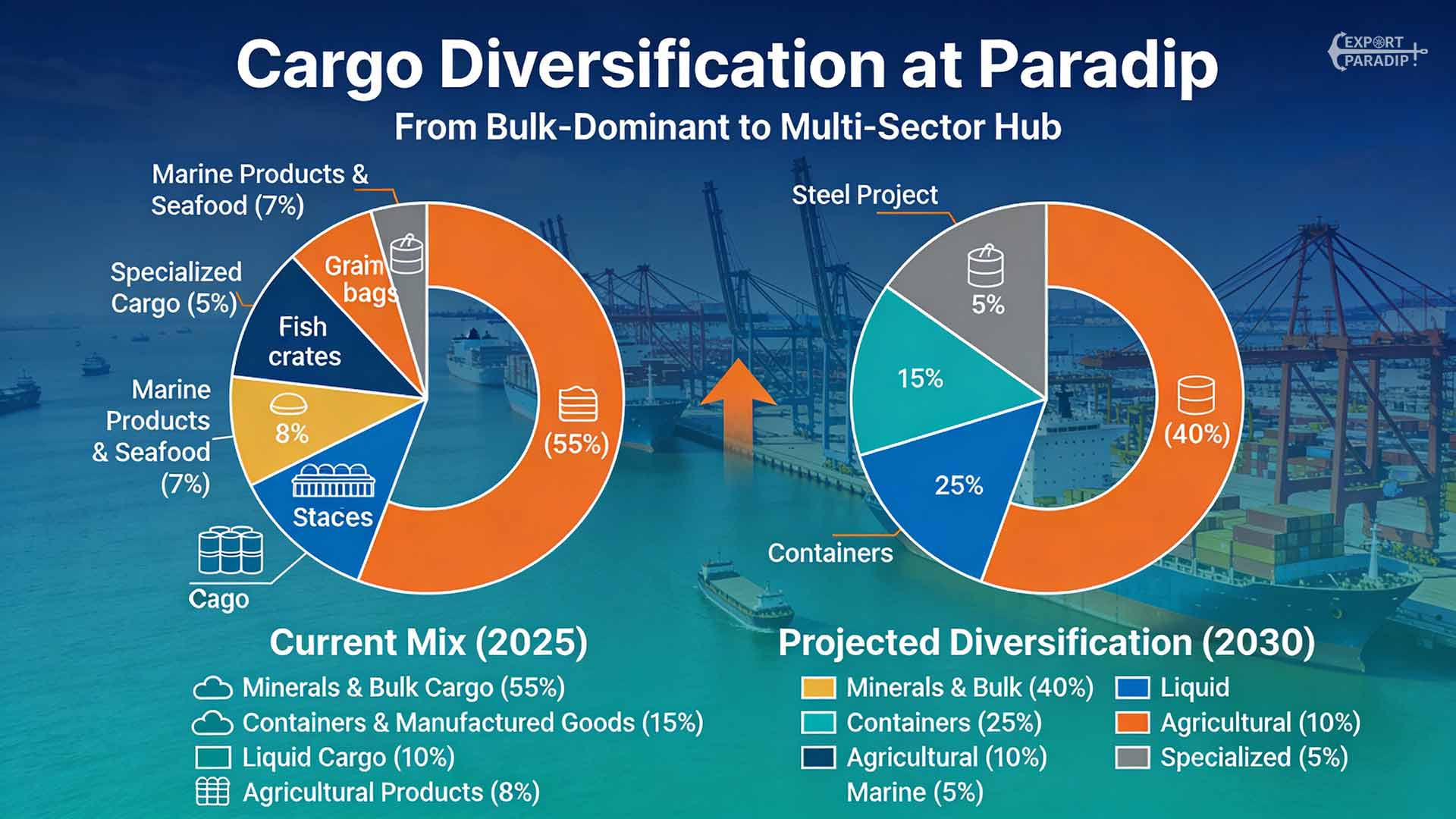
Historically, Paradip was known primarily as a bulk cargo port handling iron ore, coal & other minerals. While these commodities remain important, the port has successfully diversified its cargo profile, making it resilient & attractive to a broader range of exporters.
Container Traffic Growth
Container handling capacity at Paradip has been growing rapidly. The development of dedicated container terminals with modern gantry cranes & storage facilities is attracting containerized cargo that previously moved through Chennai or Visakhapatnam. This is particularly significant for manufactured goods, textiles, processed foods & value-added products.
Agricultural Exports
Odisha & neighboring states produce massive quantities of rice, wheat, maize, soybeans, spices & other agricultural products. Paradip is becoming the preferred export gateway for these commodities, especially for shipments to Southeast Asia & Africa. The port's grain handling facilities & modern silos ensure quality preservation during storage & loading.
Marine Products & Seafood
India is one of the world's largest exporters of seafood, & Odisha's coastline is rich in marine resources. Paradip's cold storage facilities, quick turnaround times & direct connectivity to fishing hubs make it ideal for frozen seafood exports. As global demand for shrimp, fish & other marine products grows, Paradip is capturing an increasing share of this lucrative market.
Specialized Cargo
From automobiles to project cargo, fertilizers to chemicals, Paradip is expanding its capabilities to handle specialized shipments. This diversification not only increases revenue but also makes the port less vulnerable to fluctuations in any single commodity market.
Government Support & Policy Initiatives
Port development doesn't happen in isolation. It requires coordinated policy support, investment & vision from government authorities at both state & central levels. Paradip is benefiting from unprecedented government backing.
Sagarmala Project
Under the ambitious Sagarmala initiative, the Indian government has identified Paradip as a critical node in the country's maritime development strategy. Significant funding has been allocated for infrastructure development, hinterland connectivity & port-led industrialization around Paradip.
Special Economic Zones
Multiple Special Economic Zones (SEZs) & industrial parks are being developed in proximity to Paradip Port. These zones offer tax incentives, streamlined approvals & world-class infrastructure, attracting manufacturers & exporters who want to leverage the port's connectivity. This creates a self-reinforcing cycle, more industry attracts more shipping lines, which in turn attracts more industry.
Ease of Doing Business Initiatives
Odisha has been actively improving its business environment, simplifying export procedures & reducing bureaucratic hurdles. Digital documentation, single-window clearances & proactive support for exporters make Paradip an attractive choice compared to ports where regulatory complexity creates delays.
Strategic Investment in Port Infrastructure
The Paradip Port Authority, now operating under the Paradip Port Trust, has been given operational & financial autonomy to make strategic investments. This has led to faster decision-making, more aggressive infrastructure development & a customer-centric approach that prioritizes exporter needs.
Digital Revolution: Real-Time Intelligence & Transparency
In the modern era, information is as valuable as physical infrastructure. Paradip is embracing digital transformation in ways that set it apart from competing ports.
Vessel Tracking & Port Visibility
Exporters using Paradip now have access to real-time vessel tracking systems that show ship positions, anchorage status, berthing schedules & port congestion levels. This transparency allows businesses to plan cargo movement with precision, optimize warehousing costs & avoid last-minute surprises.
Platforms like Export Paradip provide live vessel maps & line-up schedules, giving exporters unprecedented visibility into port operations. This level of transparency was unheard of at Indian ports just a few years ago & represents a massive competitive advantage.
Digital Documentation & Compliance
Export documentation has traditionally been a painful, paper-heavy process prone to errors & delays. Paradip is at the forefront of digitizing export procedures, from electronic shipping bills to digital certificates of origin. This reduces processing time, minimizes errors & accelerates cargo clearance.
Data-Driven Decision Making
With access to port analytics, exporters can identify optimal shipping windows, understand seasonal patterns & make informed decisions about vessel selection & routing. This data-driven approach improves efficiency & profitability across the supply chain.
Cost Competitiveness: Lower Total Landed Costs
At the end of the day, exporters care about one thing above all else, profitability. Paradip delivers tangible cost advantages that directly impact the bottom line.
Reduced Inland Transportation Costs
For producers in Odisha, Jharkhand, Chhattisgarh & surrounding regions, shipping through Paradip eliminates the need to transport cargo hundreds of kilometers to distant ports. This proximity saves on trucking & rail freight costs, which can represent a significant portion of total export expenses.
Lower Port Charges
Paradip's operational efficiency & competition among service providers keep port charges competitive. Faster vessel turnaround also means lower demurrage & detention costs for exporters.
Optimal Freight Rates
As Paradip's cargo volumes grow, major international shipping lines are establishing regular services to the port. Increased competition among carriers drives down freight rates, giving exporters access to more affordable shipping options.
Reduced Time Costs
Time is money in international trade. Faster cargo processing, shorter waiting times for vessel berthing & quicker customs clearance all translate to faster payment realization & improved cash flow for exporters.
Growing International Connectivity
A port is only as good as the shipping routes it serves. Paradip's international connectivity is expanding rapidly, opening up new markets for Indian exporters.
Direct Services to Key Markets
Major shipping lines are launching direct services from Paradip to ports in China, Japan, South Korea, Southeast Asia, the Middle East & Africa. These direct connections eliminate the need for transshipment, reducing costs & transit times.
Attracting Global Shipping Lines
As cargo volumes increase, Paradip is becoming increasingly attractive to global shipping majors. The port's modern infrastructure, efficient operations & growing hinterland make it a strategic call point for vessels serving the Bay of Bengal region.
Expanding Feeder Networks
Beyond mainline services, Paradip is also developing robust feeder networks that connect it to smaller regional ports. This hub-and-spoke model positions Paradip as a central aggregation point for cargo from across eastern India.
Industrial Ecosystem Development
Ports don't exist in isolation, they thrive when surrounded by thriving industrial ecosystems. Paradip is becoming the center of significant industrial development that will drive long-term export growth.
Manufacturing Clusters
Multiple manufacturing clusters are emerging around Paradip, taking advantage of port proximity, raw material availability & export connectivity. Industries ranging from steel & aluminum to petrochemicals, food processing & automotive components are establishing operations in the region.
Value Addition Zones
Rather than simply exporting raw materials, there is growing emphasis on value addition before export. Processing facilities, refineries & manufacturing units near Paradip are creating higher-value export products that generate better margins & more employment.
Logistics & Warehousing Hubs
Modern logistics parks & warehousing facilities are being developed to support export operations. These facilities provide temperature-controlled storage, quality testing laboratories, packaging services & consolidation capabilities that make exporting easier & more efficient.
Sustainability & Green Port Initiatives
As global trade becomes increasingly conscious of environmental impact, ports that embrace sustainability gain competitive advantages. Paradip is positioning itself as a green port that appeals to environmentally conscious buyers & shipping lines.
Renewable Energy Adoption
Solar installations, wind power & energy-efficient equipment are reducing Paradip's carbon footprint. This not only cuts operational costs but also aligns with global sustainability standards increasingly demanded by international buyers.
Waste Management Systems
Modern waste handling facilities, pollution control measures & environmental monitoring systems ensure that Paradip's growth doesn't come at the cost of environmental degradation.
Green Shipping Incentives
Paradip is exploring incentives for vessels that meet environmental standards, encouraging cleaner shipping practices & positioning the port as a leader in sustainable maritime operations.
Comparing Paradip with Other East Coast Ports
To understand why Paradip will emerge as the top east coast export hub, it's useful to compare it with its main competitors.
Chennai Port
While Chennai has historical advantages & strong container handling capacity, it faces space constraints, congestion issues & limited scope for expansion. Paradip's greenfield advantages & room for growth give it a long-term edge.
Visakhapatnam Port
Vizag is a strong competitor with good infrastructure, but Paradip's superior hinterland connectivity to mineral-rich regions & faster development pace are helping it close the gap & potentially overtake in specific cargo segments.
Kolkata Port
Kolkata's river location creates draft limitations & longer approach channels. Paradip's direct sea access & natural depth give it clear advantages for handling larger vessels & bulk cargo.
Haldia Port
Similar to Kolkata, Haldia's river location limits vessel size. Paradip's coastal position & ongoing capacity expansion make it more attractive for modern shipping requirements.
The Export Paradip Advantage
For businesses looking to leverage Paradip's rise, platforms like Export Paradip are making the transition seamless. Export Paradip connects local producers with global buyers while providing real-time shipping intelligence, documentation support & market insights. By combining Paradip Port's infrastructure advantages with digital enablement, the platform helps exporters navigate international markets confidently.
From verified buyer connections to live vessel tracking & compliance assistance, Export Paradip removes traditional barriers that prevented small & medium producers from accessing global markets.
The Road Ahead: Vision 2030
Looking forward, several developments will cement Paradip's position as India's premier east coast export hub.
Capacity Expansion
Paradip's cargo handling capacity is projected to reach 300 million tonnes annually by 2030, making it one of India's largest ports. This massive scale will attract even more shipping lines & exporters.
Smart Port Technologies
Artificial intelligence, Internet of Things sensors, automated cargo handling & predictive analytics will make Paradip one of Asia's smartest ports, further improving efficiency & reducing costs.
Enhanced Regional Connectivity
As the East Coast Economic Corridor develops & multimodal connectivity improves, Paradip's hinterland will effectively expand to cover a larger geographical area, bringing more cargo to the port.
Export-Oriented Policy Framework
Continued policy support, including streamlined regulations, export incentives & trade facilitation measures, will make Paradip the preferred choice for exporters across multiple industries.
What This Means for Exporters
Paradip's emergence as the top east coast export hub creates tangible opportunities for businesses:
Lower Costs: Reduced transportation & shipping expenses improve margins.
Faster Execution: Efficient port operations & shorter routes mean quicker delivery to buyers.
Market Access: Growing international connectivity opens up new export destinations.
Competitive Advantage: Early adopters of Paradip-centric logistics gain advantages over competitors still using congested or distant ports.
Scale Opportunities: As Paradip's ecosystem grows, exporters can scale operations more easily with access to better infrastructure & services.
Conclusion: The Big Picture
India's export ambitions require world-class maritime infrastructure on both coasts. While Mumbai, JNPT & other west coast ports serve their regions well, the east coast has lacked a truly dominant export gateway, until now.
Paradip's combination of natural advantages, infrastructure investment, government support, cargo diversification, digital innovation & cost competitiveness positions it to become India's number one east coast export hub.
For businesses eyeing international growth, the choice is clear. Paradip isn't just a port, it's a strategic advantage, a gateway to faster, cheaper & smarter exporting.
The transformation is already underway. The only question is whether you'll be part of it.
Think Big. Export Smart. Choose Export Paradip.
FAQ's
What makes Paradip Port better than other east coast ports?
Paradip offers superior natural depth, proximity to resource-rich hinterlands, modern infrastructure, shorter routes to key Asian markets & rapidly growing cargo handling capacity, all making it more competitive for exporters.
Which products are best suited for export through Paradip?
Minerals, agricultural commodities, seafood, textiles, manufactured goods, chemicals, fertilizers & containerized products all benefit from Paradip's facilities & connectivity.
How does Export Paradip help businesses export through the port?
Export Paradip provides verified buyer connections, real-time vessel tracking, documentation support, market intelligence & logistics planning assistance, making the entire export process smoother.
Is Paradip suitable for small & medium businesses?
Absolutely. Digital platforms like Export Paradip specifically empower SMEs, traders & rural producers by providing access to global buyers & simplifying complex export procedures.
What is the future outlook for Paradip Port?
With capacity expansion plans, smart port technologies, enhanced connectivity & strong government support, Paradip is projected to become India's largest east coast port by 2030, handling over 300 million tonnes annually.