 India's leather industry has spent decades building a reputation for craftsmanship from finished garments & footwear to bags, saddlery & travel goods. But 2026 has added new layers of compliance that leather exporters can't afford to overlook, particularly if Europe is part of your buyer base. For exporters shipping leather products through Paradip Port here's what's changed & what still matters most.
📋 Getting Registered: CLE, IEC & GST
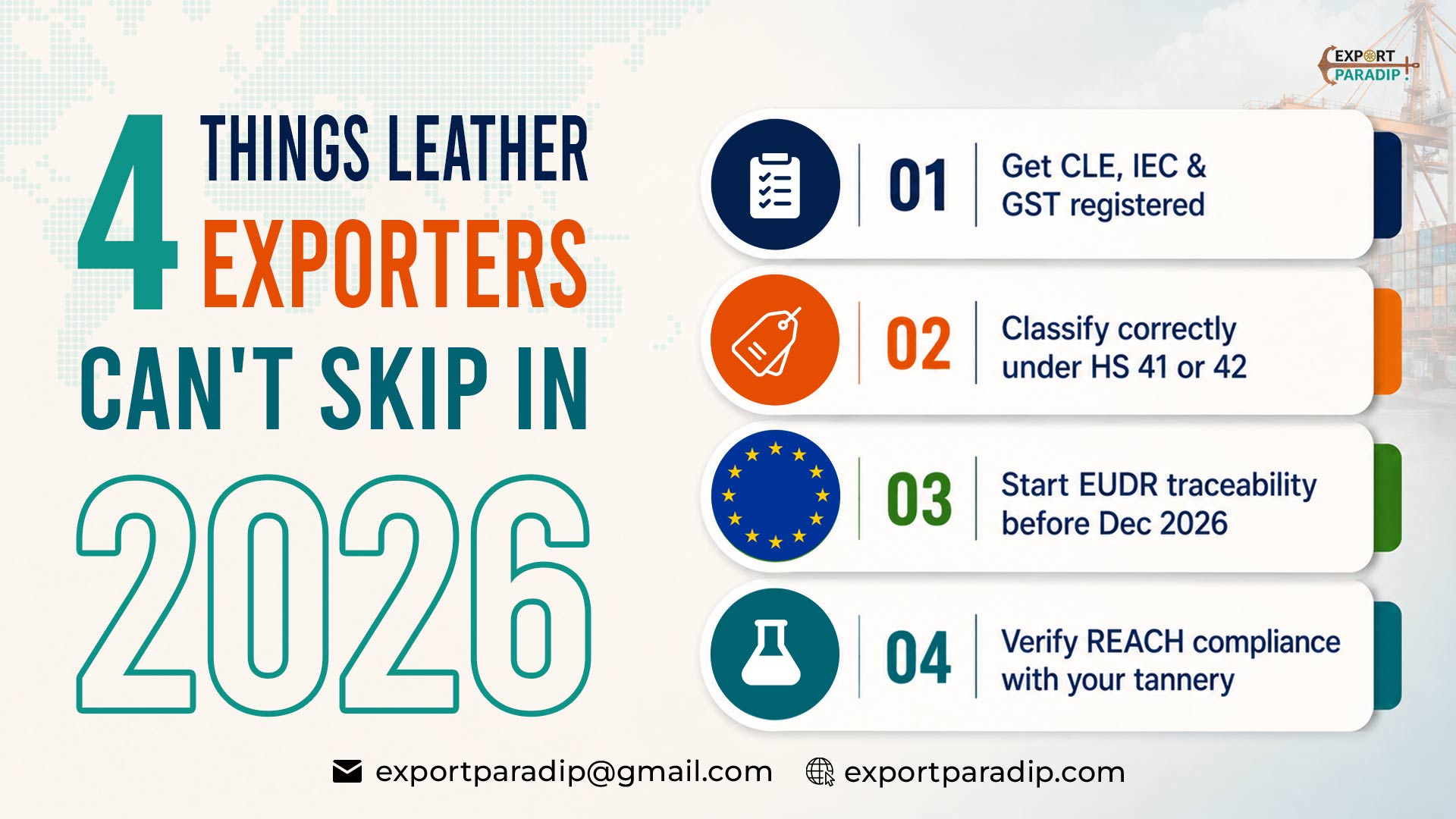
Before your first shipment leaves, three registrations need to be in place: Import Export Code (IEC): The baseline requirement for any exporter in India, issued by DGFT. Council for Leather Exports (CLE) Registration: CLE is the apex trade promotion body for India's leather sector, operating under the Ministry of Commerce & Industry. Without CLE registration, you can't access export subsidies, incentive schemes, or participate in the global trade fairs the Council organises. It's not optional if you want the full benefit of India's leather export ecosystem. GST Registration: Needed to claim GST refunds on exports & route input credits correctly. 💡 Export Paradip's Advantage: Getting these three registrations sorted before you approach buyers signals credibility international buyers increasingly expect to see CLE membership as a baseline trust marker, not an optional extra.
🏷️ Getting Your HS Code Right
Leather goods span two HS chapters, & misclassifying between them is one of the most common & costly export errors: HS Chapter 41: Raw hides, skins & leather (unfinished/semi-finished material) HS Chapter 42: Finished leather goods bags, footwear, garments, travel goods, saddlery Getting this classification right affects your duty calculation, your eligibility for export incentives, & how smoothly customs clears your shipment. If you're unsure which chapter your product falls under, our HS Code Finder lets you search across 12,000+ trade codes before you file.
🇪🇺 The EU Deforestation Regulation: What Changes in December 2026
If Europe is a meaningful part of your buyer base, this is the single most important compliance shift to plan around this year.
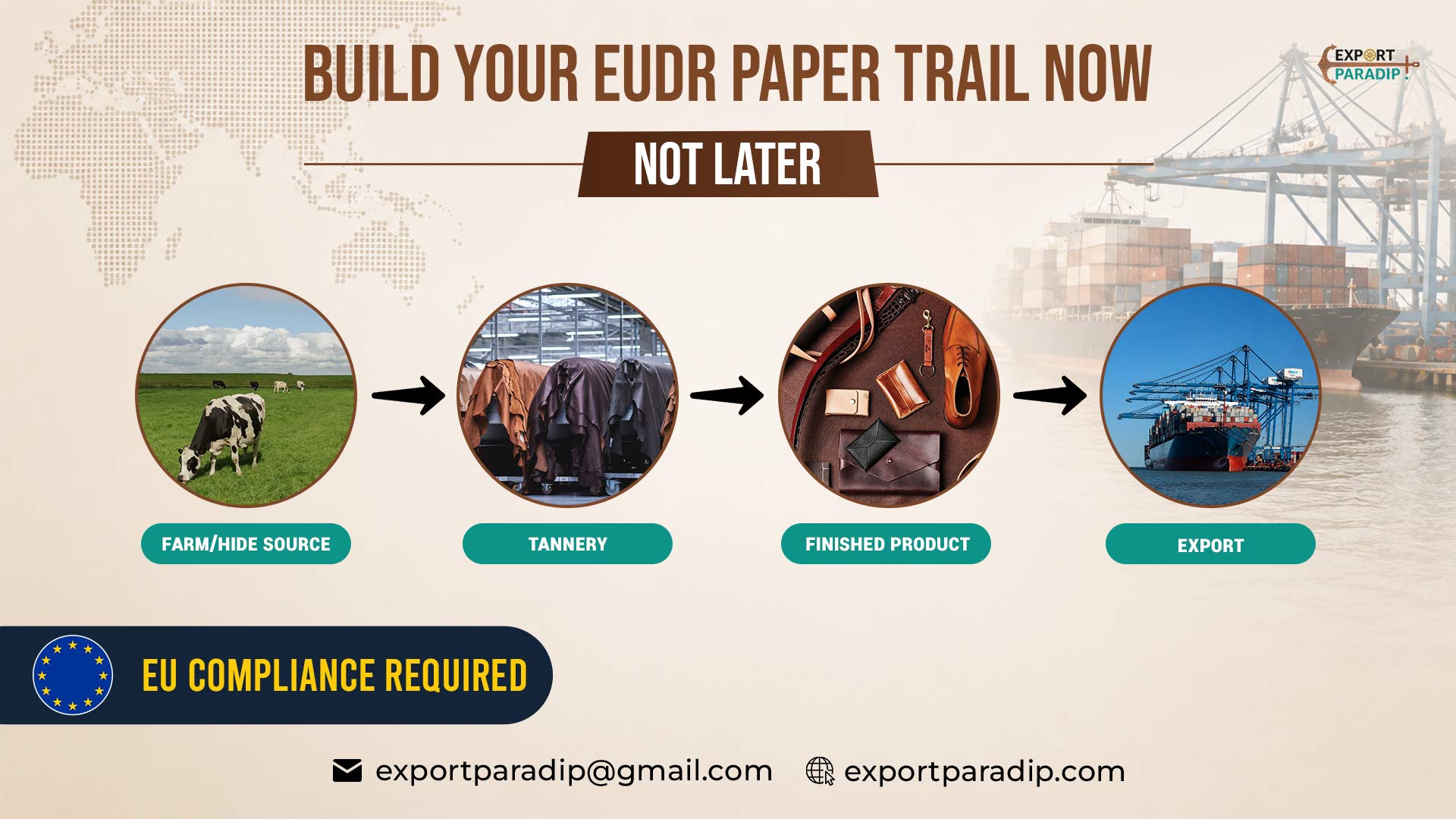
The EU Deforestation Regulation (EUDR) comes into effect on 30 December 2026, & it specifically covers cattle hides & leather falling under HSN 4101, 4104 & 4107. In practice, this means EU buyers will require documented proof that the leather in your shipment wasn't sourced from deforested land a traceability requirement that goes further back into your supply chain than most exporters have previously needed to document.
If you export finished leather goods to the EU or supply raw material to EU-based manufacturers, start building this traceability documentation now rather than waiting until the deadline. Retrofitting a supply chain's paper trail under time pressure is far harder than building it in from the next shipment onward.
🧪 REACH Compliance: The Chemical Standard That Won't Go Away
Beyond deforestation traceability, EU buyers also expect compliance with REACH the regulation restricting hazardous chemicals in consumer goods. For leather specifically, this means controlling substances like AZO dyes & Chromium VI, both commonly associated with lower-quality tanning processes. REACH compliance isn't new, but it remains one of the most frequent reasons EU shipments get flagged or rejected at the buyer's end usually because the exporter assumed their tannery's process was compliant without actually verifying it. If you're working with a new tannery partner, request chemical compliance documentation before committing to a shipment, not after.
📦 Documentation & Incoterms for Leather Shipments
Beyond the compliance layer, standard export documentation still applies but leather cargo has a few specifics worth flagging: Commercial invoice, packing list & bill of lading the baseline for any shipment Certificate of origin often required by buyers to confirm sourcing Quality certificates increasingly requested alongside REACH/EUDR documentation for EU-bound cargo Incoterms: Leather shipments commonly move under FOB or CIF terms confirm which applies before finalising your sales contract, since it determines who bears shipping & insurance costs at each stage Moisture-sensitive packaging matters more for leather than most cargo categories protecting against humidity during transit isn't just good practice, it's often the difference between a claimable insurance loss & a preventable one.
🎯 Export Incentives Worth Claiming
CLE-registered exporters have access to several incentive schemes worth factoring into your margins: RoDTEP (Remission of Duties & Taxes on Exported Products) Duty Drawback on inputs used in manufacturing EPCG Scheme for capital goods used in production These aren't automatic they require correct documentation & timely filing, but they meaningfully improve margins for exporters who claim them consistently rather than treating them as an afterthought.
✅ Before Your Next Leather Shipment
✔ Confirm CLE, IEC & GST registration are active & current
✔ Classify correctly under HS Chapter 41 or 42
✔ Start EUDR traceability documentation now if you sell into the EU
✔ Verify REACH compliance with your tannery, not just your buyer's assumption
✔ Use moisture-resistant packaging appropriate to leather cargo
✔ Claim RoDTEP & duty drawback where eligible
Export Paradip works with exporters across our full leather product range from finished goods to industrial leather helping structure shipments through Paradip Port with compliant documentation from day one. Get in touch to talk through your next shipment, or explore our Export Documentation Checklist to see exactly what your paperwork needs to include.
FAQ's
Do I need CLE registration to export leather from India?
It's not legally mandatory to export, but without CLE registration you lose access to export incentive schemes, subsidies, & participation in Council-organised trade fairs making it a practical necessity for most serious leather exporters.
What's the difference between HS Chapter 41 & 42 for leather?
Chapter 41 covers raw & semi-finished hides, skins & leather material. Chapter 42 covers finished leather goods like bags, footwear, garments & travel goods. Correct classification affects duty rates & incentive eligibility.
What is the EU Deforestation Regulation & does it affect my leather exports?
EUDR takes effect on 30 December 2026 & covers cattle hides/leather under HSN 4101, 4104 & 4107. If you sell to EU buyers, you'll need to document that your leather wasn't sourced from deforested land start building this traceability now.
What does REACH compliance mean for leather exporters?
REACH restricts hazardous chemicals like AZO dyes & Chromium VI, often linked to lower-quality tanning. EU buyers generally expect REACH-compliant sourcing, & verifying this with your tannery upfront avoids shipment rejections.
Can Export Paradip help with leather product exports?
Export Paradip supports exporters shipping leather products through Paradip Port with documentation guidance & shipment planning. For CLE registration & REACH/EUDR compliance specifics, we'd recommend pairing our support with CLE or a compliance consultant. Contact our team to get started.