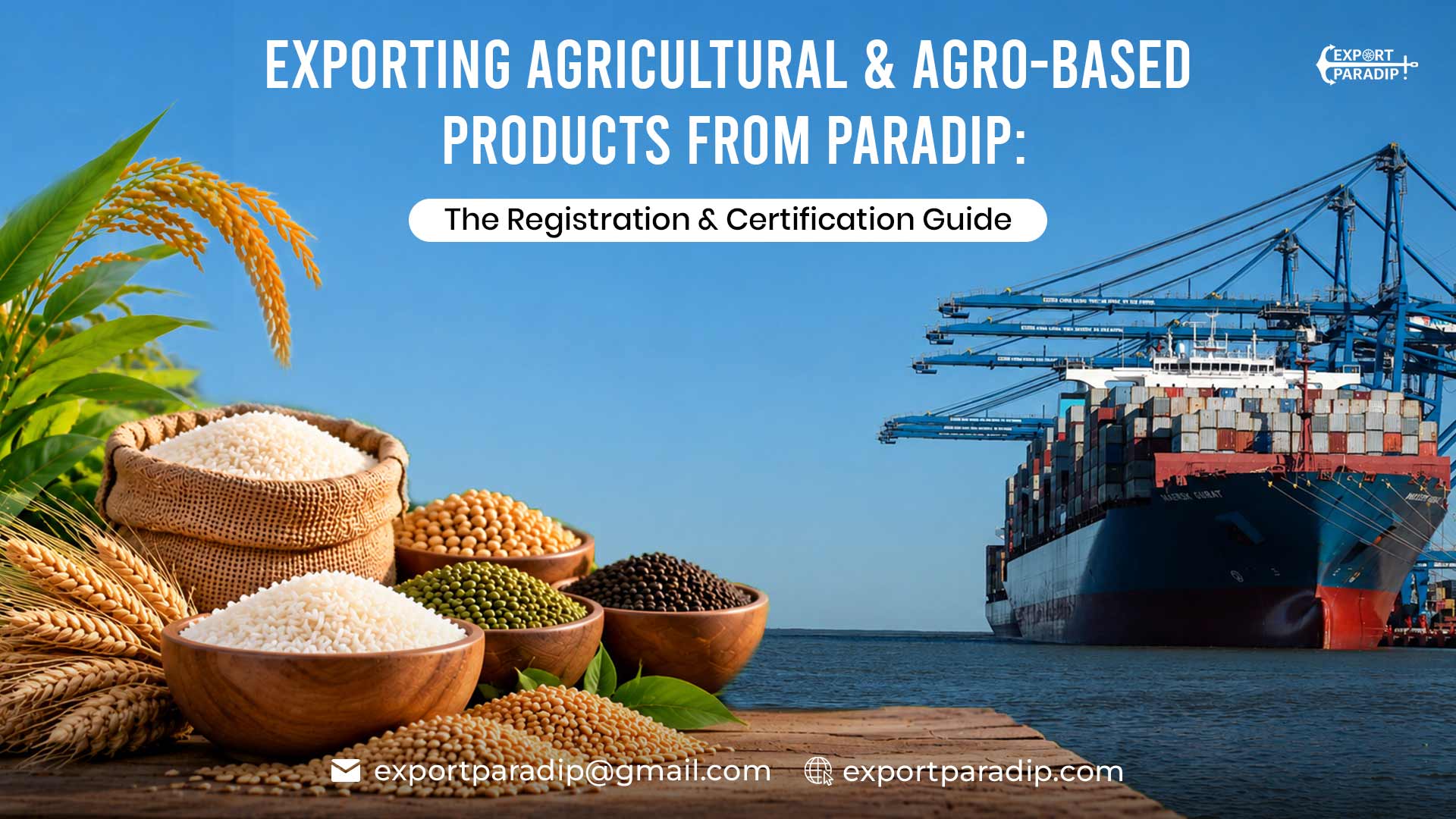
 Agricultural cargo carries a compliance burden most other export categories don't because you're not just shipping a product, you're shipping something a foreign government's food & plant safety authority has to actively approve. For exporters shipping agricultural & agro-based products through Paradip Port, missing a single certificate can mean a shipment held at port, fumigated at your cost, or returned entirely.
📋 APEDA: The Starting Point for Every Agro Exporter
The Agricultural and Processed Food Products Export Development Authority (APEDA) is the government body overseeing export of agricultural products & processed food from India. If your product falls under APEDA's scheduled categories which includes rice, fruits, vegetables, processed foods & more registration isn't optional paperwork. It's the gateway to being allowed to export at all.
APEDA registration confirms to both Indian authorities & overseas buyers that: Your business is legally recognised & capable of exporting food products You're exporting under your actual registered business name, not an informal or trading alias Your products meet the traceability & quality expectations increasingly demanded by international buyers Skip or delay this step, and shipments risk being held at port, rejected by buyers, or returned at your own cost a expensive way to learn the requirement existed.
🌾 Rice Exports: The RCAC Requirement
If rice is part of your export mix, there's an additional layer beyond standard APEDA registration. Both Basmati & non-Basmati rice require a Registration-cum-Allocation Certificate (RCAC), issued by APEDA once you register your export contract. For Basmati specifically, this certificate is what legally allows your shipment to carry the "Basmati" label under India's Geographical Indication (GI) protection rules miss this registration, and customs can reclassify your shipment as ordinary rice, changing the duty treatment entirely. Basmati rice also has to meet physical grain standards to qualify: length greater than 6.61mm, with a length-to-width ratio above 3.5. It's worth verifying your product meets this threshold before assuming the Basmati classification applies.
🌱 Phytosanitary Certificates: Proving Your Cargo Is Pest-Free
Beyond APEDA & RCAC, plant-based agricultural exports typically require a Phytosanitary Certificate, issued by the Directorate of Plant Protection, Quarantine & Storage (DPPQS). This certificate confirms your shipment has been inspected & found free of regulated pests & diseases that could threaten agriculture in the destination country.
A few practical points worth planning around: Apply at least 7 days before your shipment date to allow time for inspection & lab testing Choose the correct NPPO office based on your port of loading — not your company's registered location Keep your warehouse & packaging pest-free ahead of inspection — clean, dry, properly labeled cargo passes faster A shipment arriving without a valid Phytosanitary Certificate can be held, fumigated at the importer's expense, or returned outright
🌍 Destination-Country Requirements Vary Check Before You Ship
APEDA & Phytosanitary certification satisfy India's export-side requirements, but many destination countries layer on their own import-side rules. A few examples worth knowing:
Rice exports to Indonesia require pre-shipment testing from a laboratory approved by the Indonesia Agriculture Quarantine Agency
Rice exports to China require GMO analysis from an approved laboratory
Exports of drumstick & green chilies to the EU require testing against a specific list of agrochemicals, alongside EU traceability monitoring
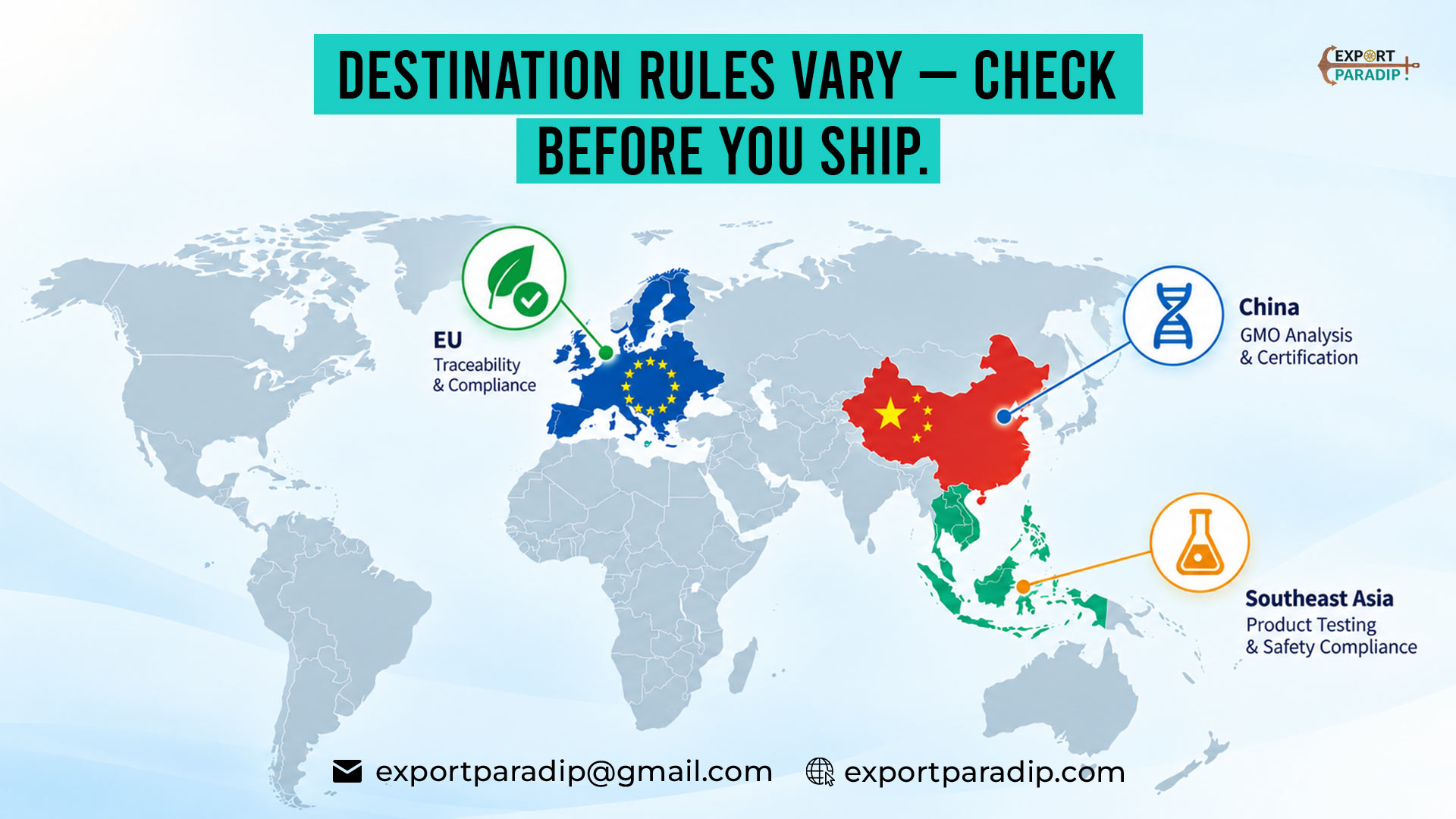
Fresh fruit & vegetable exports to certain markets require destination-specific advisories that change periodically The pattern here matters more than any single example: assuming your product's compliance requirements end at the Indian border is one of the most common and costly mistakes agro exporters make.
✅ Before Your Next Agricultural Shipment
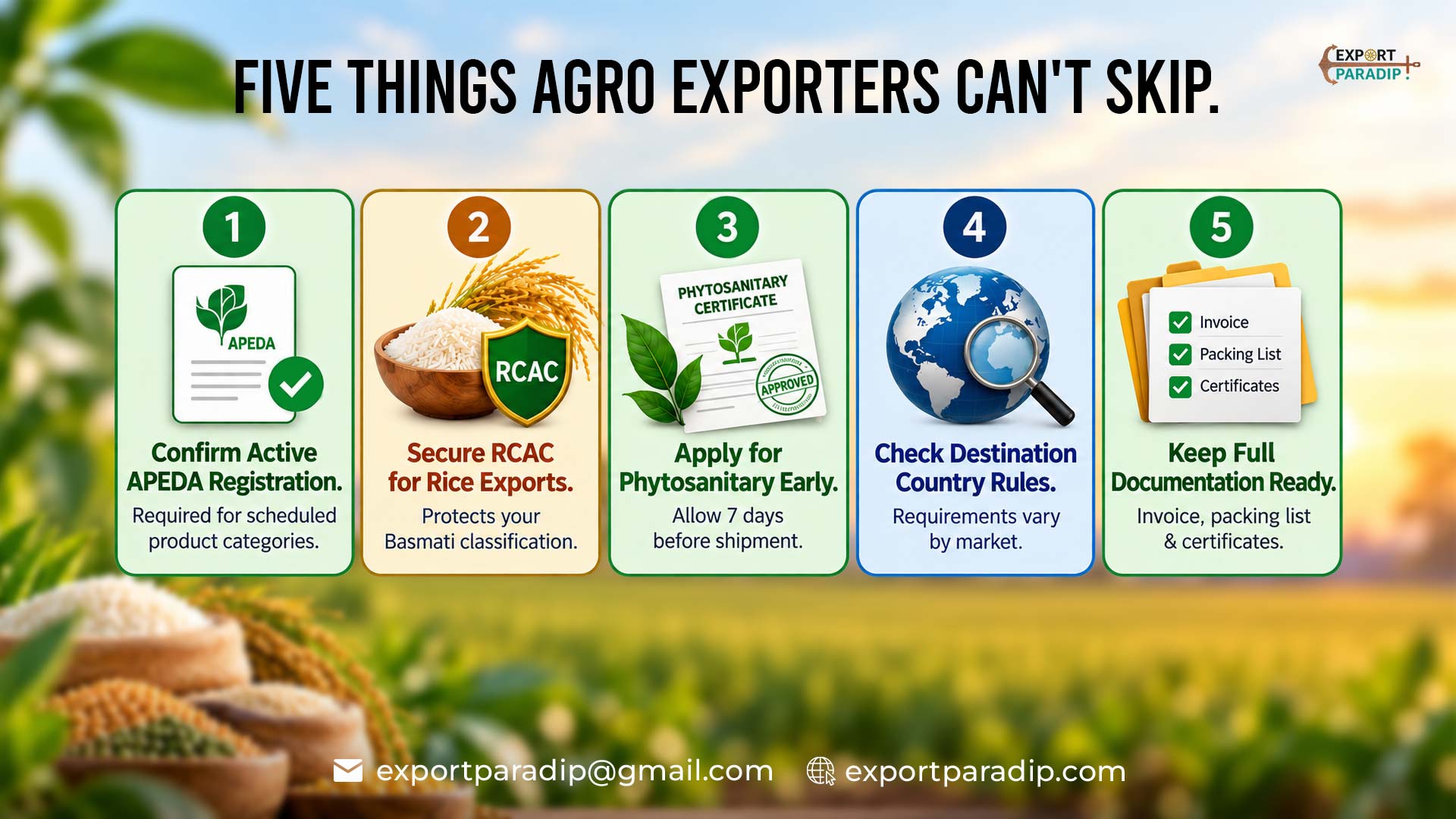
✔ Confirm APEDA registration is active for your product category
✔ Secure RCAC if you're exporting Basmati or non-Basmati rice
✔ Apply for your Phytosanitary Certificate at least 7 days ahead of shipment
✔ Check destination-country specific requirements testing, GMO analysis, or additional certification
✔ Keep documentation complete invoice, packing list & fumigation certificate ready alongside your certifications
Export Paradip helps exporters shipping agricultural & agro-based products through Paradip Port keep documentation & certification requirements on track. Get in touch to talk through your next shipment, or explore our Export Documentation Checklist to see what your paperwork needs to include.
FAQ's
Is APEDA registration mandatory for all agricultural exports from India?
It's mandatory for products falling under APEDA's scheduled categories, which includes rice, fruits, vegetables & processed foods. Exporting without it risks shipments being held, rejected by buyers, or returned at the exporter's cost.
What is RCAC and do I need it for rice exports?
The Registration-cum-Allocation Certificate is required for both Basmati and non-Basmati rice exports, issued by APEDA upon registering your export contract. For Basmati specifically, it's what legally allows the "Basmati" label under India's GI protection rules.
How long does it take to get a Phytosanitary Certificate?
Applications should be submitted at least 7 days before shipment to allow time for inspection and lab testing. An NPPO inspector typically schedules an inspection within 24–48 hours of application.
Do all countries have the same import requirements for Indian agricultural products?
Destination countries frequently layer their own requirements on top of Indian export certification for example, Indonesia requires pre-shipment testing from an approved lab, while China requires GMO analysis for rice.
Can Export Paradip help with agricultural export certification?
Export Paradip supports exporters with documentation guidance for shipments through Paradip Port. For APEDA registration and Phytosanitary Certificate applications specifically, we'd recommend working directly with APEDA and DPPQS or a certified export documentation service. Contact our team to get started.