 Ask ten first-time exporters what scared them most before their first shipment, & most won't say the product or the buyer. They'll say the process felt like a black box. Too many steps, too many acronyms, no clear order.
Here's the thing it's really not that complicated once someone lays it out properly. We see this play out with new exporters all the time: the shipment isn't the hard part. Getting the sequence right is. So let's walk through it the way it actually happens, step by step, the way we'd explain it to someone sitting across the table from us.
Ask ten first-time exporters what scared them most before their first shipment, & most won't say the product or the buyer. They'll say the process felt like a black box. Too many steps, too many acronyms, no clear order.
Here's the thing it's really not that complicated once someone lays it out properly. We see this play out with new exporters all the time: the shipment isn't the hard part. Getting the sequence right is. So let's walk through it the way it actually happens, step by step, the way we'd explain it to someone sitting across the table from us.
First, Get Your Paperwork House in Order
Before you even think about buyers or vessels, there's some groundwork to lay. You'll need an Import Export Code from the Directorate General of Foreign Trade, an active GST registration & depending on what you're selling membership with the export promotion council that covers your product. This part feels tedious, we know. But it's a one-time job & it's also the single most common reason a first shipment gets stuck at the starting line. Do this properly once, & you never have to think about it again.
Know Exactly What You're Shipping, On Paper
Every product carries a Harmonized System code & that little number quietly controls a lot your duty rates, what documents you'll need, whether you need any special licensing. Get it wrong & it's not just an annoying correction. It can genuinely hold your cargo at customs while everyone figures out what went sideways. If you're not sure where your product falls, don't guess. Our HS Code Finder exists precisely so you don't have to.
Now Find Your Buyer & Get Everything in Writing
This is where the real business starts. You're identifying buyers, agreeing on Incoterms like FOB or CIF, & settling the details that matter: quantity, price, packaging, timelines. Here's a small piece of hard-earned advice don't let this stay a verbal understanding. We've seen good relationships turn sour over a misremembered price or a delivery date nobody wrote down. Even a simple confirmation email is enough to save you a headache later.
The Paperwork Stretch
-
This is the part nobody loves, but it's also the part a good checklist makes painless. At minimum, you're putting together:
-
A commercial invoice & packing list
-
A proforma invoice, so your buyer has something formal to reference upfront
-
A certificate of origin
-
A bill of lading, once the goods are actually shipped\
Any product-specific certificates phytosanitary, quality, inspection depending on what you're exporting
Our Export Documentation Checklist covers this in more depth, & the Proforma Invoice Generator can shave a step off your workload.
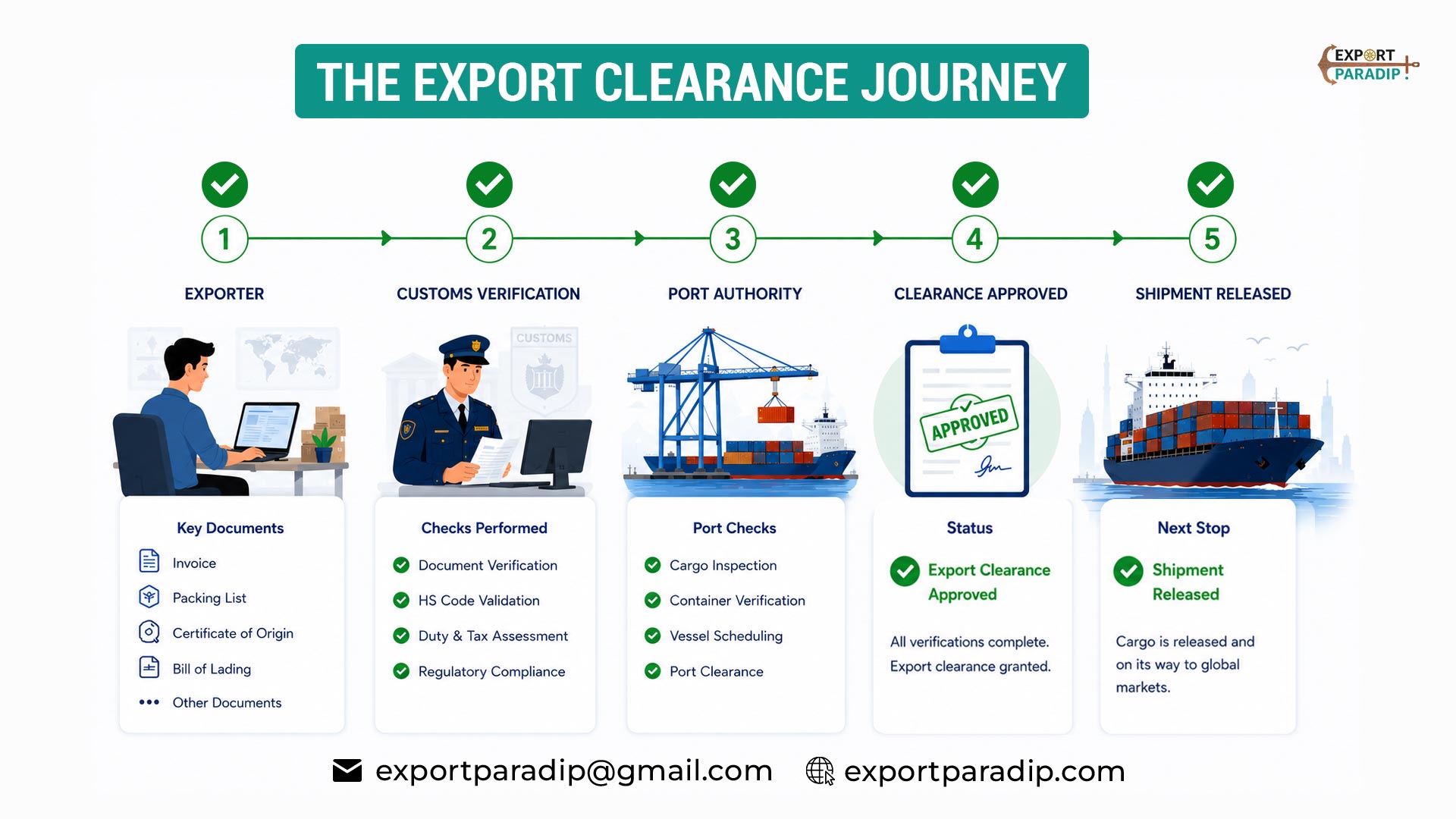
Figure Out How Your Cargo Actually Moves
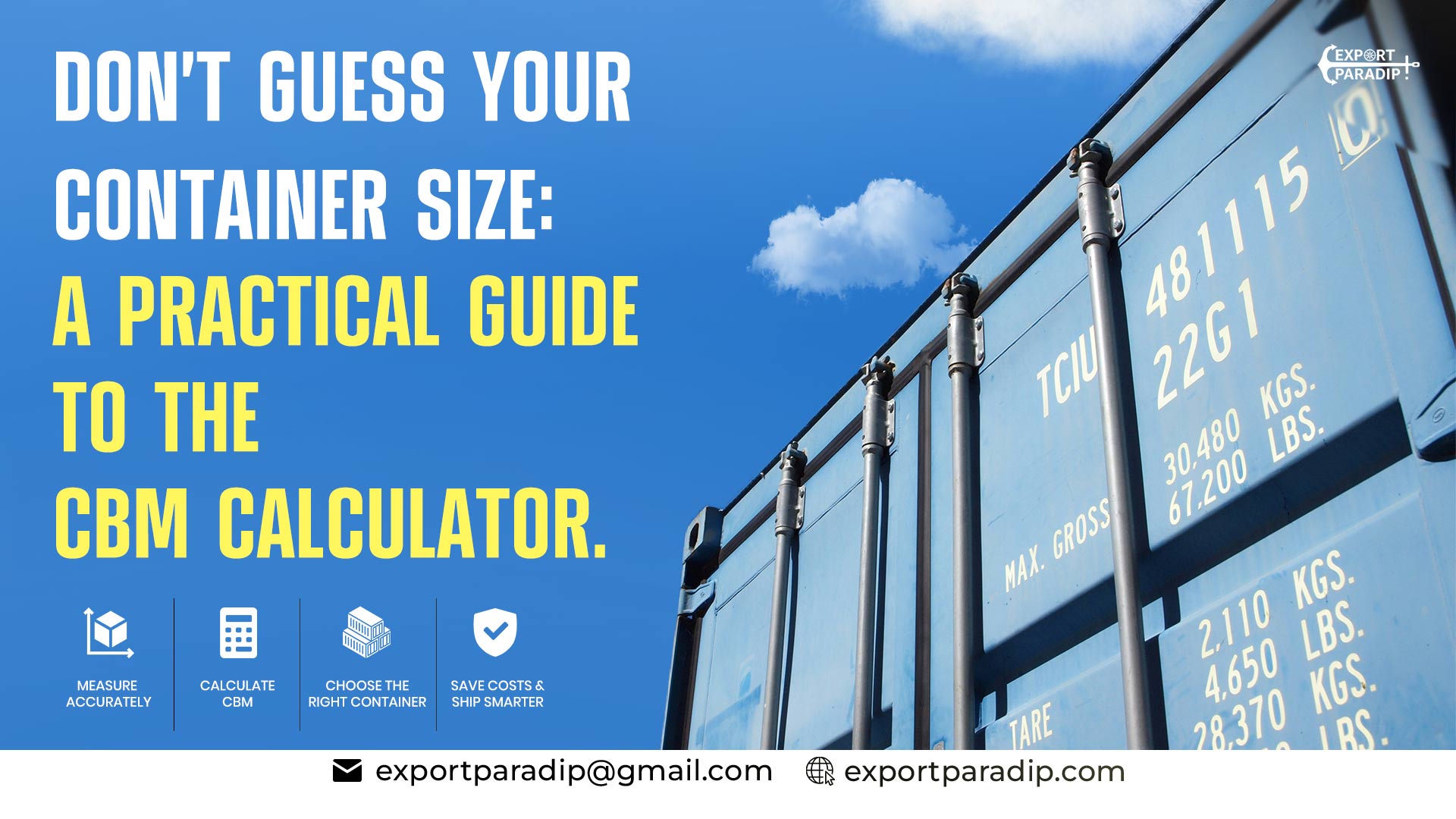
With the documents in motion, it's time to think logistics. Run your cargo volume through a CBM & Container Calculator so you know whether you're looking at a full container, a partial load, or bulk shipment. Then check the vessel line-up schedule & book around real sailing dates instead of guessing & hoping.
Paradip's deep draft & berth capacity mean it handles both bulk cargo & containers comfortably, so really this step is just about matching what you're shipping to the right slot on the right vessel.
Clearing Customs Without the Drama
At the port, your shipping bill gets filed, cargo gets inspected if it needs to be, & clearance is granted before anything gets loaded. Most exporters lean on a customs house agent for this stage, & here's where the earlier paperwork step pays off clean, consistent documentation is what keeps this quick instead of turning into back-and-forth queries.
Keep an Eye on It Once It's Sailed
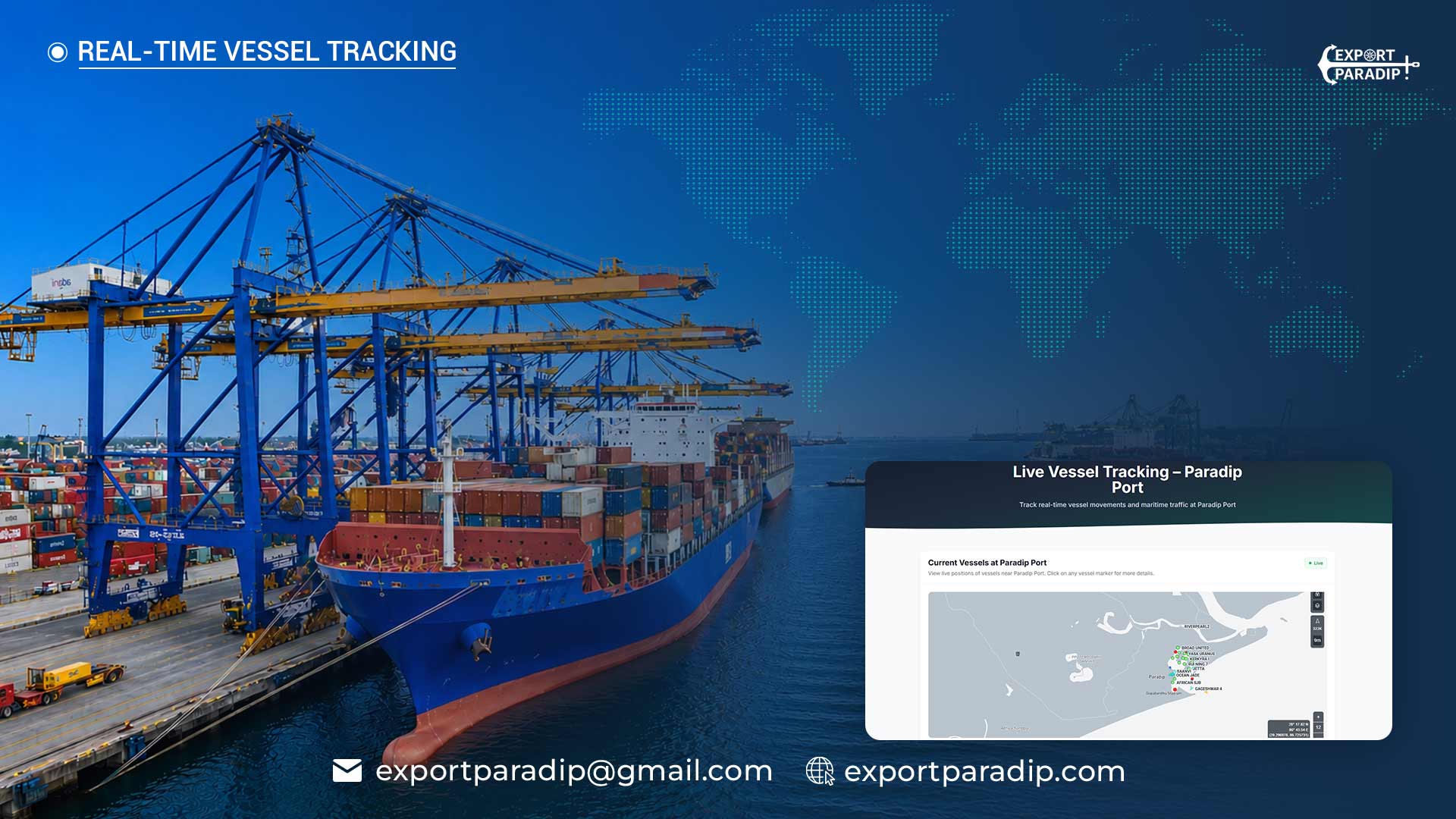
Your cargo's on the water, but that doesn't mean you're out of the loop. Our live Vessel Map lets you & your buyer track the shipment in real time genuinely useful for planning on the receiving end, & it goes a long way toward keeping buyers reassured rather than anxious.
Last Step: Get Paid & Close It Out
Depending on how you structured the deal letter of credit, advance payment, documents against payment this is where you submit your shipping documents to the bank for realization. One habit worth building early: keep copies of everything. Reconciling a payment against a shipment three months later is a lot easier with a complete paper trail than a half one.
So Here's the Real Takeaway
None of these steps is genuinely difficult on its own. What actually trips people up is doing them out of order booking a vessel before the documents are ready, or chasing a buyer before you've even sorted your HS code. Get the sequence right, & Paradip's infrastructure does most of the heavy lifting from there. If any of this feels like a lot to juggle on your own, that's exactly what we're here for. We work with exporters at every stage first shipment or fiftieth. Get in touch & let's talk through where you're at.
FAQ's
Do I need to apply for an IEC before every shipment?
Nope, just the once. Get your Import Export Code sorted the first time, & it stays valid for every shipment after that unless something major changes on your business end.
How long does clearance actually take at Paradip?
Honestly, it depends on your cargo & how clean your paperwork is. Get your documents right the first time & you'll usually sail through. Sloppy or inconsistent paperwork is what turns a quick clearance into a back-and-forth.
What's actually different between a proforma invoice & a commercial invoice?
Think of the proforma as the preview it goes to your buyer early as a formal heads-up on price & terms. The commercial invoice is the real deal, issued once the goods are actually on their way.
Can Paradip handle both bulk cargo & containers, or do I need to pick one?
You don't need to pick Paradip does both comfortably. What you're shipping & how much of it determines the route, not any limitation on the port's end.
What's the real risk if I get my HS code wrong?
More than you'd think. Wrong classification can mean incorrect duty, customs holding your cargo, or compliance issues down the line. It only takes a few minutes to confirm it properly, so there's really no reason to guess.