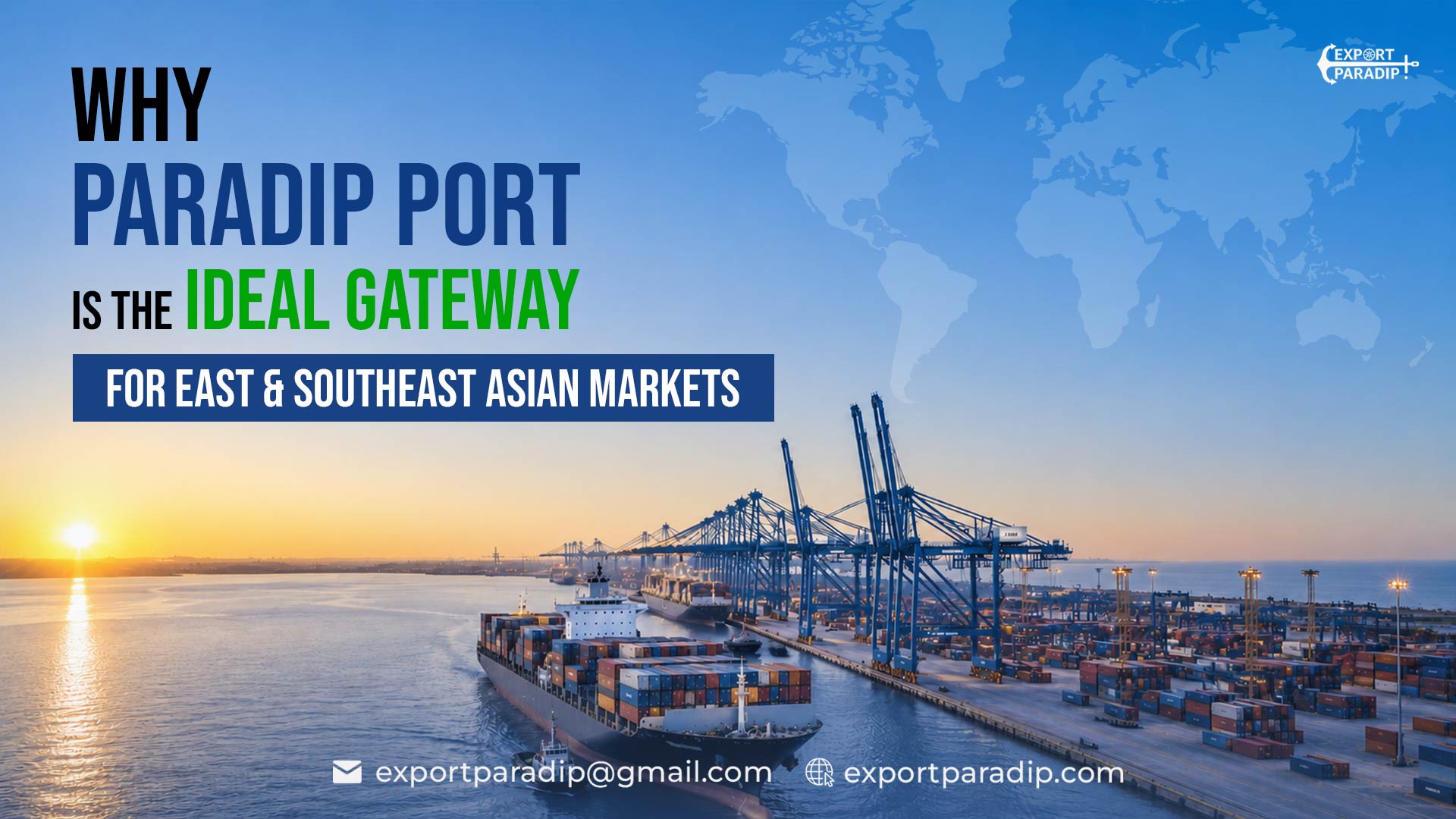
Look at a map of India's east coast and the advantage becomes obvious almost immediately. While ports on India's western coast lose extra sailing days routing around Sri Lanka to reach Southeast Asia, Paradip opens straight onto the Bay of Bengal, facing Myanmar, Thailand, Malaysia, Indonesia and the rest of the ASEAN coastline almost head-on.
For exporters in Odisha and the wider eastern hinterland, that's not a minor detail, it's a genuine shipping advantage built into the geography itself. Export Paradip works with exporters across multiple product categories who are learning exactly how to put that advantage to use.
What "Gateway" Actually Means
A gateway port isn't simply one that faces the right direction on a map. It's one where location, infrastructure and cargo all line up, deep water, capable berths, regular vessel calls and a hinterland producing what the destination market actually wants to buy. Paradip checks each of these boxes in a way few ports on India's east coast can match right now.
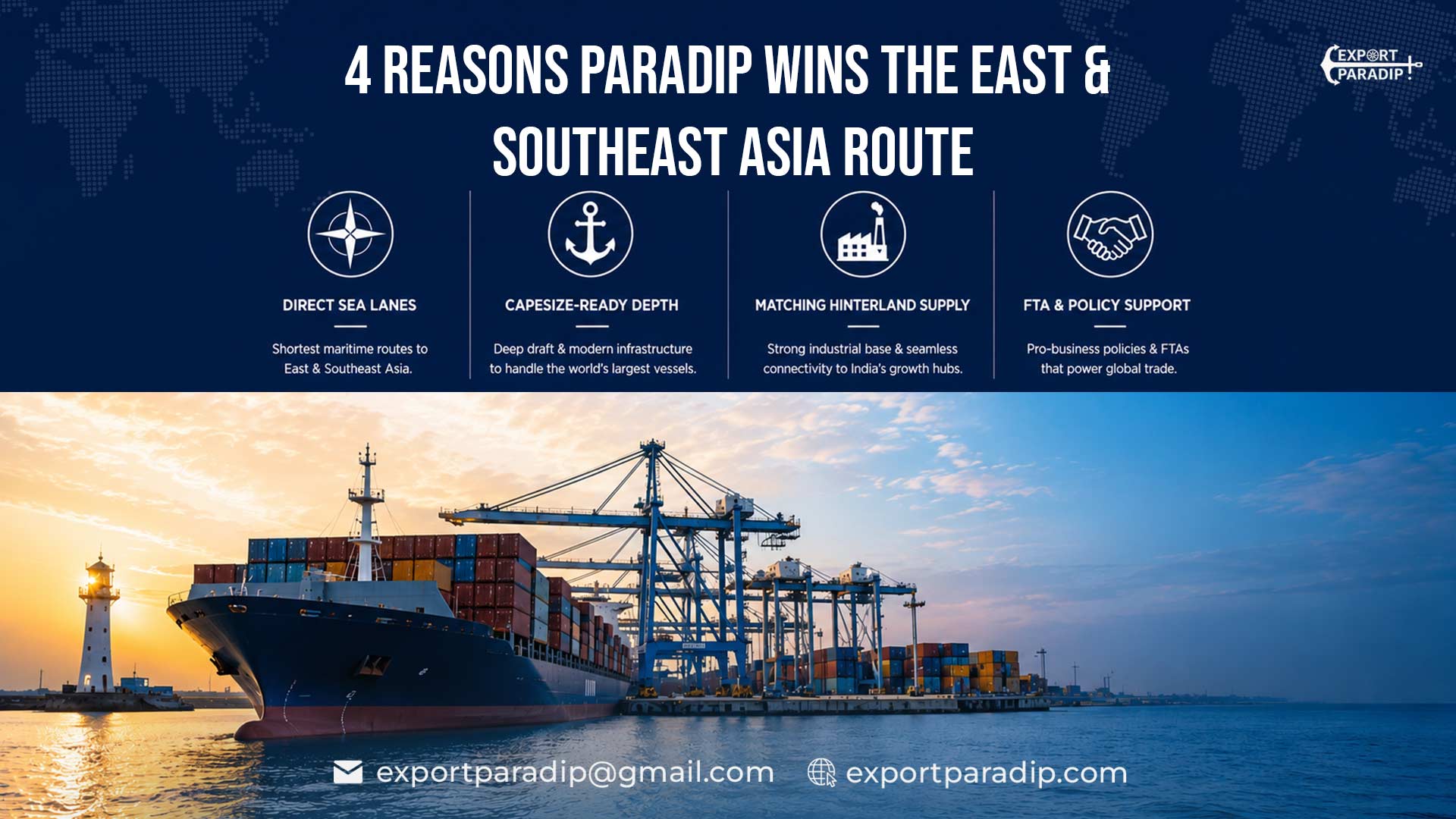
Four Reasons Paradip Works So Well for the East
-
Geography That Skips the Detour Sitting at the confluence of the Mahanadi river and the Bay of Bengal, Paradip's natural deep-water harbour opens directly onto sea lanes running toward Myanmar, Thailand, Singapore and onward to Japan and South Korea. Cargo moving from west coast ports typically rounds the southern tip of India first. Paradip skips that leg entirely, which can mean real time saved on the way to an East or Southeast Asian buyer.
-
Built for Big Ships, Not Just Big Claims Paradip is one of the few Indian ports built to handle Capesize vessels, with an approach channel dredged to nearly 19 metres and ongoing capital dredging pushing that depth even further. Already moving over 150 million tonnes of cargo a year, it has become one of the country's busiest ports. For an exporter, that translates simply: larger vessels mean fewer transhipments, lower per-tonne freight cost and fewer delays.
-
A Hinterland the Region Already Buys From Odisha's industrial base is built around exactly the categories East and Southeast Asian buyers are already importing: iron ore, minerals and ores, processed chemicals, metallurgical products, marine catches and agricultural goods. Paradip isn't trying to create demand from nothing, it's sitting right next to supply the region already wants.
-
Policy Tailwinds, Not Headwinds India's Act East Policy and its trade agreements with ASEAN, Japan and South Korea were shaped with corridors exactly like this one in mind. Exporters shipping through Paradip aren't working against the policy direction, they're moving with it.
Turning Geography Into a Shipment
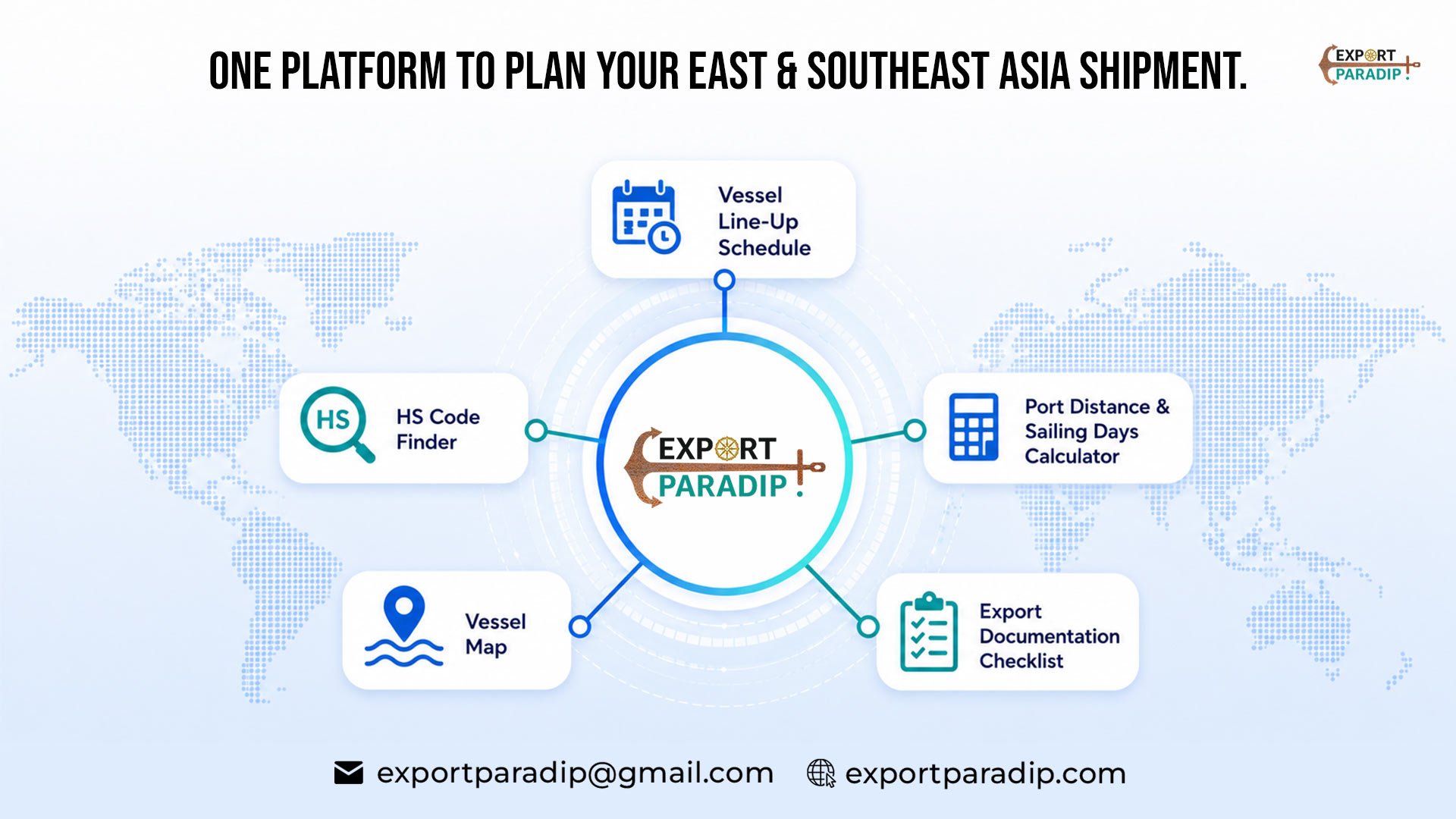
None of this matters until it becomes an actual booked shipment. That means knowing which vessels are calling at Paradip and when, classifying products under the correct HS Code, keeping FTA documentation ready and mapping the most efficient route to the destination port. Export Paradip's Vessel Line-Up Schedule, HS Code Finder and Port Distance & Sailing Days Calculator exist for exactly this reason, to turn a geographic advantage into a shipment an exporter can actually plan around.
Paradip's position on the map was always going to count for something. What turns that position into a real trading advantage is the exporter who pairs it with the right product, the right paperwork and a shipping plan built around it.
FAQ's
Why is Paradip Port considered a gateway to East & Southeast Asia?
Its position on the Bay of Bengal gives it a direct sea route to ASEAN nations, Japan and South Korea, without the detour west coast ports take around Sri Lanka.
Which products move well from Paradip into these markets?
Iron ore, minerals, processed chemicals, metallurgical goods, marine products and agricultural commodities are among the strongest performers.
Can Paradip Port handle large vessels?
Yes, its deep-draft channel allows it to handle Capesize vessels, which improves freight economics for bulk exporters.
Does India have trade agreements supporting this route?
Yes, FTAs with ASEAN, Japan and South Korea, alongside India's Act East Policy, directly support exporters using this corridor.
How does Export Paradip help exporters use this route?
Through tools like the Vessel Line-Up Schedule, HS Code Finder and Port Distance & Sailing Days Calculator that help plan shipments to East and Southeast Asian destinations.