 India ranks as the world's fourth-largest seafood exporter, shipping over 1.78 million tonnes of marine products worth $7.7 billion annually to global markets. Behind these impressive numbers lies a critical success factor that determines whether Indian seafood reaches international buyers in premium condition or arrives as rejected cargo: cold chain logistics.
Export Paradip specializes in facilitating marine product exports with comprehensive cold chain coordination, ensuring your valuable seafood cargo maintains required temperatures & quality standards throughout the journey from Odisha's fishing harbors & aquaculture facilities to destination markets worldwide.
India ranks as the world's fourth-largest seafood exporter, shipping over 1.78 million tonnes of marine products worth $7.7 billion annually to global markets. Behind these impressive numbers lies a critical success factor that determines whether Indian seafood reaches international buyers in premium condition or arrives as rejected cargo: cold chain logistics.
Export Paradip specializes in facilitating marine product exports with comprehensive cold chain coordination, ensuring your valuable seafood cargo maintains required temperatures & quality standards throughout the journey from Odisha's fishing harbors & aquaculture facilities to destination markets worldwide.
Understanding Cold Chain Requirements for Marine Products
The Science Behind Temperature Control
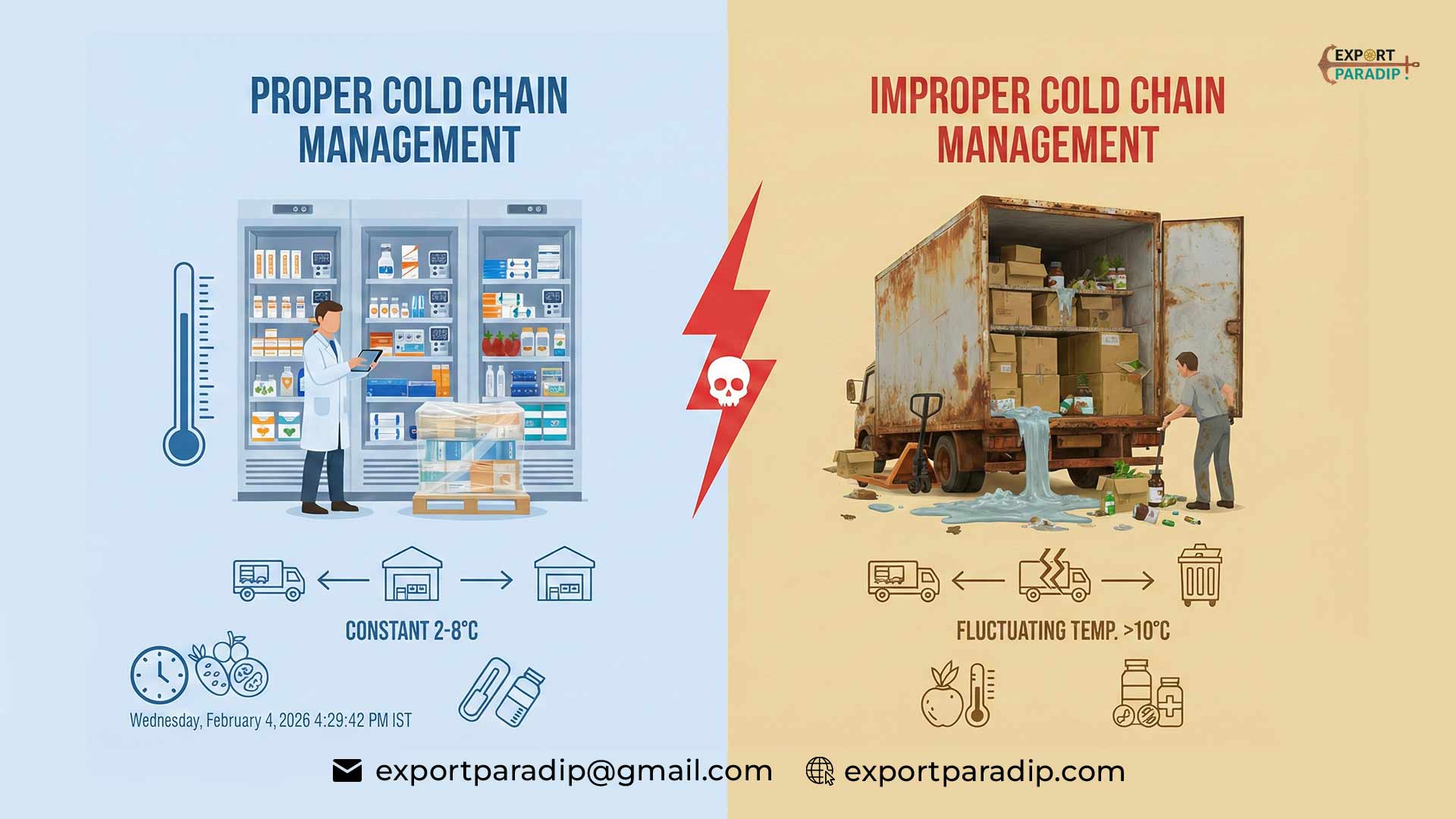
Marine products are highly perishable commodities requiring strict temperature management due to their biological composition. Fish, shrimp, crab & other seafood contain high moisture content, neutral pH levels & abundant nutrients creating ideal conditions for rapid bacterial growth when temperature control fails.
Fresh fish begins deteriorating immediately after harvest due to autolytic enzyme activity & bacterial multiplication. At ambient temperatures (25-30°C), bacterial populations can double every 20-30 minutes, rapidly rendering seafood unsafe & unmarketable.
Temperature Zones for Different Marine Products
Different seafood products require specific temperature ranges throughout the supply chain:
-
Chilled Fresh Seafood: Maintained at 0°C to 4°C, chilled seafood provides the premium product category commanding highest prices in markets like Japan, Europe & the Middle East.
-
Frozen Seafood: Maintained at -18°C to -25°C, frozen seafood represents the largest volume of India's marine exports.
Critical Control Points in Marine Export Cold Chain
Pre-Processing Temperature Management
The Cold chain begins at the moment of harvest, not at the processing plant. Fishing vessels must have adequate ice or refrigeration capacity to chill catch immediately.
Processing Plant Operations
Modern seafood processing facilities operate as temperature-controlled environments where products never exceed critical thresholds. Key infrastructure includes:
-
Receiving Areas: Temperature-controlled zones (4-7°C) for raw material quality inspection & cleaning.
-
Processing Halls: Maintained at 12-15°C to prevent bacterial multiplication.
-
Blast Freezers: Rapid freezing equipment achieving -35°C to -40°C air temperature freezes seafood quickly.
-
Cold Storage Facilities: Post-freezing, products are held at -18°C to -25°C awaiting export.
-
Quality Control Laboratories: Monitored areas for microbiological testing & compliance verification.
Container Stuffing Operations
Loading frozen seafood into refrigerated containers (reefers) represents a critical control point. Best practices include:
-
Pre-Cooling Containers: Reefer containers must be pre-cooled to -18°C or colder before loading.
-
Rapid Loading: Minimizing time between removing product from cold storage & completing container stuffing prevents surface warming.
-
Proper Air Circulation: Cargo must be loaded allowing air circulation around all sides, preventing localized warming.
-
Temperature Recorder Installation: Redundant temperature monitoring is essential for quality assurance.
-
Container Seal Verification: Proper seal verification prevents warm air infiltration during transit.
The Infrastructure Requirements for Marine Product Cold Chain
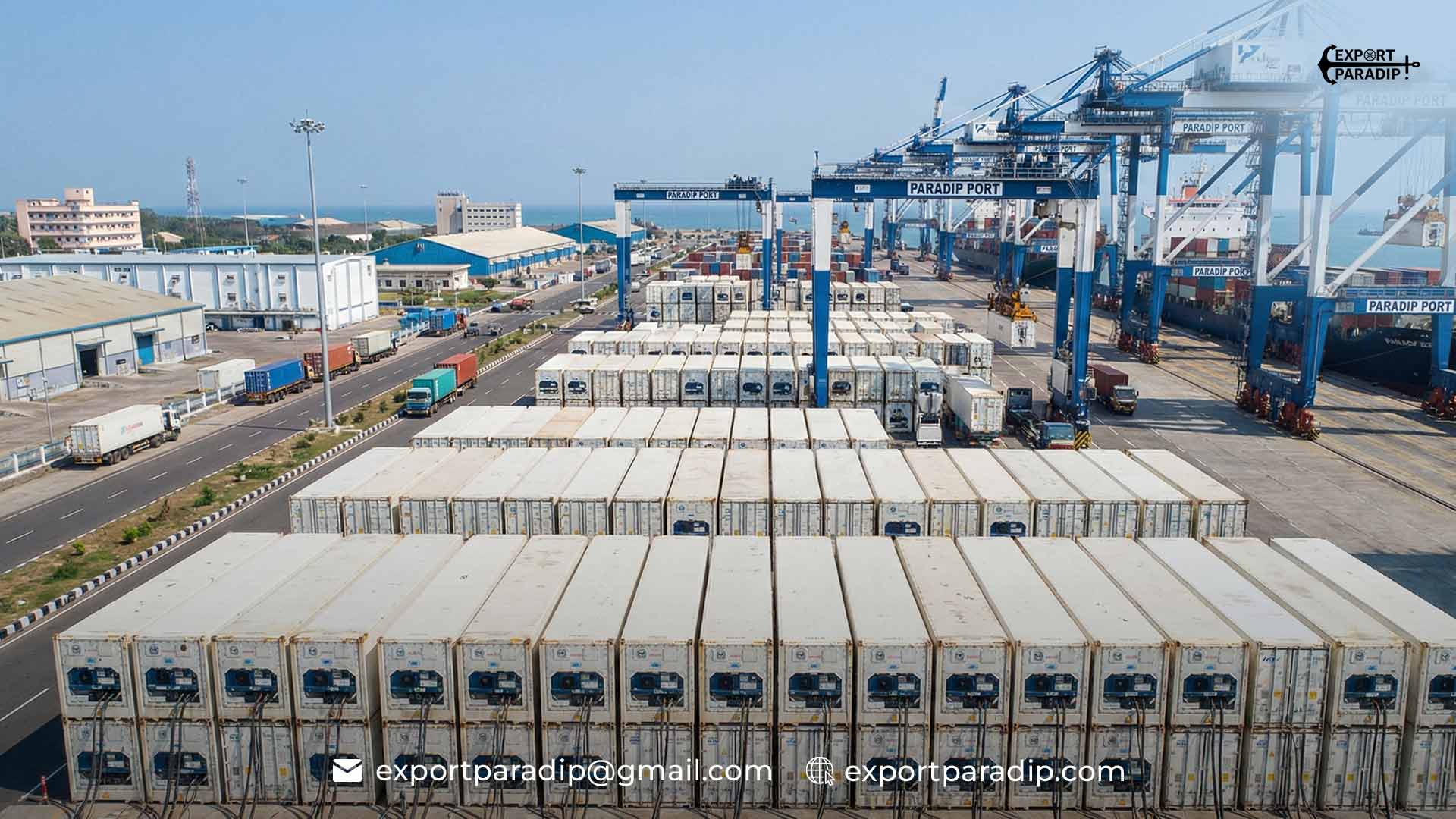
Port-Side Cold Storage Facilities
Paradip Port's infrastructure development includes temperature-controlled warehousing supporting marine product exports, offering:
-
Blast Freezing Capacity: Beneficial for smaller exporters aggregating volumes for container loads.
-
Pre-Shipment Cold Storage: Allows exporters to accumulate sufficient volume for full container loads.
-
Container Holding Areas: Reefer container storage maintaining temperature settings during port dwell time.
-
Emergency Backup Systems: Prevent temperature failures during power outages.
Regulatory Compliance in Marine Product Exports
International Quality Standards
Marine product exports must satisfy stringent international standards established to protect public health.
HACCP Certification Requirements
HACCP certification is mandatory for seafood processing facilities exporting to major markets. It requires:
-
Identifying biological, chemical & physical hazards.
-
Establishing Critical Control Points (CCPs).
-
Setting critical limits & monitoring procedures.
-
Maintaining detailed records for compliance.
EU-Approved Establishment Requirements
Seafood facilities exporting to the EU must achieve approval, involving:
-
Temperature-controlled environments throughout processing areas.
-
Comprehensive quality management systems.
US FDA Registration & FSMA Compliance
Seafood exports to the U.S. require FDA compliance, including:
-
Facility registration with FDA.
-
Implementation of HACCP plans.
Temperature Monitoring & Documentation Systems
Real-Time Temperature Tracking
Modern marine product exports employ multiple layers of temperature monitoring:
-
Processing Facility Monitoring: Continuous recording & alarm systems.
-
Data Loggers: Record temperatures throughout storage & transit.
-
Container Integral Systems: Monitor temperatures & performance.
-
GPS-Enabled Tracking: Combines temperature monitoring with location tracking.
Common Cold Chain Failures & Prevention Strategies
Understanding Temperature Abuse Scenarios
Despite best intentions, cold chain failures occur:
-
Inadequate Initial Cooling: Requires proper vessel refrigeration & rapid transport.
-
Processing Delays: Extended time between receiving & processing allows bacterial multiplication.
-
Blast Freezer Overloading: Requires adherence to capacity limits.
-
Container Stuffing Delays: Rapid loading is essential.
-
Equipment Failures: Preventive maintenance programs are crucial.
-
Power Supply Interruptions: Requires automated backup systems.
The Economics of Cold Chain Investment
Cost-Benefit Analysis for Marine Exporters
Proper cold chain infrastructure requires investment, but economic analysis demonstrates profitability:
-
Premium Market Access: Higher prices for products in excellent condition.
-
Rejection Rate Reduction: Proper management reduces rejection rates.
-
Shelf Life Extension: Longer merchandising windows increase buyer willingness to pay.
-
Claim & Dispute Reduction: Comprehensive documentation aids quality assurance.
Seasonal Considerations in Marine Product Exports
Understanding Seasonal Demand Patterns
Marine product export markets exhibit seasonal demand fluctuations affecting pricing & cold chain requirements:
-
Peak Demand Periods: Higher prices during summer & winter holidays.
-
Lean Demand Periods: Softer demand typically shows lower prices.
-
Religious & Cultural Events: Increased Middle Eastern seafood demand during holidays.
How Export Paradip Facilitates Marine Product Exports
Comprehensive Cold Chain Coordination
Export Paradip provides end-to-end cold chain management for marine product exporters, including:
-
Processing Facility Assessment: Identifying gaps & recommending improvements.
-
Cold Storage Coordination: Arranging access to temperature-controlled warehousing.
-
Refrigerated Transportation: Coordinating qualified logistics providers.
-
Container Booking & Management: Handling all reefer container logistics.
-
Temperature Monitoring Documentation: Establishing comprehensive systems.
Regulatory Compliance Support
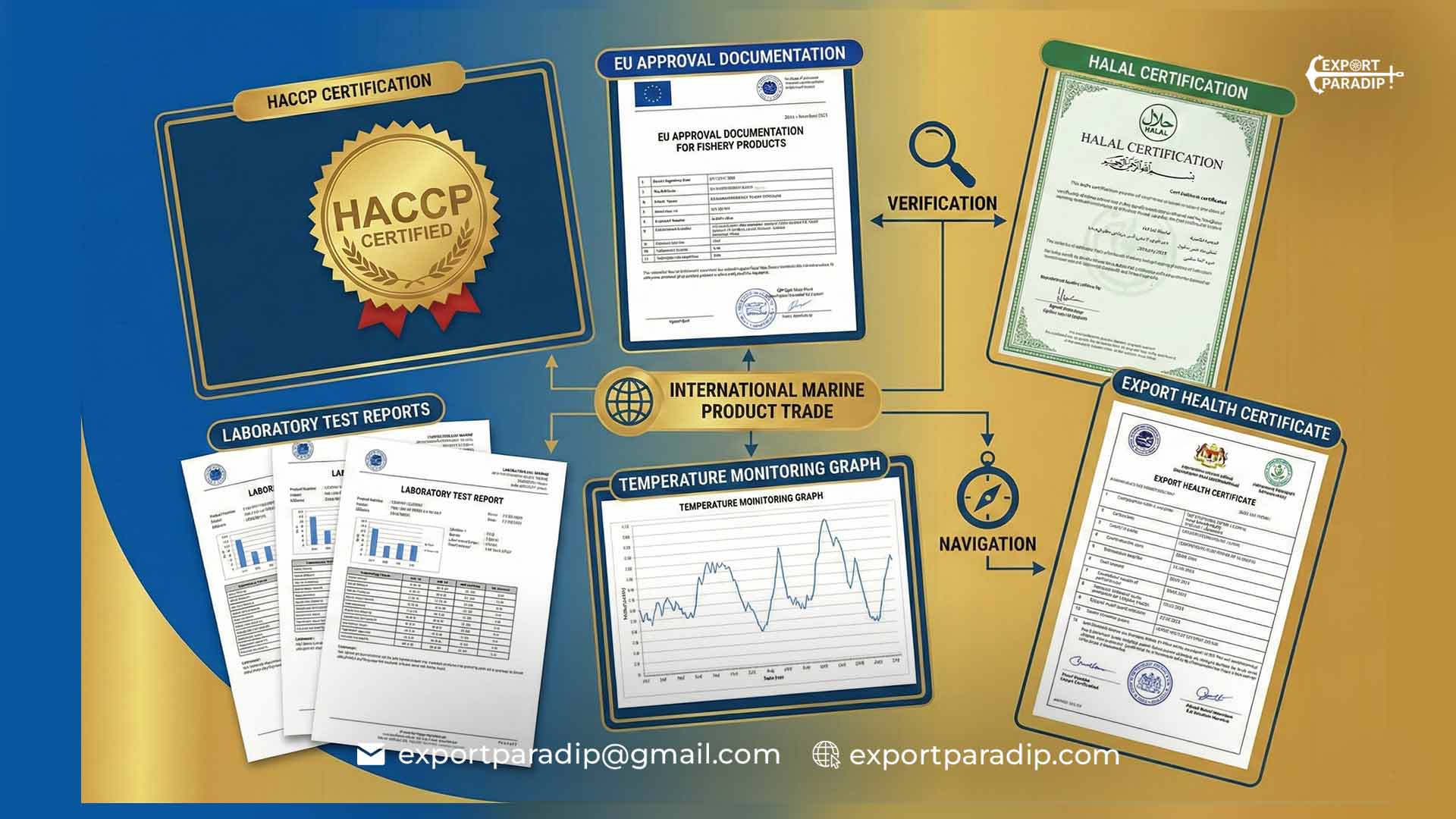
Marine product exports face stringent international regulations requiring specialized expertise:
-
MPEDA Registration Assistance: Guiding new marine exporters through the registration process.
-
International Certification Coordination: Connecting with necessary certification bodies.
Quality Control & Testing Support
Export Paradip facilitates quality assurance & testing:
-
Laboratory Connections: Providing microbiological testing & quality analysis.
-
Pre-Shipment Inspection Coordination: Scheduling inspections to verify compliance.
The Paradip Port Advantage for Marine Exports
Strategic Geographic Positioning
Paradip Port's location on Odisha's coast provides advantages for marine product exports:
-
Proximity to Production Centers: Reduces inland transportation time.
-
Shorter Routes to Key Markets: Lowers refrigeration costs & maintains product quality.
World-Class Port Infrastructure
Paradip Port supports efficient marine product export operations:
-
Reefer Container Handling Expertise: Ensuring proper maintenance during port operations.
-
Cold Storage Facilities: Providing pre-shipment cold storage & backup systems.
Success Stories: Marine Exporters Thriving Through Export Paradip
Case Study: Shrimp Exporter Market Expansion
A Ganjam district-based shrimp processing facility wanted to access premium EU buyers but faced overwhelming compliance requirements. Export Paradip provided necessary guidance, leading to a 40% revenue increase & successful market contracts.
Case Study: First-Time Marine Product Exporter
A Kendrapara-based fish processing unit successfully expanded into exports with Export Paradip's comprehensive assessment & support, leading to a significant increase in export revenue.
Case Study: Cost Optimization Through Route Switching
A Balasore-based crab processing facility successfully reduced logistics costs by switching to Paradip Port, leading to a 45% increase in export volumes.
Future Trends in Marine Product Cold Chain
Technology Integration & Innovation
Innovations in the marine export cold chain include:
-
Blockchain-Based Traceability: Providing verified traceability.
-
IoT-Enabled Monitoring: Real-time data for proactive quality assurance.
Sustainability & Carbon Footprint Reduction
International buyers prioritize sustainability:
- Carbon Footprint Tracking: Preparing for future reporting requirements.
- Renewable Energy Integration: Using energy-efficient resources.
Getting Started with Marine Product Exports Through Export Paradip
Initial Consultation & Assessment
Contact Export Paradip for comprehensive consultation & assessment regarding your export capabilities.
Infrastructure Development Support
Export Paradip connects you with the necessary suppliers & financing for infrastructure improvements.
Conclusion
Cold chain logistics represent the critical foundation enabling India's marine product exports to reach global markets with quality, safety & profitability. For Odisha's seafood processors & exporters, proper temperature management determines success in international markets.
With guidance & strategic planning, marine product exports can transform local fishing & aquaculture operations into globally competitive businesses. Export Paradip specializes in facilitating these exports through comprehensive coordination & support.
The global appetite for high-quality Indian seafood continues to grow & with proper cold chain management, Odisha's marine product exporters are perfectly positioned to seize these opportunities.
FAQ's
Why is cold chain logistics essential for marine product exports?
Cold chain logistics are crucial because marine products are highly perishable. Maintaining a consistent temperature helps preserve their quality & safety, ensuring they reach consumers in optimal condition.
What are the typical temperature requirements for transporting marine products?
Generally, seafood should be kept at temperatures below 4°C (39°F) during transportation & storage. Some products, like frozen fish, may require temperatures below -18°C (0°F) to maintain quality.
What are the main challenges faced in cold chain logistics for marine exports?
Key challenges include inadequate infrastructure, fluctuating temperatures during transport, high implementation costs & compliance with international regulations.
How can technology improve cold chain logistics?
Technology can enhance cold chain logistics through IoT devices for real-time temperature monitoring, automated temperature control systems & advanced tracking solutions that ensure products remain within required temperature ranges during transport.
What impact does an efficient cold chain have on waste reduction?
An efficient cold chain minimizes spoilage & waste by keeping marine products at the right temperature. This not only leads to higher profitability for exporters but also contributes to sustainability by reducing the overall waste generated in the supply chain.