Introduction: A Rapidly Changing Global Marketplace
The year 2026 is shaping up to be one of the most transformative years for global trade. Shifting geopolitical alliances, supply chain rebalancing, regionalization, rising sustainability standards, digital documentation & evolving consumer behaviors are rewriting export trends across the world. Indian exporters, especially from sectors such as agro-commodities, engineering goods, pharmaceuticals, seafood, textiles, chemicals & minerals are witnessing unprecedented opportunities as well as challenges.
According to recent global trade outlooks, demand is projected to grow in Southeast Asia, Africa, West Asia, Eastern Europe & Latin America, with strong buyer interest in sustainable, high-quality & competitively priced Indian goods.
However, to truly succeed in 2026, exporters must understand:
- Where global demand is shifting
- Which product categories are rising internationally
- What new compliance rules & buyer expectations matter
- How to adapt shipping, documentation & supply chain strategies
- How platforms like Export Paradip can accelerate global growth
This blog offers a deep insight into the emerging global trade landscape of 2026 & provides Indian exporters with a strategic roadmap to navigate & win in the new world of demand-driven trade.
Understanding the Major Global Demand Shifts in 2026
Global trade in 2026 is heavily shaped by four megatrends:
1. Sustainability & Green Procurement Are Now Mandatory
Global buyers, from the EU to Japan to GCC nations, are prioritizing:
- Low-carbon supply chains
- Eco-friendly packaging
- Traceability & digital documentation
- Clean energy powered production
Carbon Border Adjustment Mechanisms (CBAM) in Europe & similar policies in the UK & Canada are influencing purchasing decisions.
Export implication (2026):
Exporters must shift toward cleaner processes, green certifications & transparent supply chains to remain competitive.
2. Regionalization of Supply Chains (Post-Pandemic Acceleration)
Companies worldwide are reducing reliance on single-country sourcing. This has created rising opportunities for Indian exporters in:
- ASEAN
- Gulf & West Asia
- Africa
- Eastern Europe
- Latin America
Export implication (2026):
India is emerging as a preferred supplier for agro goods, engineering products, steel, chemicals, textiles, seafood & processed food.
3. Digital Trade Requirements Have Become Non-Negotiable
From e-invoices to digital certificates of origin, most importing nations in 2026 prefer:
- Paperless documentation
- Real-time shipment visibility
- Digital compliance submissions
- Blockchain-enabled traceability Export implication:
Using digital port tools, like Export Paradip’s Vessel Map & Vessel Line-Up Schedule, gives exporters a competitive advantage.
4. Consumer Spending Patterns Are Transforming Globally
Demand across regions is influenced by:
✔ Rising middle-class population
✔ Shifts toward healthy, organic & premium foods
✔ Replacement demand for industrial & engineering goods
✔ Increased construction & infrastructure spending
✔ Strong energy transition investments
Exporters must realign product offerings to match these needs.
Top Global Markets Showing Rising Demand in 2026
Below are the major export markets dominating demand shifts this year.
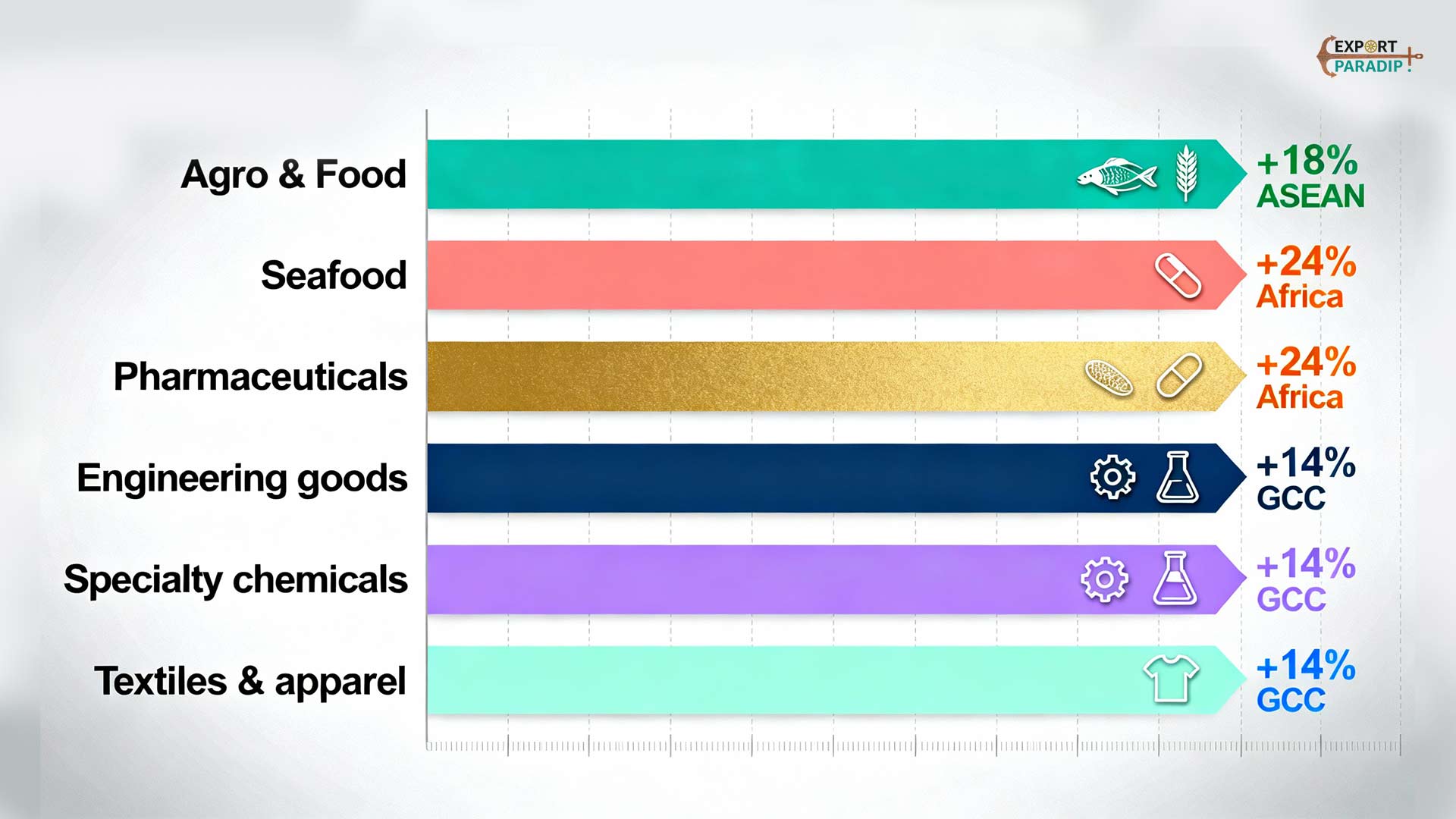
1. Southeast Asia: Fastest Growing Trade Destination for India
Countries such as Vietnam, Indonesia, Philippines, Malaysia & Thailand are importing more Indian goods due to:
- Manufacturing expansion
- High dependence on India for agro & raw materials
- Strategic trade partnerships
Top products in demand (2026):
- Non-basmati rice & broken rice
- Marine products
- Steel & engineering goods
- Pharmaceuticals
- Plastics & chemicals
- Electrical machinery Why 2026 is a breakthrough year:
ASEAN importers increasingly prefer cost-efficient Indian suppliers over China due to diversification.
2. Africa: A Continent of High-Potential Markets
Nigeria, Kenya, Egypt, Tanzania, South Africa & Ghana continue to expand imports from India. High-demand categories:
- Rice & wheat
- Processed food
- Engineering goods
- Pharmaceuticals
- FMCG & consumer products
- Construction materials
2026 driver:
Africa’s rapid urbanization & infrastructure growth will create strong demand for Indian exports.
3. Middle East / GCC: India’s Most Stable Growth Region
Saudi Arabia, UAE, Qatar, Oman & Kuwait are among India’s top trade partners.
Products in high demand in 2026:
- Food grains
- Frozen foods & seafood
- Engineering items
- Electronics
- Textiles
- Building materials
Why GCC matters in 2026:
High disposable income + stable regulations + strong diaspora consumption.
4. Eastern Europe & CIS Markets: Rebuilding Economies
Countries like Poland, Romania, Kazakhstan, Uzbekistan & Georgia are increasing imports of energy, metals, machinery & agro goods.
Demand spike in:
- Agro & processed food
- Machinery & spare parts
- Pharmaceuticals
- Pipes, steel, engineering goods
Opportunity in 2026:
Eastern Europe is rebuilding manufacturing capacity & turning toward India as an alternative supplier source.
5. Latin America: Untapped but Growing Market
Brazil, Chile, Peru, Mexico & Colombia offer huge potential for:
- Rice & spices
- Seafood
- Specialty chemicals
- Textiles
- Auto components Pharma APIs & formulations 2026 demand trigger: Latin America is looking for diversified supply chains & cost-effective sourcing options.
Product Categories Gaining the Most Global Attention in 2026
Here are sectors with the fastest-growing global demand:
1. Food & Agro Commodities
- Rice (basmati & non-basmati)
- Wheat & maize
- Spices
- Processed food
- Tea & coffee
- Fresh fruits
Why growing:
Food security concerns & shifting dietary preferences.
2. Marine & Seafood
- Frozen shrimp
- Tuna
- Value-added seafood products
Why growing:
Rising global protein consumption.
3. Pharmaceuticals & Healthcare Products
- APIs
- Formulations
- Medical disposables
Why growing:
Global healthcare modernization.
4. Engineering Goods
- Steel products
- Auto components
- Industrial machinery
- Electrical equipment
Why growing:
Mega infrastructure projects worldwide.
5. Chemicals & Plastics
- Specialty chemicals
- Petrochemicals
- Bioplastics
6. Textiles & Apparel
- Eco-friendly fabrics
- Technical textiles
- Value-added garments
New Compliance & Regulatory Changes Exporters Must Know in 2026
Compliance is becoming a competitive advantage.
Key changes:
- Stricter quality controls in EU & US
- Digital export documentation mandates
- Sustainability reporting (ESG)
- Packaging material restrictions
- Food safety certifications
Export Paradip helps exporters stay compliant with real-time updates & sector guidance.
How Export Paradip Helps Exporters Win in 2026
Export Paradip is becoming the central digital hub for exporters using Paradip Port, offering tools that make global trade faster, accurate & more efficient.
1. Paradip Vessel Map
A powerful real-time shipping visibility tool: 🔗 https://exportparadip.com/online-services/vessel-map
With the Vessel Map, exporters can:
- Track vessels arriving or departing
- Plan cargo movement
- Improve coordination with shipping lines
- Reduce demurrage & handling delays
- Make informed export scheduling decisions
2. Paradip Port Vessel Line-Up Schedule
Live access to vessel timing & booking schedules: 🔗 https://exportparadip.com/online-services/vessel-line-up-schedule
Benefits include:
- Real-time berth planning visibility
- Efficient load planning
- Easier coordination with CHA & logistics teams
- Reduced waiting time
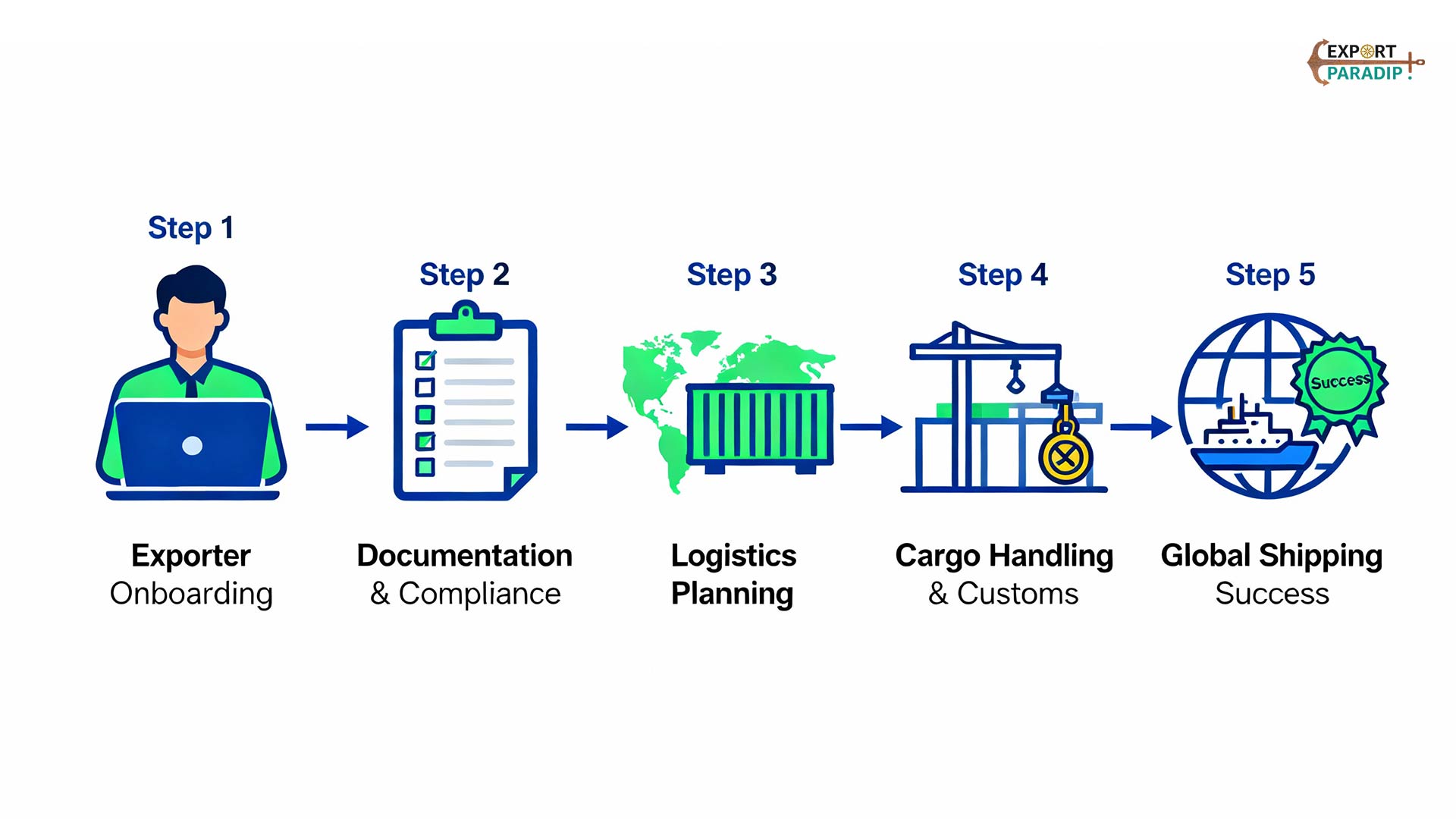
3. Export Support for Documentation & Compliance
Export Paradip guides with:
- Export documentation checklists
- Market-entry support
- Regulatory updates
- Digital filing assistance
4. Strategic Market Advisory
Export Paradip helps exporters understand:
- Top opportunities by region
- Demand trends in 2026
- Product-specific requirements
- Buyer expectations
- Shipping routes & cost optimization
Actionable Strategies for Exporters to Win in 2026
Here are practical & high-impact recommendations:
1. Optimize shipping with real-time vessel data (Export Paradip tool)
Use the Vessel Map & Vessel Line-Up tools to plan shipments better.
2. Upgrade sustainability practices
From packaging to processing, align with global ESG demands.
3. Build multi-region presence
Don’t rely on a single market, focus on ASEAN, GCC, Africa & LATAM simultaneously.
4. Invest in digital documentation
Ensure all key export files are electronically accessible, trackable & compliant.
5. Strengthen supply chain resilience
Maintain alternative suppliers, backup shipping routes & digital monitoring.
6. Stay updated with market intelligence
Export Paradip provides continuous insights into demand shifts, trade policy changes, port updates & sector opportunities.
Conclusion: Exporters Who Adapt to 2026 Trends Will Lead the Global Market
2026 is not just another year, it is a strategic turning point for Indian exporters. Global demand is shifting rapidly, but those who understand the changes & adapt quickly will enjoy strong, long-term growth.
Export Paradip stands as a trusted partner for exporters, helping you:
- Access global markets
- Plan shipping smarter
- Reduce documentation hassle
- Track vessels in real time
- Understand demand trends
Grow internationally with confidence
📩 Looking to expand your exports in 2026?
Connect with the Export Paradip team for strategic export guidance, live vessel updates & documentation support.
Ready to Take Your Odisha Business Global?
Contact Export Paradip:
Email: exportparadip@gmail.com
Phone: 06744508186
FAQs (Frequently Asked Questions)
What are the biggest global demand shifts in 2026?
Major shifts include sustainability-driven supply chains, digital documentation requirements, diversification of sourcing markets & rising demand in sectors like food, engineering goods, pharmaceuticals & chemicals.
Which export markets offer the fastest-growing opportunities for Indian exporters in 2026?
Top markets include Southeast Asia, GCC, Africa, Eastern Europe & Latin America due to increased consumption, infrastructure growth & reduced dependence on single suppliers.
How can Export Paradip help exporters manage shipping more efficiently?
Export Paradip provides a real-time Vessel Map & Vessel Line-Up Schedule, enabling exporters to track ships, plan cargo movement, avoid delays & coordinate with logistics teams more efficiently.
Why is sustainability so important for exports in 2026?
Global buyers now prefer suppliers who follow eco-friendly practices, meet low-carbon standards & provide transparent sourcing information. Compliance increases acceptance & competitiveness.
What documentation changes should exporters prepare for in 2026?
Expect mandatory digital documentation, stricter quality checks, sustainability disclosures & enhanced food safety requirements. Export Paradip provides support to meet these needs.