
The Future of Exports from Paradip: Trends &Opportunities
 India's eastern seaboard is experiencing a quiet revolution in international trade & at its heart lies Paradip Port in Odisha. Once considered a regional maritime facility, Paradip has transformed into India's largest cargo-handling major port, achieving a record-breaking 150.41 million metric tonnes in FY 2024-25. This remarkable ascent reflects not just infrastructure enhancement, but a fundamental shift in how India approaches global trade through its eastern gateway.
For exporters, manufacturers & trade professionals across Odisha, Jharkhand, Chhattisgarh & West Bengal, understanding Paradip's evolving capabilities isn't merely academic it’s strategically essential. Through services by ExportParadip, the port’s expansion aligns with India’s ambitious export targets and the global reconfiguration of supply chains, creating unprecedented opportunities for businesses ready to leverage this growth.
A Port Coming of Age: Recent Milestones
The numbers tell a compelling story. Paradip Port has overtaken Deendayal Port to become India's top cargo handler for the second consecutive year. The port registered 3.46% year-on-year growth in FY 2024-25, handling diverse cargo from thermal coal & iron ore to petroleum products & containerised goods.
What's particularly impressive is operational efficiency. Paradip achieved berth productivity of 34,303 metric tonnes per ship berthing day the highest among all Indian ports. This translates into faster turnaround times, reduced demurrage costs & more predictable supply chain planning for exporters. Coastal shipping has emerged as another strength, with Paradip accounting for 42.36% of India's coastal cargo movement.
Infrastructure Expansion: Building Tomorrow's Trade Gateway
 The Western Dock Project represents the most significant expansion, adding 25 million metric tonnes per annum of capacity. Scheduled for phase one completion by 2026, this deep-draft facility will accommodate Capesize vessels the largest dry bulk carriers in global shipping. For mineral & metallurgical exporters, this means access to economies of scale previously unavailable.
Perhaps more revolutionary is Paradip's commitment to green energy exports. Plans for dedicated green hydrogen & ammonia terminals, backed by memorandums worth over Rs 50,800 crore, position the port as India's hydrogen hub. As the global economy transitions toward clean energy, this infrastructure could make Paradip central to India's energy export strategy by 2030.
The port is pursuing 100% mechanisation by 2030, combining shore-to-ship power systems, green tugs & a 10 MW solar power plant. For exporters conscious of sustainability certifications, Paradip's green credentials offer competitive advantages in ESG sensitive markets.
Key Export Sectors: Where Opportunity Meets Infrastructure
Minerals & Metallurgical Products
Iron ore & steel products form the backbone of Paradip's export profile. Odisha accounts for nearly 30% of India's iron ore reserves & hosts major steel production hubs. Paradip's proximity to these sources, combined with deep-draft berths, creates natural competitive advantages.
Processed minerals & metallurgical products represent another growth avenue. Value-added products like pellets, ferro alloys & specialised steel grades command higher margins & benefit from India's Production Linked Incentive schemes. Paradip's expanding container handling capacity makes mixed cargo exports more viable.
Marine Products
Odisha's 480 kilometre coastline produces substantial marine catches, yet the state has underutilised its marine export potential. The government has actively engaged Paradip Port authorities to establish dedicated marine export facilities & cold storage infrastructure. Global demand for high quality seafood continues rising in the EU, USA & Japan. These regions require stringent traceability & rapid cold-chain logistics areas where modern port infrastructure makes critical differences. Exporters operating through Paradip benefit from shorter transit times to eastern markets, preserving product freshness.
Agricultural & Agro-Based Products
India's agricultural exports reached record levels recently, driven by rice, spices, organic products & processed foods. Paradip's strategic location near Odisha's agricultural belts, combined with rail connectivity to grain producing regions, positions it as an ideal export gateway.
Rice exports particularly benefit from Paradip's mechanised grain handling systems that reduce contamination risks & loading times. Organic & value added agricultural products represent emerging opportunities, with global demand for organic spices, pulses & speciality foods expanding rapidly in North America & Europe.
Chemicals & Petroleum Products
Paradip serves as an export point for refined products & chemical intermediates. India's refining sector operates at some of the world's lowest costs, making petroleum product exports competitive in Southeast Asian & African markets. Processed minerals converted into chemicals including alumina, fertilisers & industrial chemicals form another export category where Paradip holds advantages. Major chemical producers in Odisha can access cost-effective export logistics through the port.
Export Paradip: Bridging Infrastructure with Export Capability
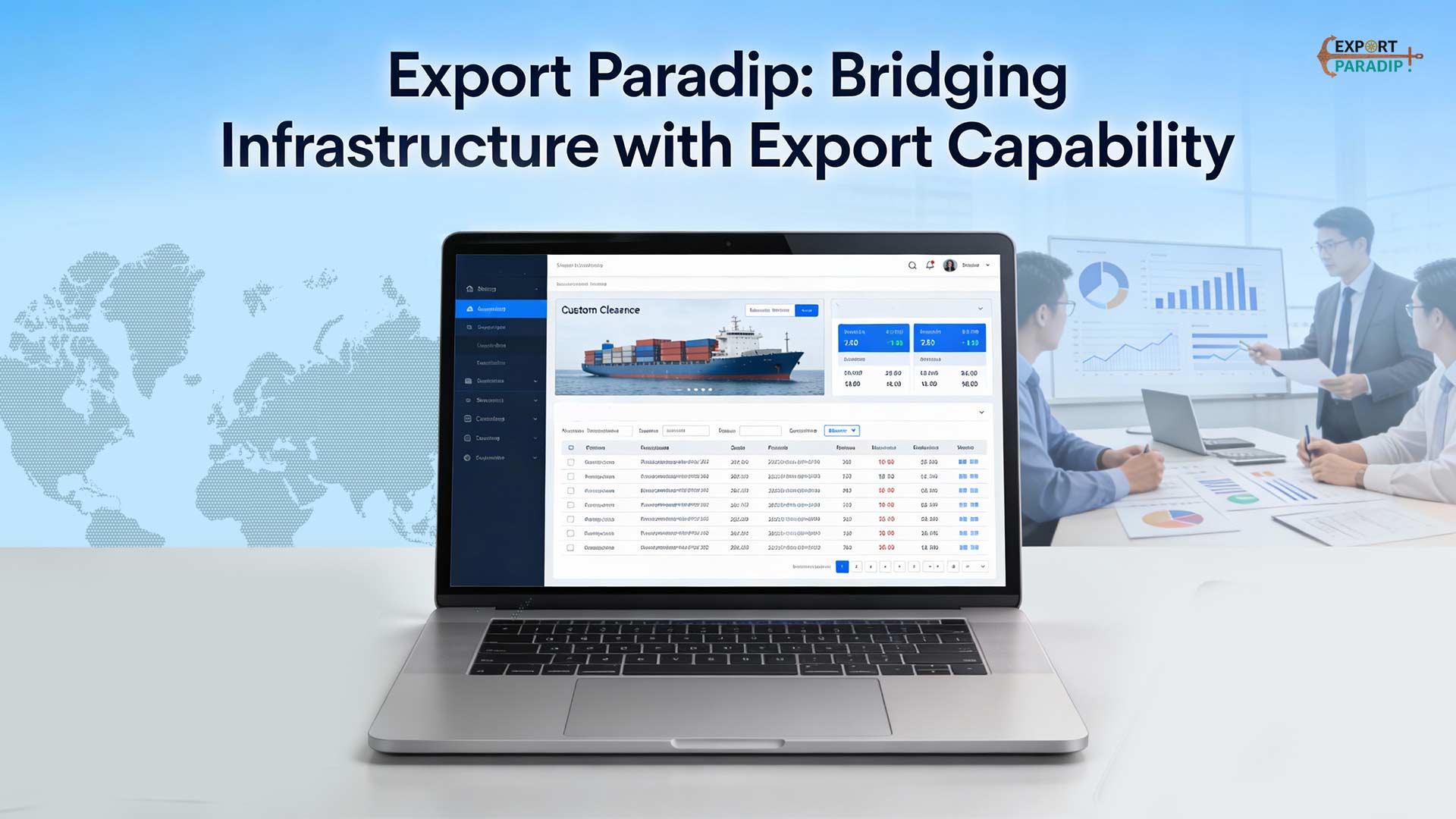
Infrastructure alone doesn't guarantee export success. Businesses need expertise in documentation, regulatory compliance, market intelligence & logistics coordination. This is where Export Paradip distinguishes itself.
Headquartered at Paradip Port, Export Paradip offers comprehensive trade facilitation for agricultural products, marine goods, minerals, processed chemicals, metallurgical items & leather products. Their services address the complete export lifecycle, from initial market research through final delivery confirmation.
One critical service is vessel tracking & scheduling transparency. Through real-time vessel maps & line up schedules available at exportparadip.com, businesses can plan dispatch timing, avoid demurrage penalties & optimise supply chain coordination. This visibility proves invaluable for just-in-time inventory systems or time sensitive agricultural exports.
Export Paradip provides documentation support a persistent pain point for SMEs entering international trade. Navigating bills of lading, letters of credit, customs declarations & origin documentation requires specialised knowledge. Expert guidance reduces risk & builds confidence among first time exporters.
Navigating Challenges: What Exporters Must Consider
The Indian rupee has depreciated significantly against major currencies. While this improves price competitiveness, it increases costs for imported inputs. Exporters must manage currency exposure through hedging instruments & pricing strategies. Trade tensions & tariff adjustments present ongoing concerns. The United States imposed steep tariffs on various Indian goods during 2024-25. These policy shifts can suddenly alter market dynamics. Diversification across multiple geographic markets reduces dependence on any single destination.
Quality compliance requirements are becoming more stringent, particularly in developed markets. The European Union's sustainability regulations, food safety standards in Japan & the USA & environmental compliance requirements demand investment in quality systems. Businesses that view these as quality improvement opportunities gain competitive advantages.
Government Initiatives Amplifying Export Potential
The Export Promotion Mission, launched with Rs 25,060 crore allocation for FY 2025-26 through FY 2030-31, aims to streamline export credit access & facilitate market entry. Production-Linked Incentive schemes across 13 sectors provide financial incentives for manufacturing expansion & export performance.
The Remission of Duties & Taxes on Exported Products (RoDTEP) scheme ensures exporters receive refunds for embedded taxes. Free Trade Agreements with the UK, UAE, Australia & EFTA countries provide duty-free access for numerous product categories. Ongoing negotiations with the EU & the USA promise further market opening.
The Odisha government has demonstrated strong commitment to export facilitation, particularly for marine products & agricultural goods. Coordination between state agencies, export authorities & port officials creates an ecosystem supporting exporters with infrastructure & market intelligence.
Future Outlook: 2026 & Beyond
Capacity expansion will continue accelerating, with the port targeting 500 million metric tonnes by 2047. Containerisation is expanding after years of focusing on bulk cargo. The CONCOR Multimodal Logistics Park enhances inland connectivity for containerised goods, supporting manufactured goods & mixed cargo exports.
Digital transformation brings transparency & efficiency improvements. Real-time cargo tracking, automated customs processing & integrated logistics platforms reduce paperwork & processing times. These systems particularly benefit small & medium enterprises lacking dedicated export departments.
Sustainability will increasingly influence port operations & trade flows. Paradip's investments in renewable energy & green hydrogen infrastructure position it favourably as carbon regulations expand. Exporters demonstrating environmental responsibility will access premium market segments & avoid potential carbon tariffs.
Taking Action: Strategic Steps for Exporters
Conduct thorough market research before committing resources. Which markets show growing demand for your products? What certifications do those markets demand? Export Paradip provides market intelligence that informs these decisions.
Build relationships with reliable logistics partners. Consistent inland transportation, efficient customs clearing & proven freight forwarders form the foundation of successful export operations. Cost shouldn't be the sole criterion reliability prevents costly disruptions.
Invest in quality systems & certifications relevant to your target markets. ISO certifications, HACCP for food products, organic certifications & sector-specific standards open doors that uncertified competitors cannot access.
Leverage government schemes designed to support exporters. From PLI incentives to RoDTEP refunds to preferential tariffs under FTAs, these programmes directly impact profitability. Partner with trade consultants or organisations like Export Paradip to capture all available benefits.
Conclusion:
The future of exports from Paradip represents more than infrastructure expansion it reflects India's transformation into a major global trade hub, with the eastern seaboard playing an increasingly central role.
For businesses across Odisha, Jharkhand, Chhattisgarh & West Bengal, Paradip Port offers competitive advantages modern infrastructure, operational efficiency, strategic location & growing connectivity to global markets. Combined with supportive government policies & facilitation services from Export Paradip, the export opportunity has never been more accessible.
Success requires quality commitment, market understanding & strategic agility. But for businesses willing to invest in these capabilities, the rewards extend beyond revenue growth to establishing lasting presence in international markets.
The transformation underway at Paradip Port is creating possibilities that didn't exist even five years ago. Businesses positioned to leverage this momentum will define India's export story in the decade ahead.
FAQ's
What types of products are best suited for export through Paradip Port?
Paradip Port is ideal for bulk cargo like iron ore, coal, minerals, agricultural products, marine goods, chemicals, and containerised manufactured items due to its deep-draft and mechanised infrastructure.
How does Export Paradip help businesses that are new to exporting?
Export Paradip offers end-to-end support including market research, documentation assistance, compliance guidance, logistics coordination and buyer connections for first-time exporters.
What are the main challenges exporters should anticipate when using Paradip Port?
Key challenges include inland logistics coordination, regulatory compliance, currency fluctuations, and peak-season congestion, which can be managed with proper planning and expert support.
How is Paradip Port positioning itself for future trade opportunities in green energy?
The port is investing in green hydrogen terminals, solar power, electric tugs, and shore power systems, positioning itself as a future-ready green energy export hub.
What advantages does Paradip Port offer compared to other major Indian ports?
Paradip offers deep-draft berths, high berth productivity, strong rail connectivity, 24/7 operations, lower inland costs, and continuous government-backed infrastructure upgrades.